
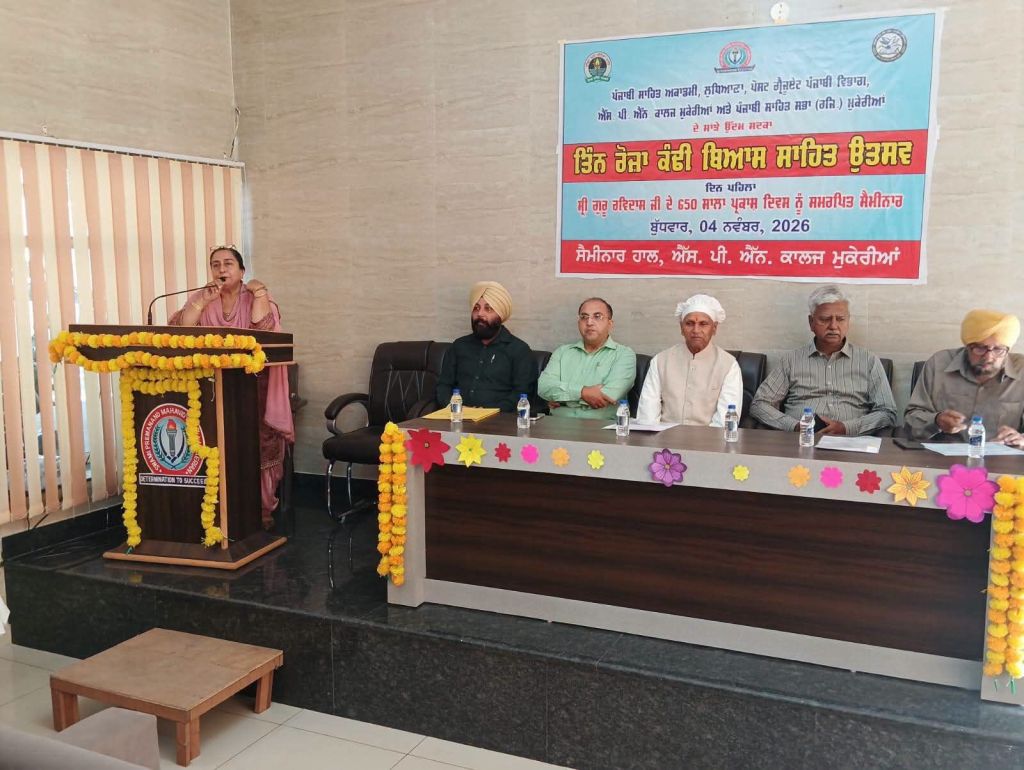
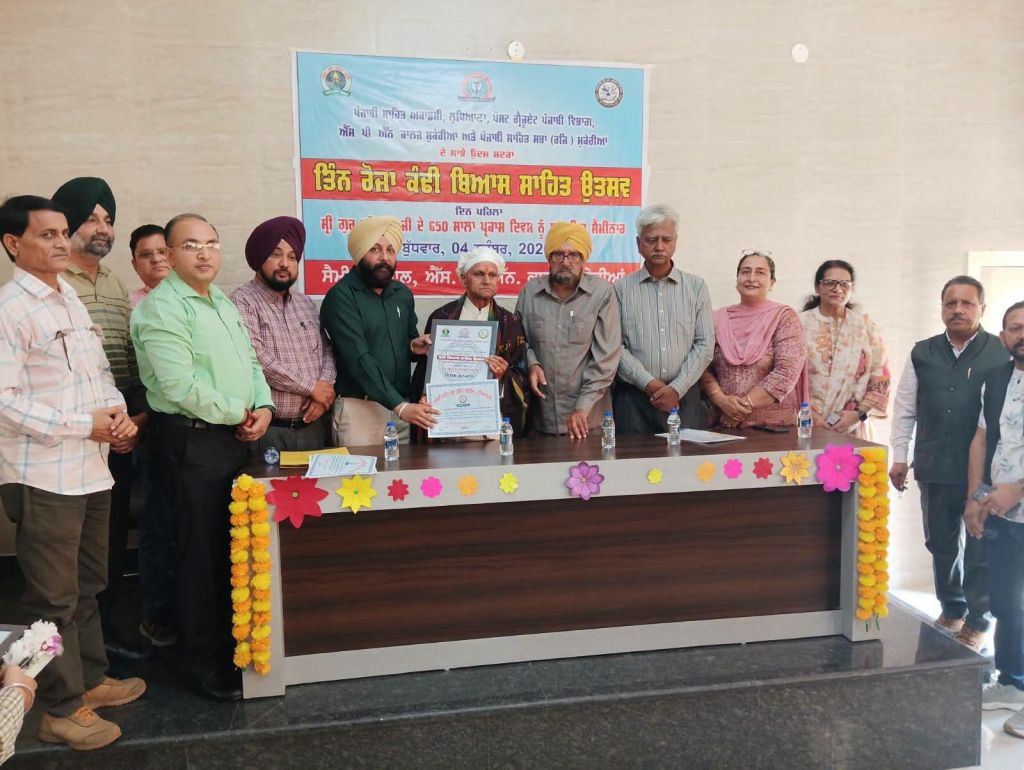
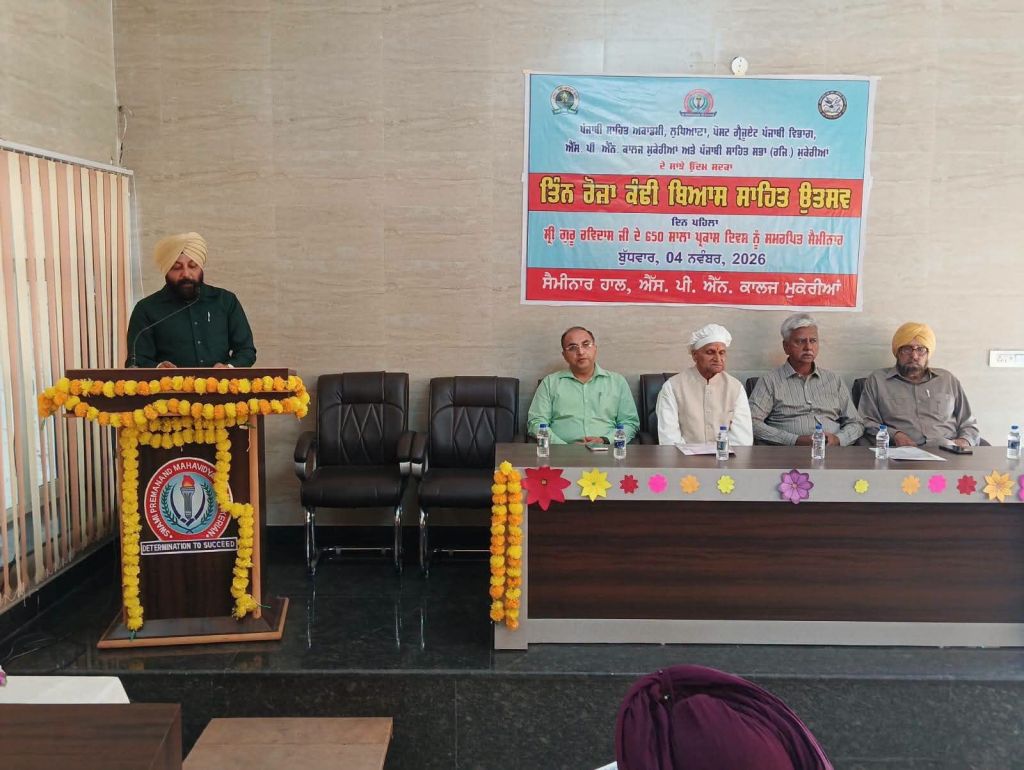
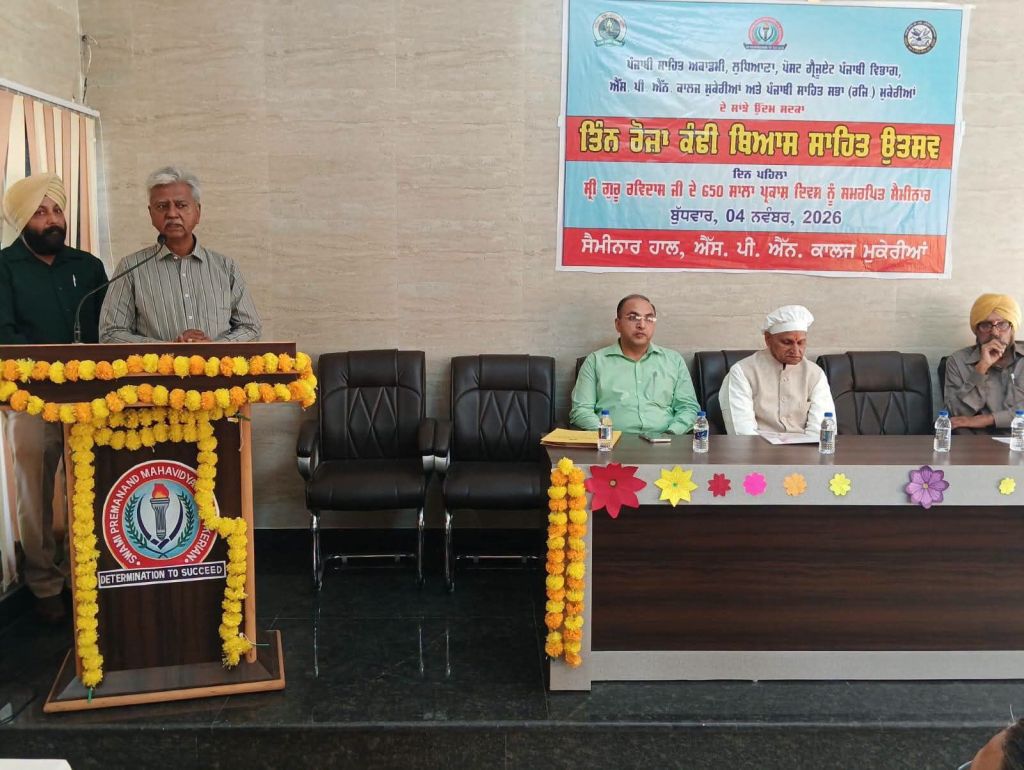
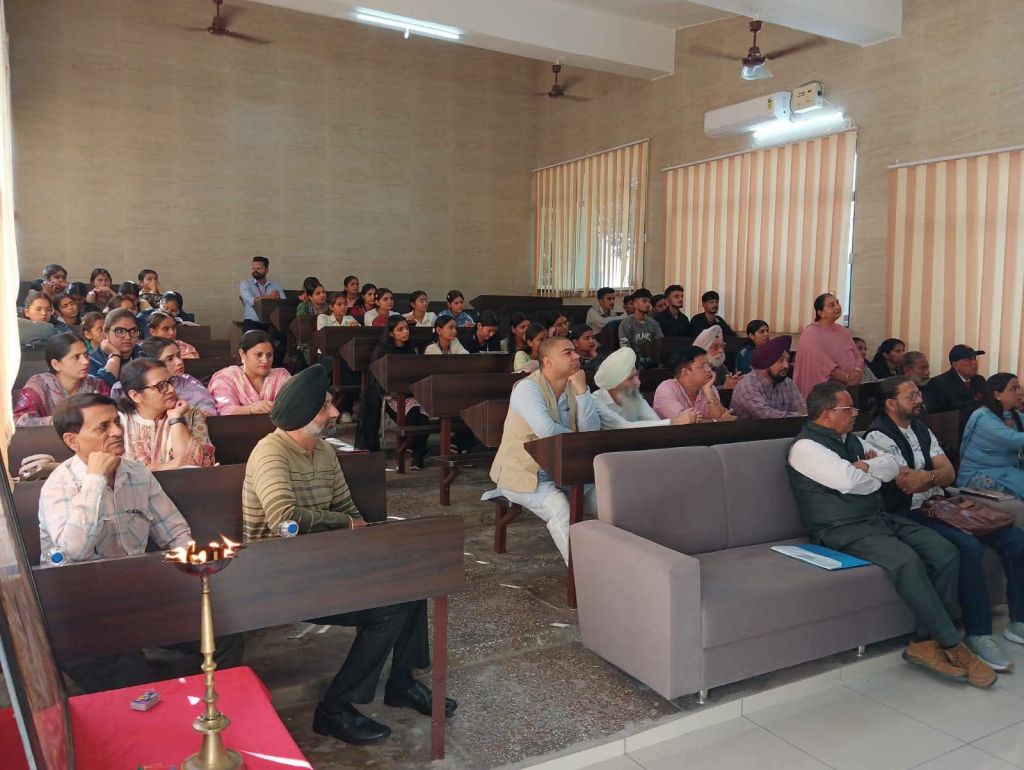
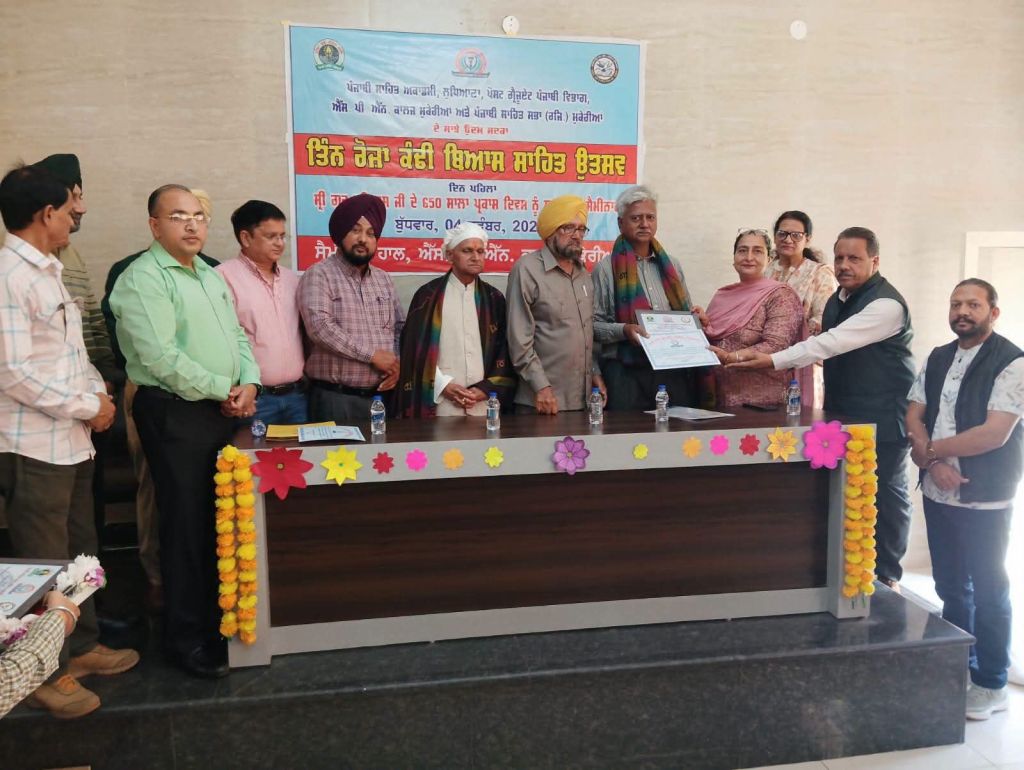
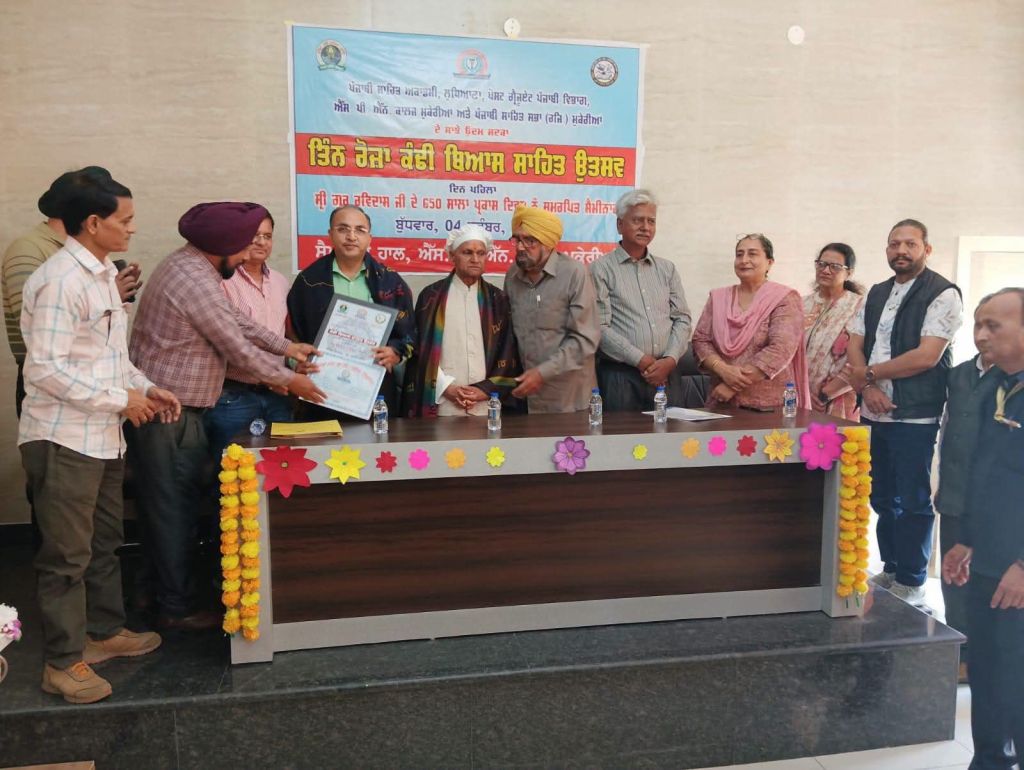
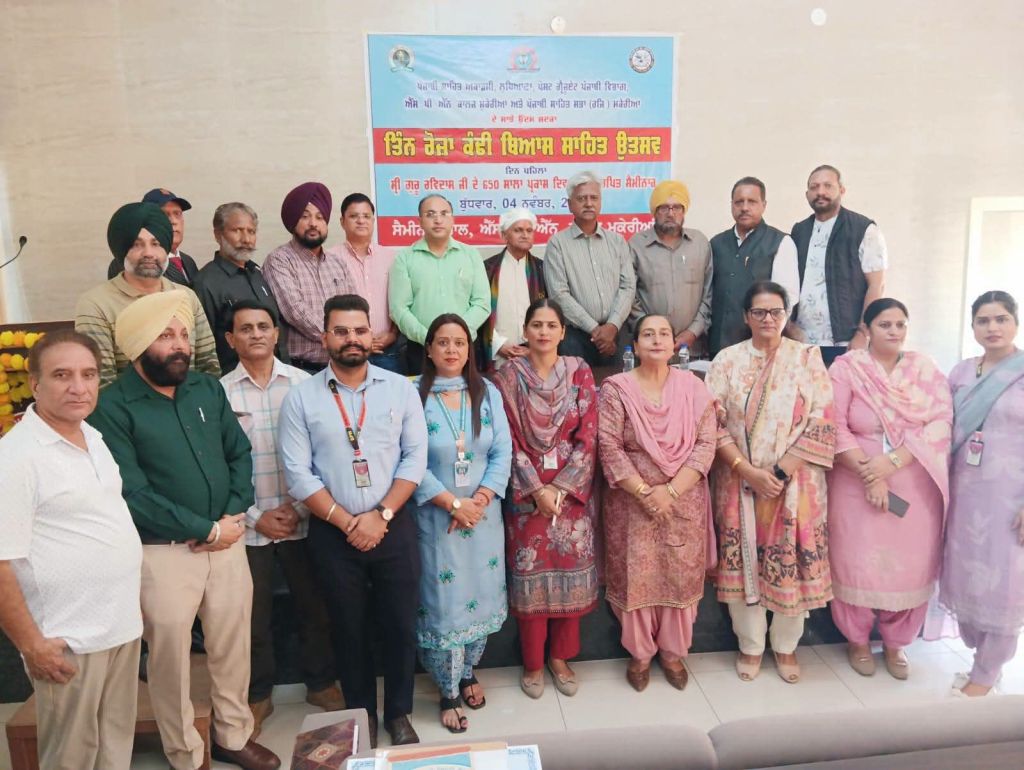
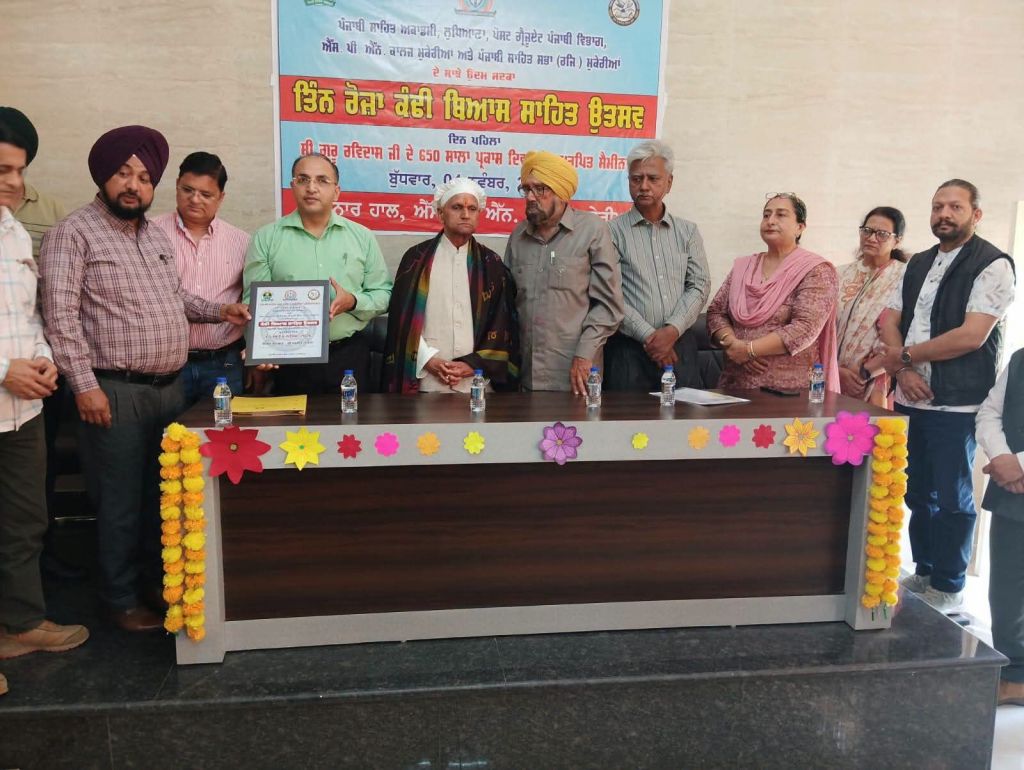
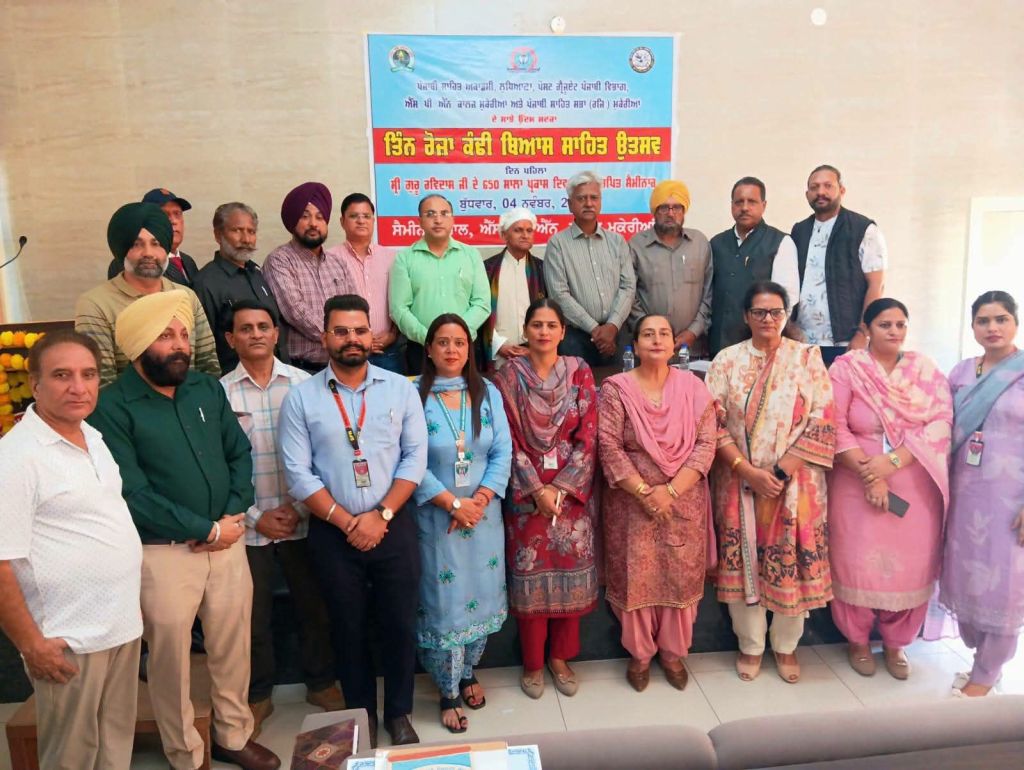
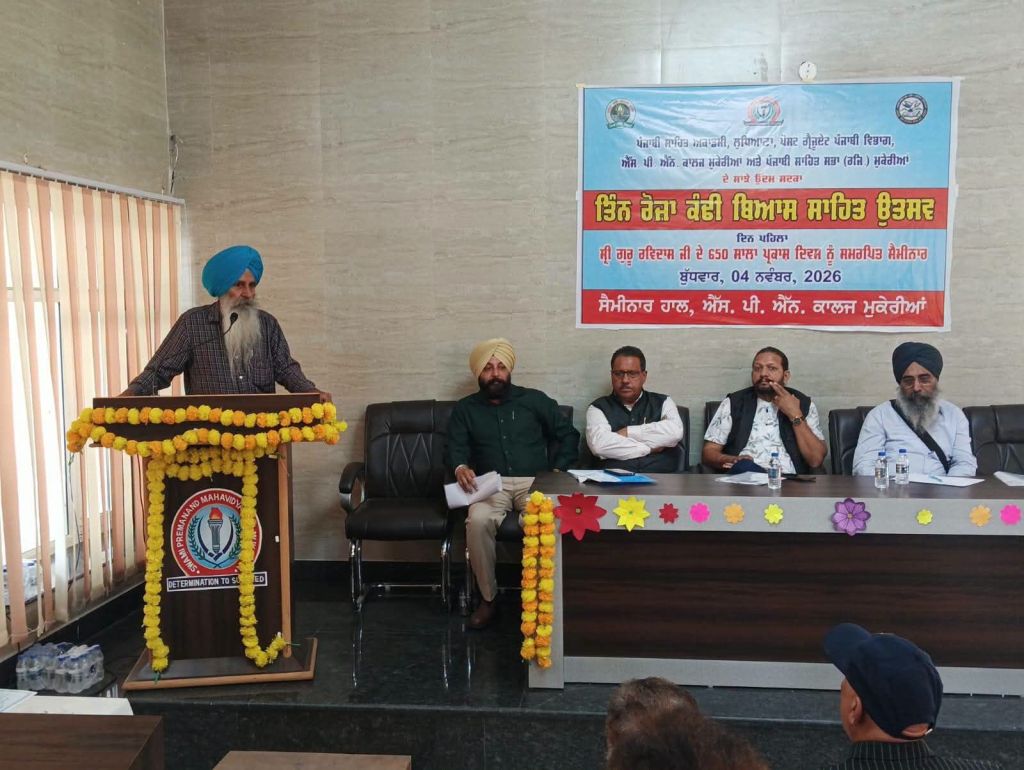
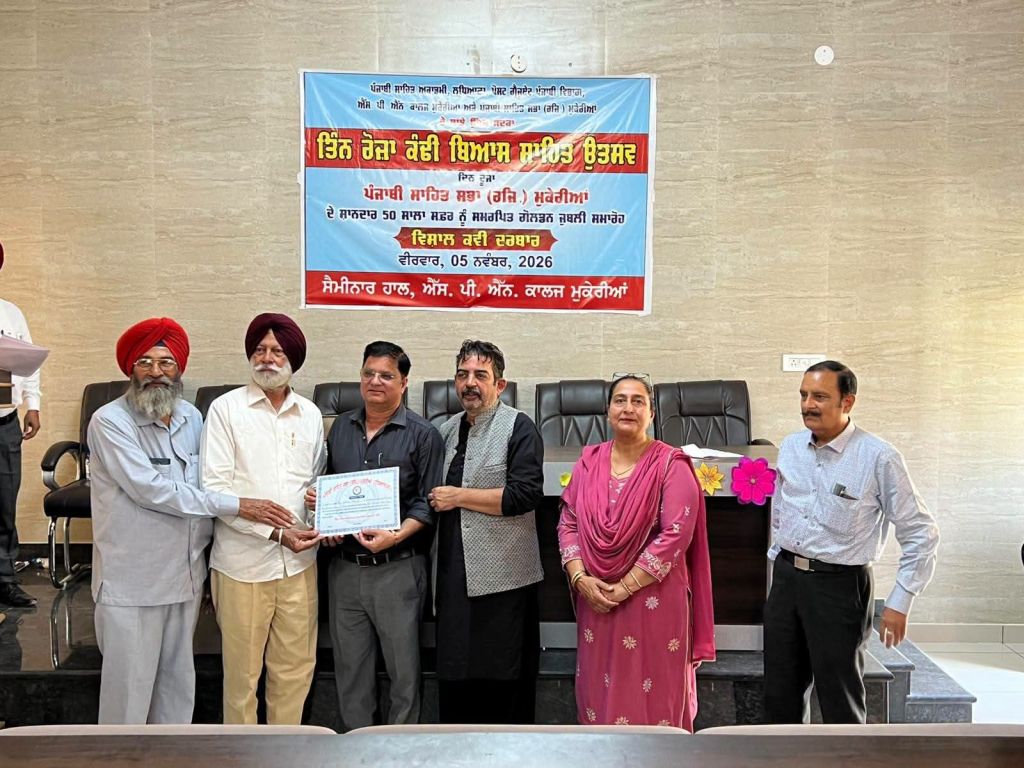
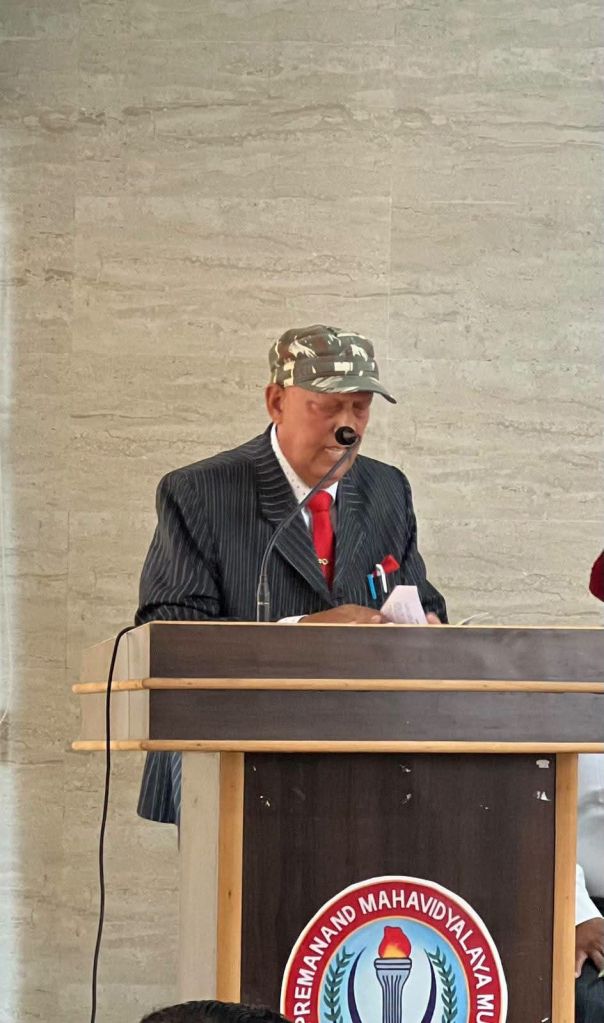
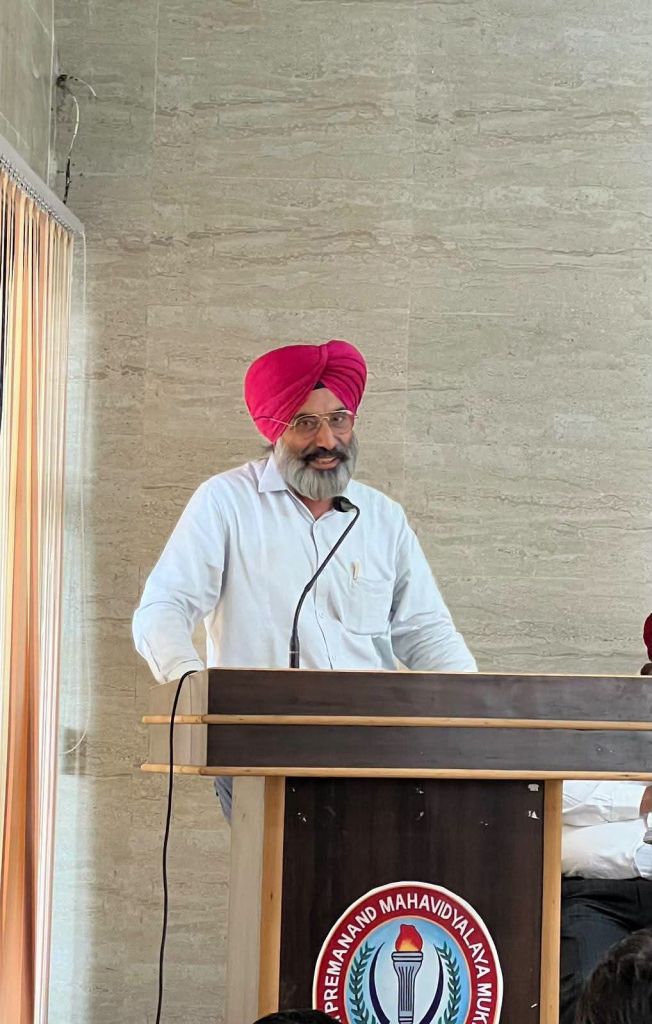
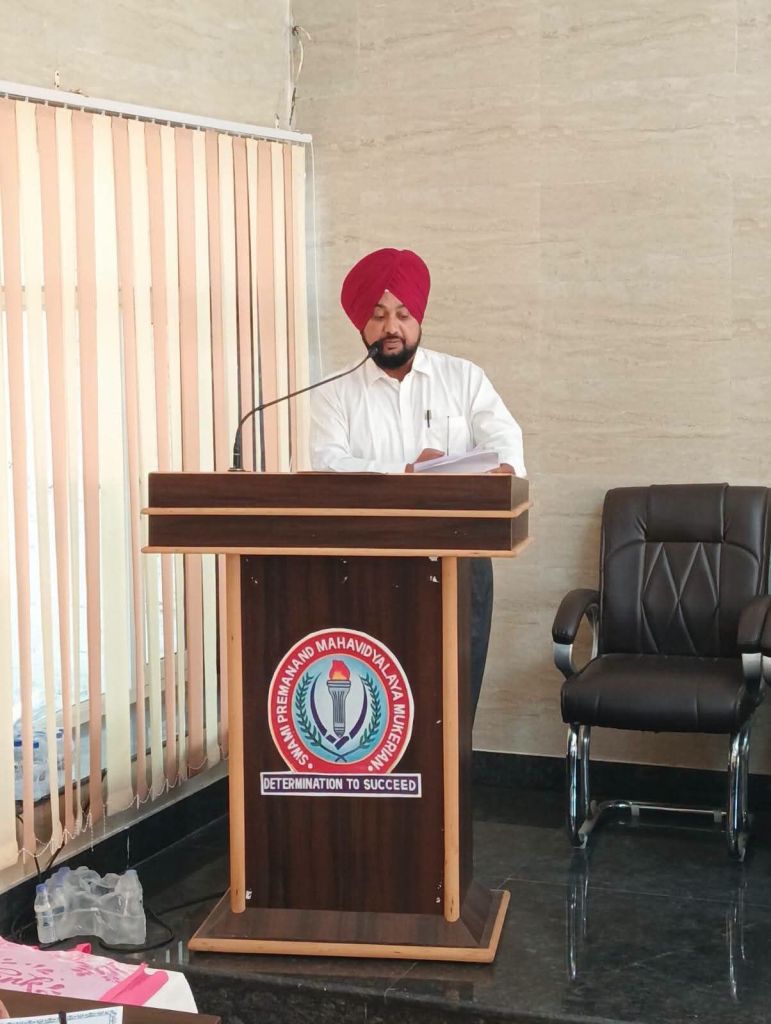
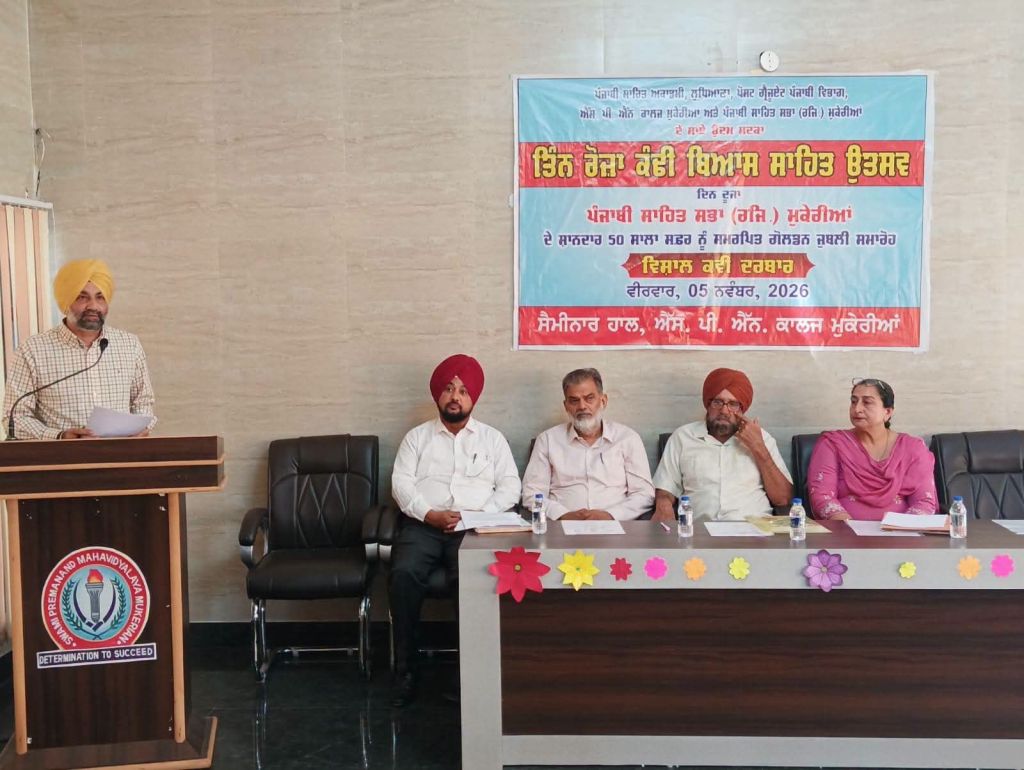
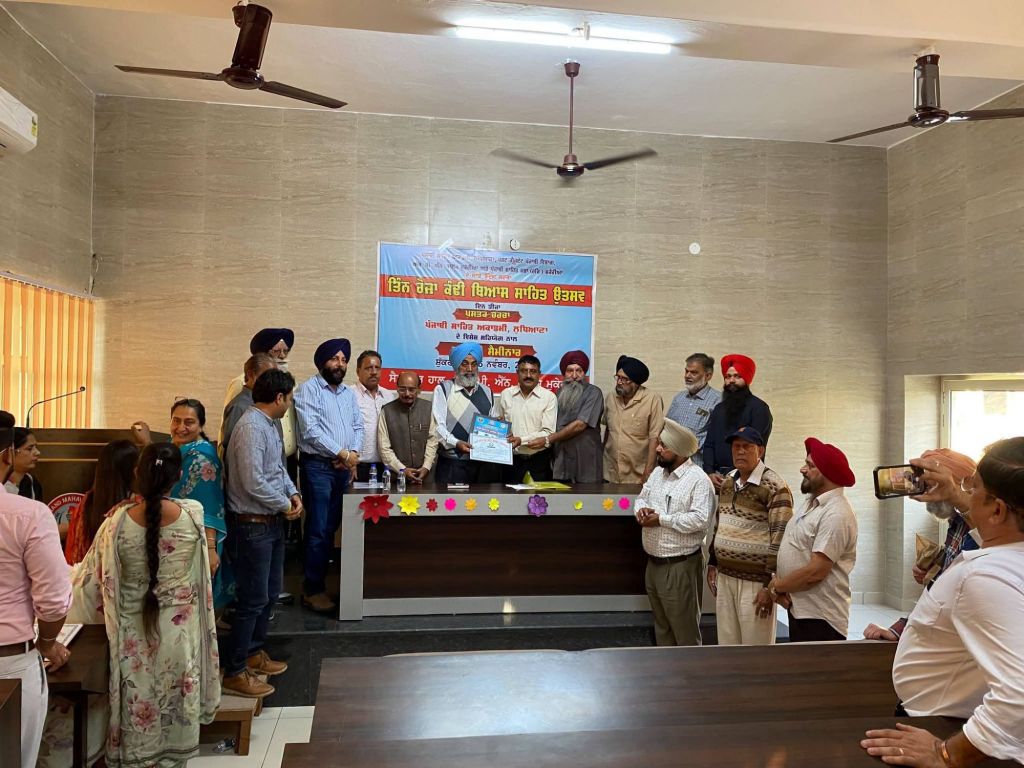
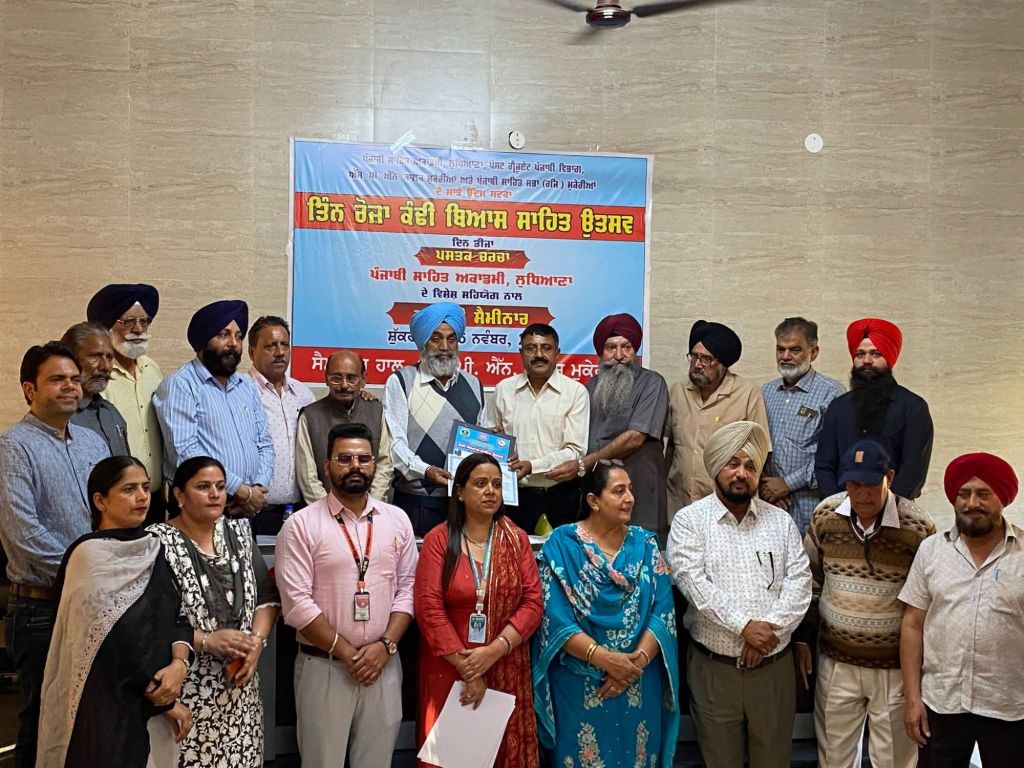
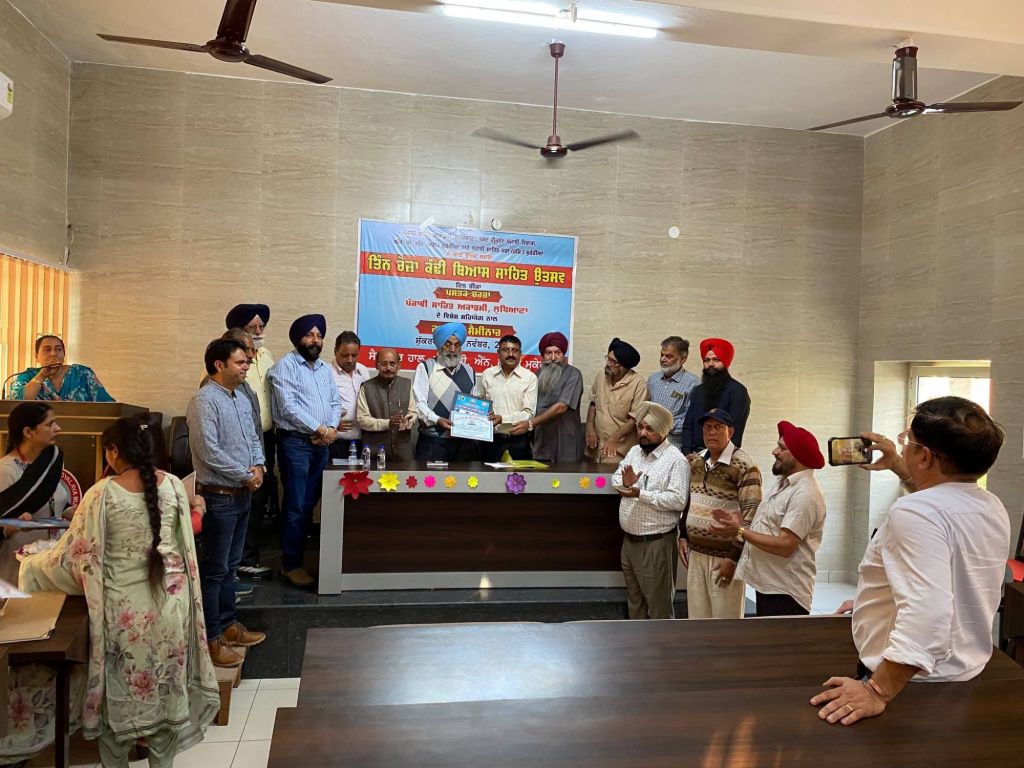
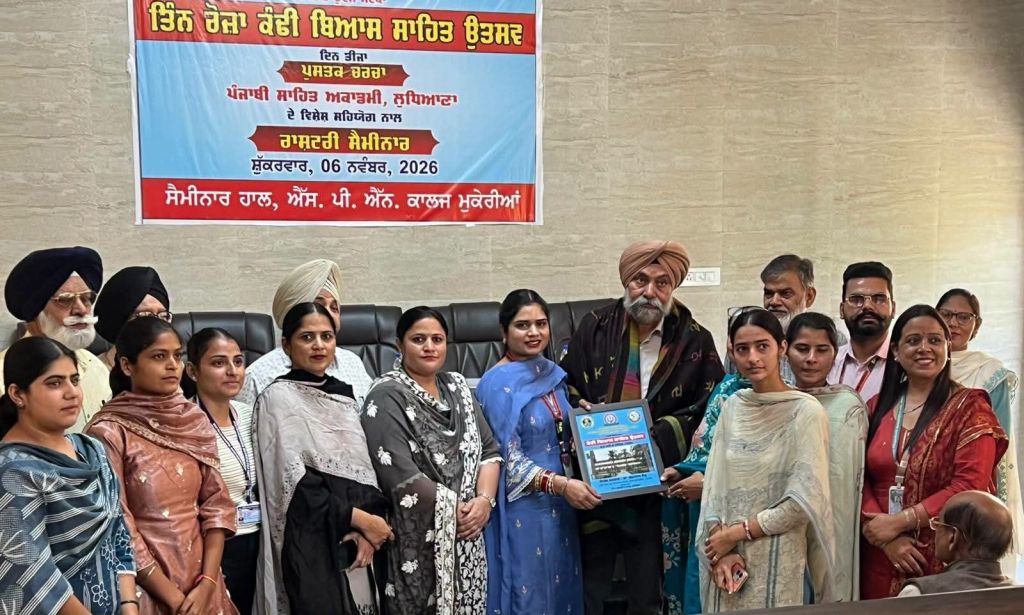
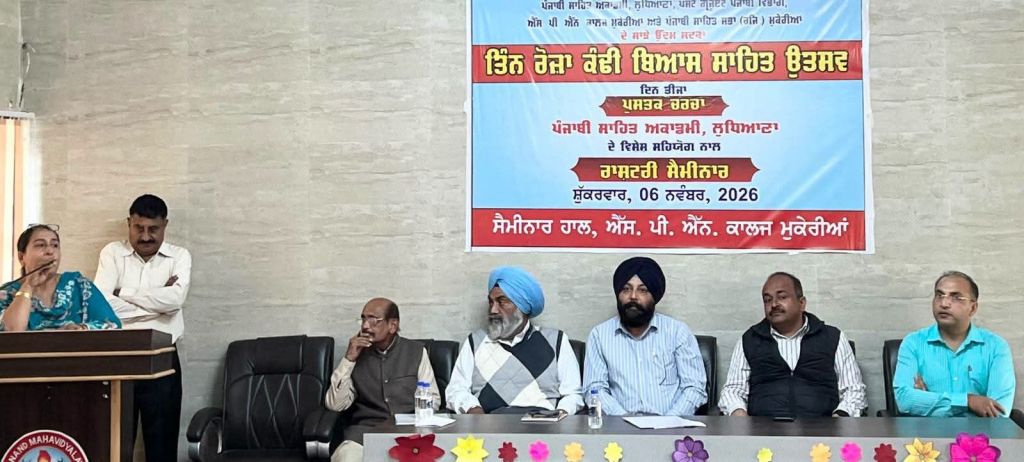
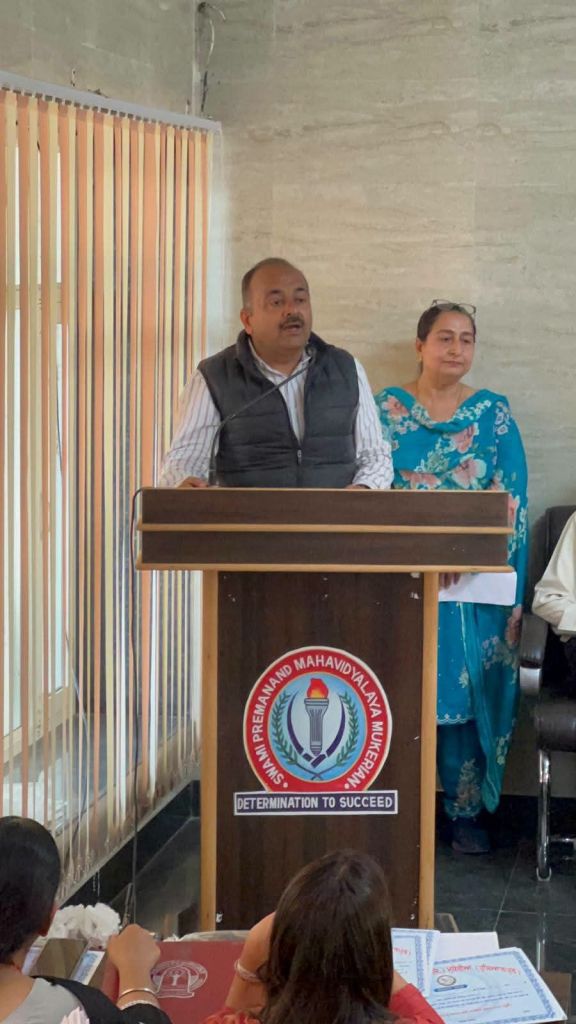
A three-day ‘Kandi Beas Sahit Utsav’ was inaugurated at Swami Premanand Mahavidyalaya, Mukerian with the objective of promoting Punjabi language, literature and cultural heritage, and encouraging literary activities,. The literary festival was jointly organised by the Punjabi Sahit Academi, Ludhiana, the Postgraduate Department of Punjabi, SPN College, Mukerian, and the Punjabi Sahit Sabha (Regd.), Mukerian. On the first day of the festival, a special seminar was organised to commemorate the 650th Prakash Purab of Sri Guru Ravidas Ji.
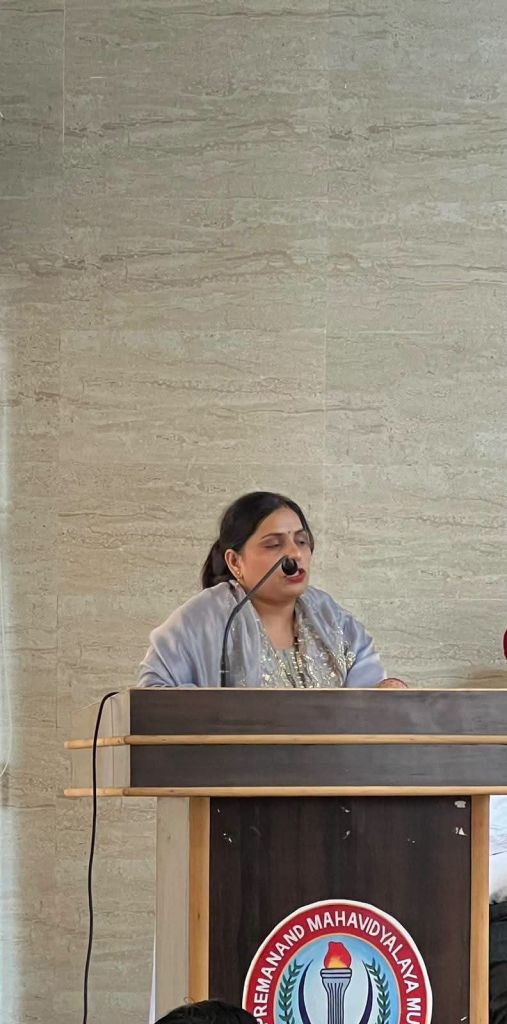
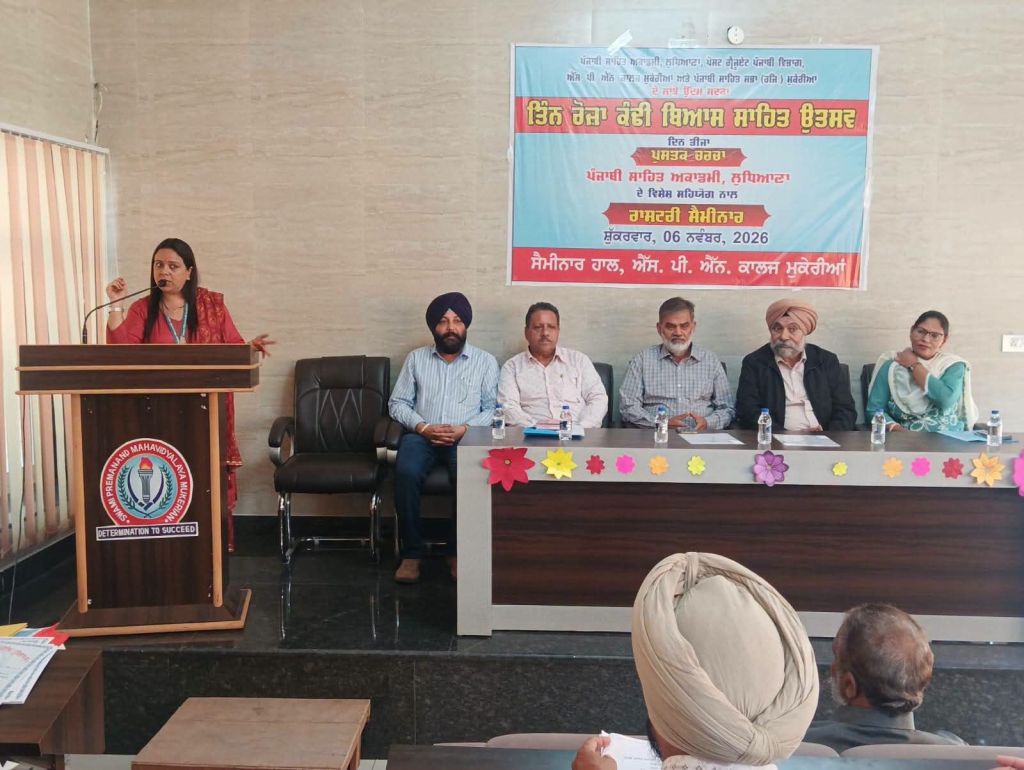
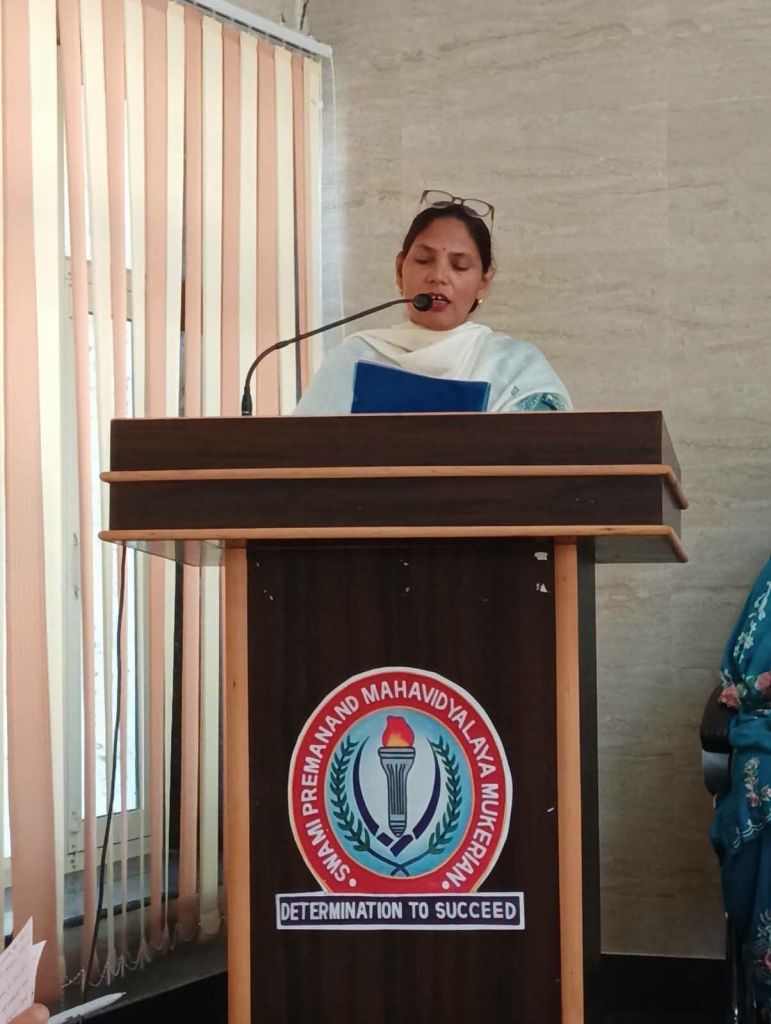
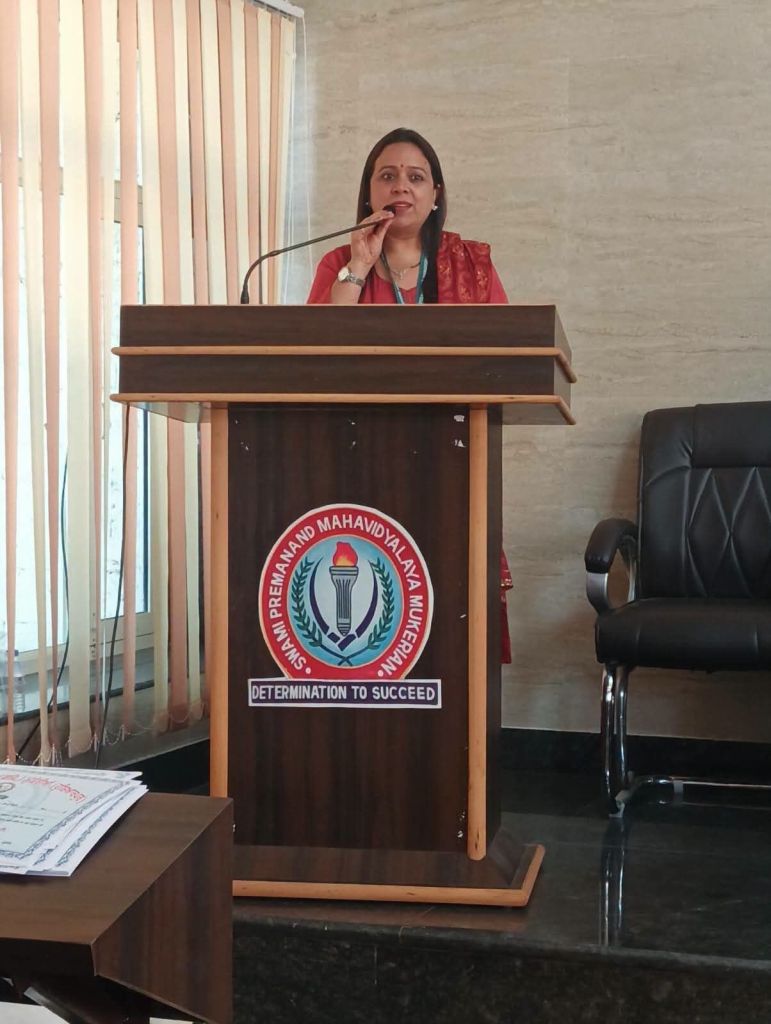
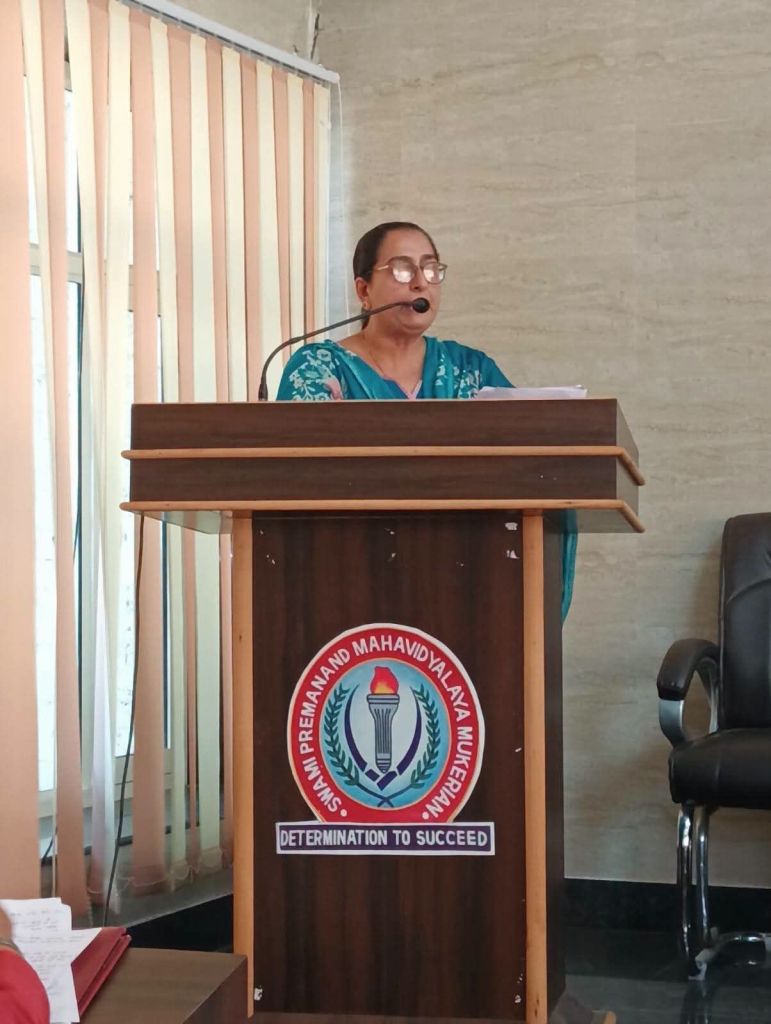
Dr. Kiranjit Kaur, Head, Post Graduate Department of Punjabi, delivered the welcome address. While highlighting the historical background of the department and its literary activities, she warmly welcomed the distinguished guests, scholars and eminent literary personalities attending the occasion.
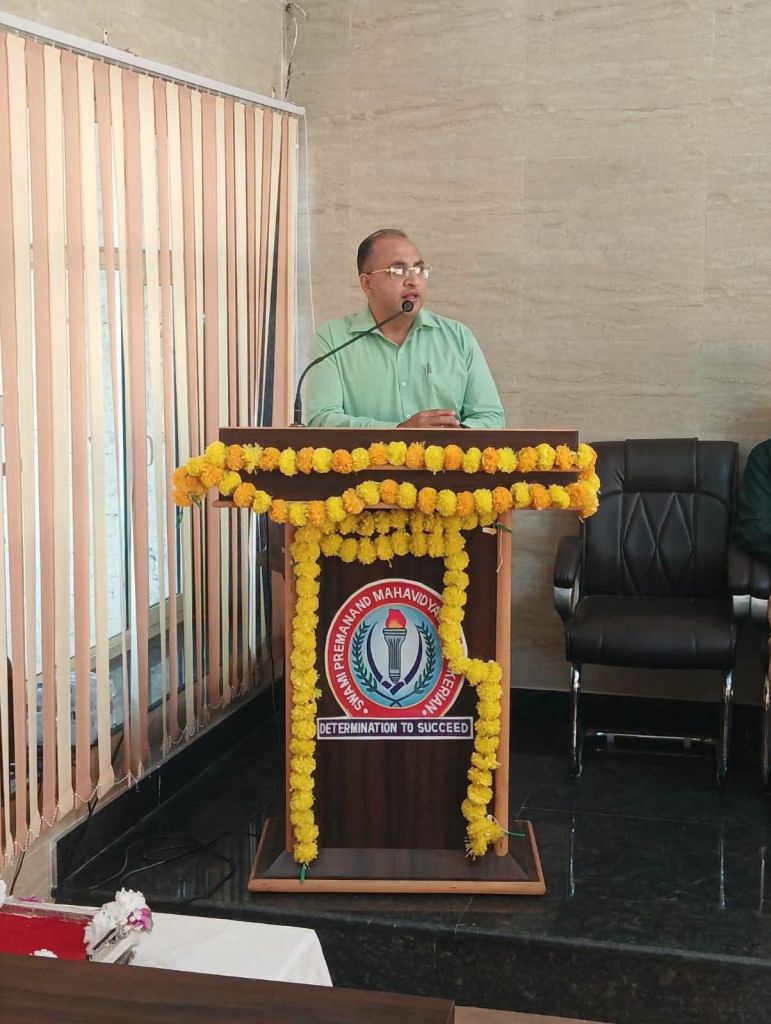
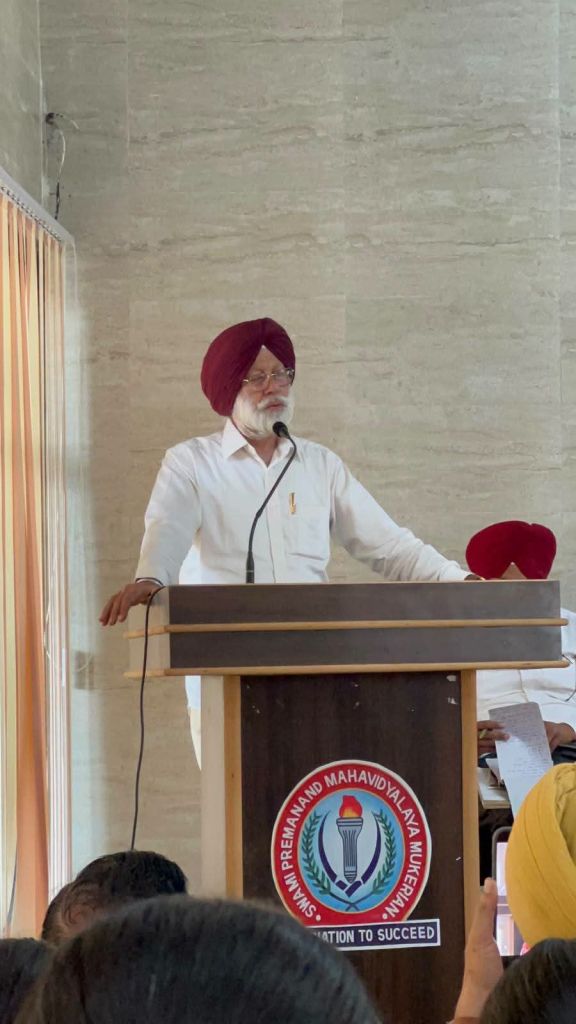
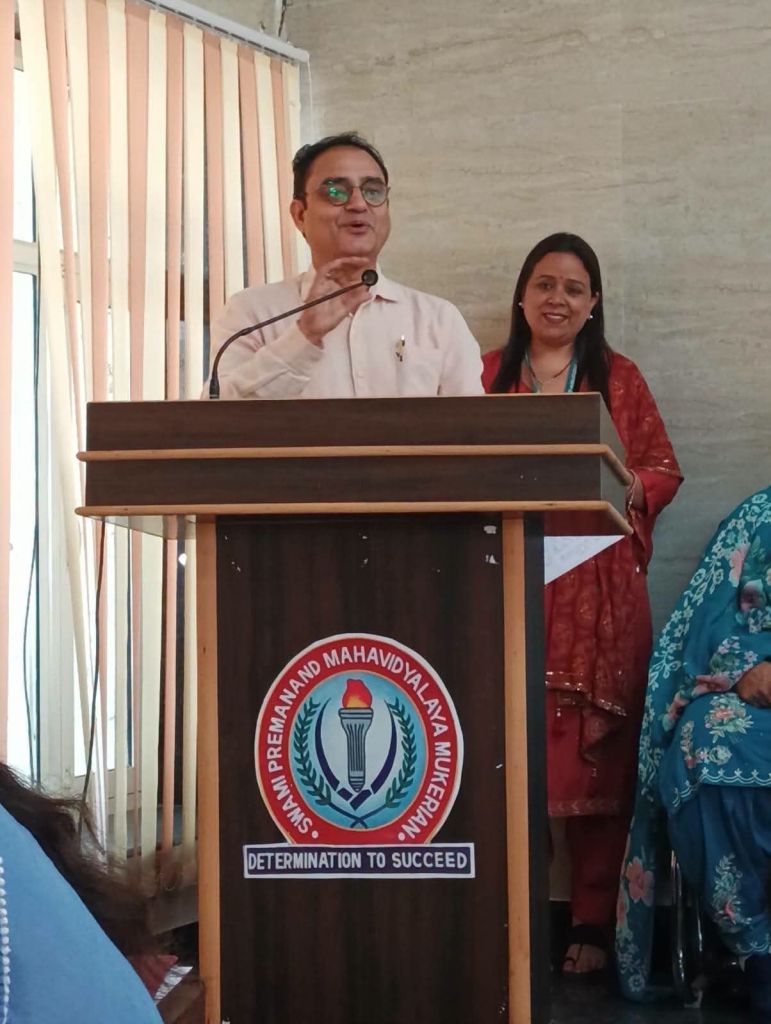
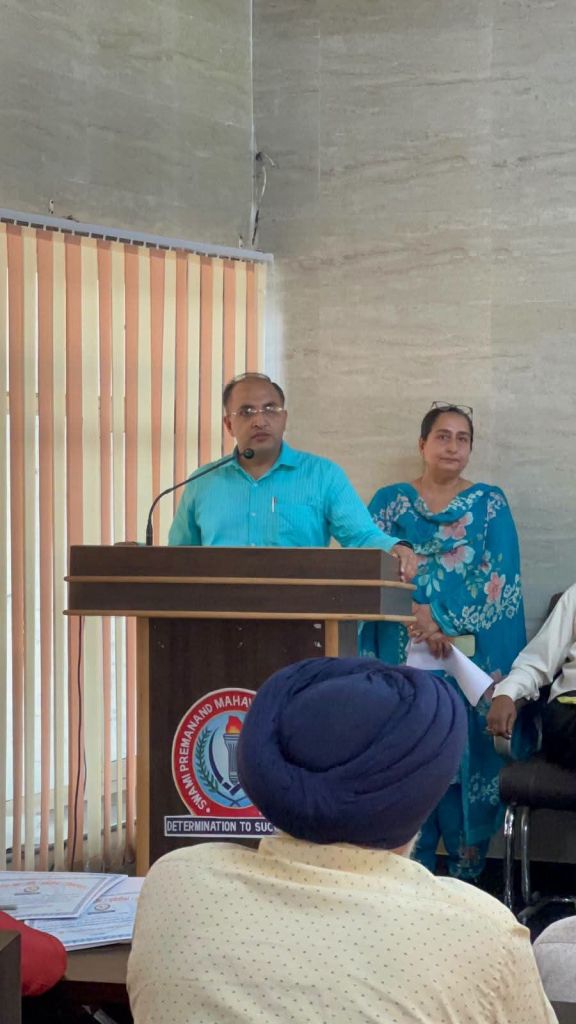
Principal Dr. Sameer Sharma, in his inaugural address, highlighted the significance of such literary initiatives. He remarked that literary gatherings play a vital role in connecting the younger generation with their language, literature and cultural heritage.
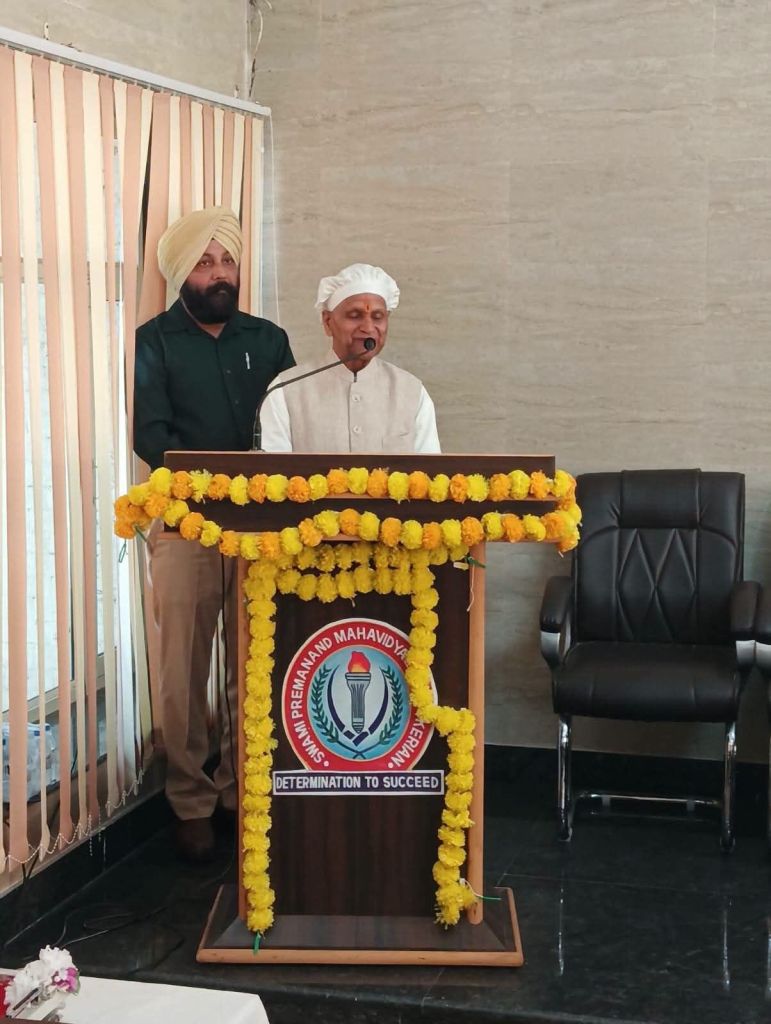
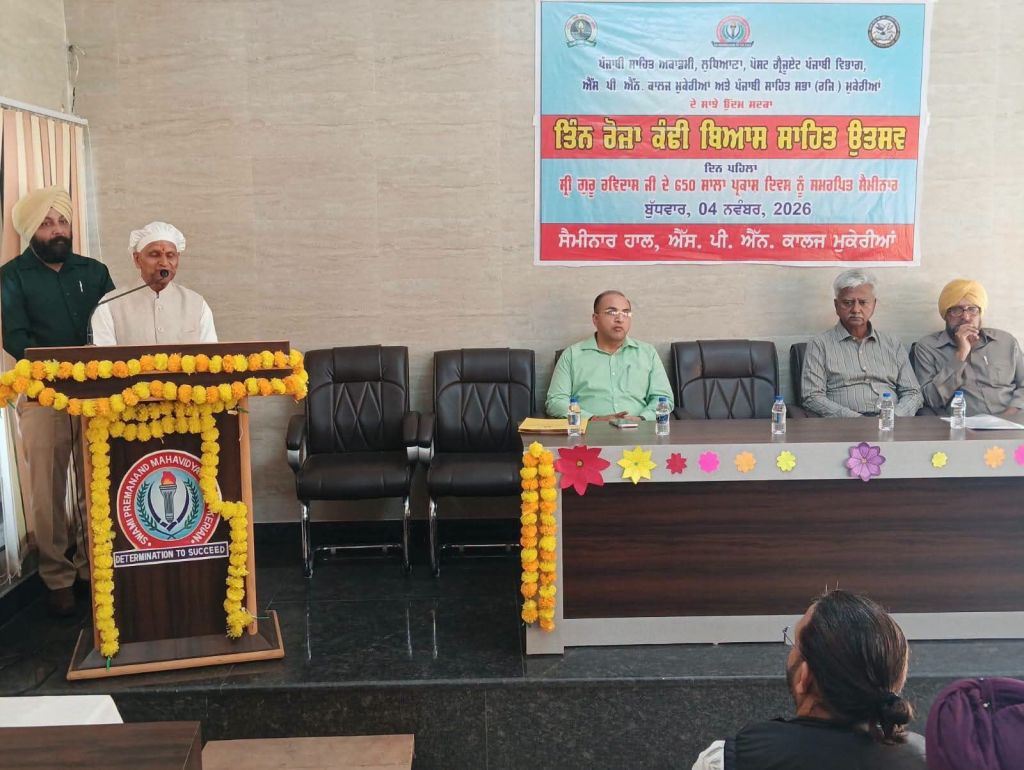
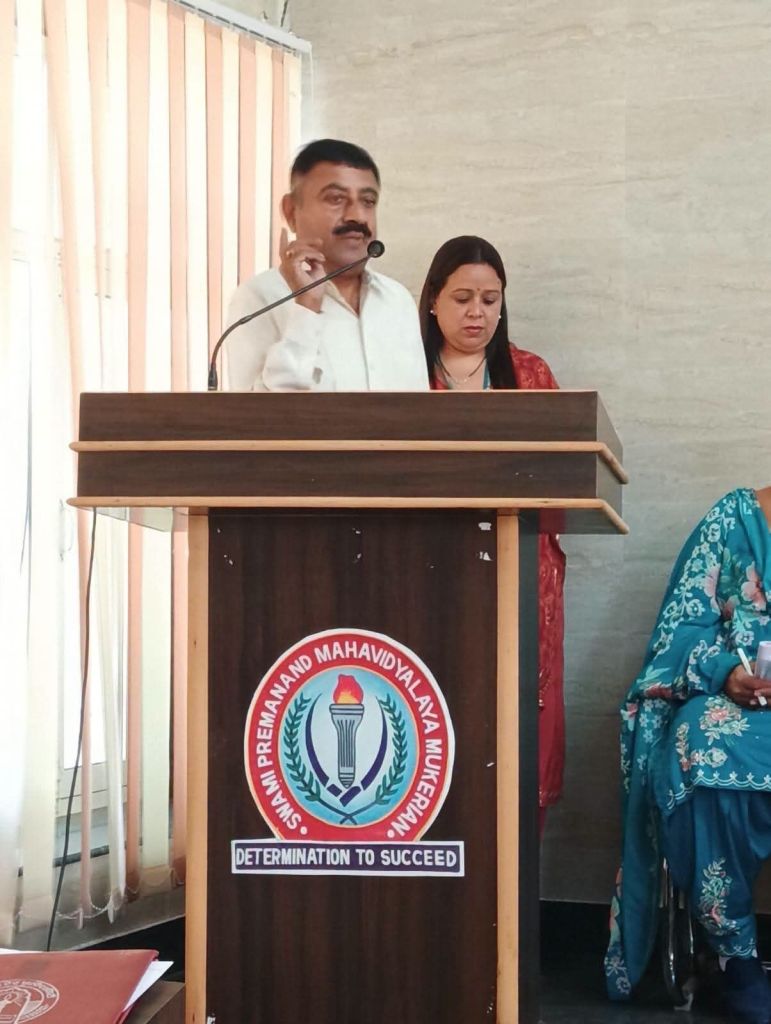
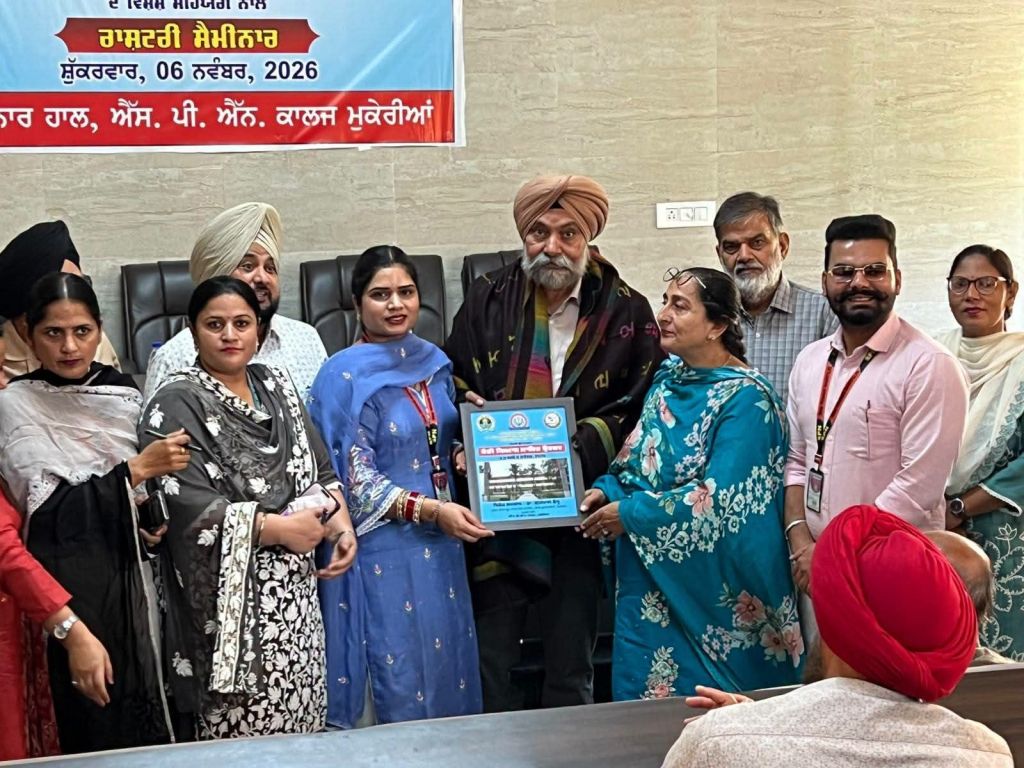
Mahant Shri Ramesh Das Ji, Member of the Managing Committee, SPN College, graced the inaugural session of the seminar as the Chief Guest. In his address, he highlighted the significance of the teachings and philosophy of Sri Guru Ravidas Ji, emphasising that Guru Sahib conveyed the universal message of equality, love and brotherhood to humanity. He observed that literature serves as an important medium for preserving the historical memory, cultural heritage and linguistic identity of a community. Referring to Punjabi literature, he stated that the sacred compositions of the Sikh Gurus, the works of Sufi poets, Qissa poetry, folk songs, Vaaran, short stories and novels beautifully portray the diverse dimensions of Punjabi life and culture.
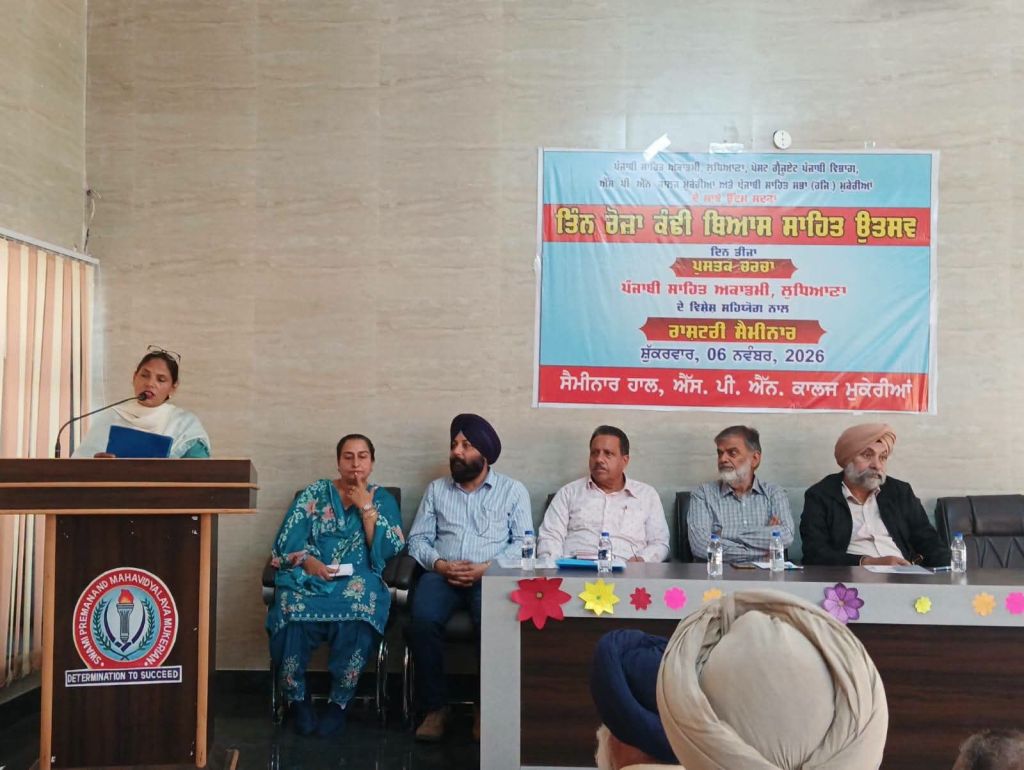
Dr. Rajesh Lakhanpal, Auditor, SPN College Managing Committee, attended the occasion as the Guest of Honour and shared his valuable insights. He stated that the teachings of Sri Guru Ravidas Ji inspire humanity to rise above caste-based discrimination and social divisions and embrace equality, humanism and ethical values. He further observed that literature is an integral part of human life, as it connects individuals with their roots, cultural heritage and social values while broadening their outlook and providing a new direction to their thinking.
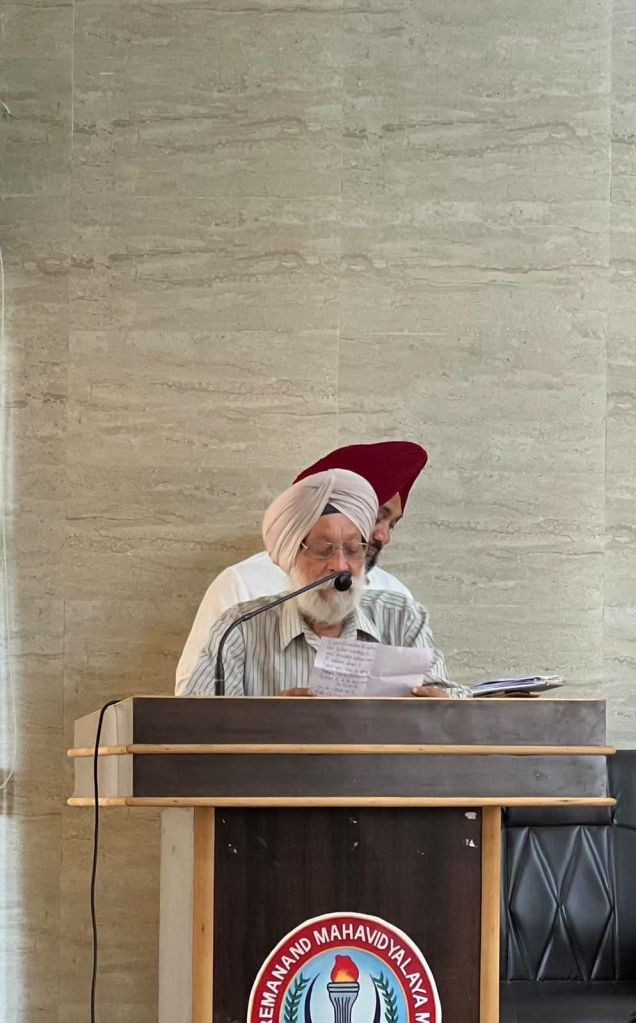
Principal Navtej Garhdiwala, a renowned poet and thinker, presented his research paper, sharing valuable perspectives on the philosophy of Sri Guru Ravidas Ji, his social consciousness, humanistic outlook and the message of equality. Subsequently, Dr. Gurnam Singh Chanour also presented his research paper and shared significant insights related to the theme.
During the academic session, Dr. Jaswant Rai, Research Officer, Office of the District Language Officer, Hoshiarpur, participated as the Chief Guest. Drawing upon the sacred compositions of Guru Ravidas Ji, he elaborated on the relevance of his philosophy and teachings in the contemporary social context. He also highlighted the timeless significance and universal appeal of Guru Sahib’s ideology.
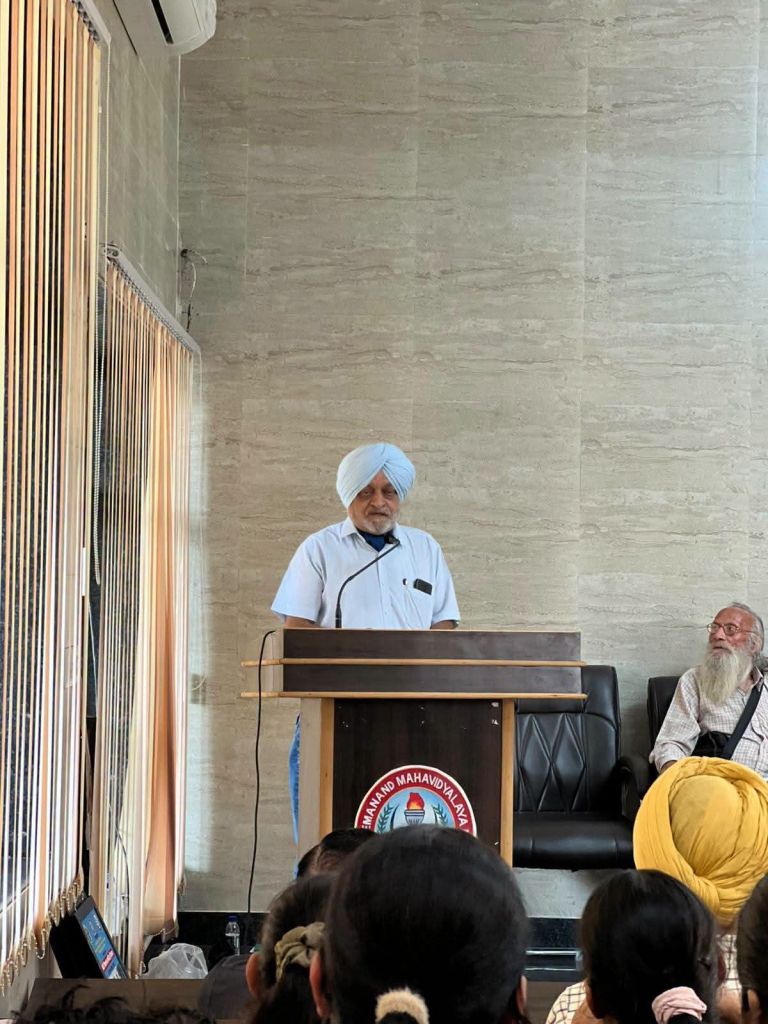
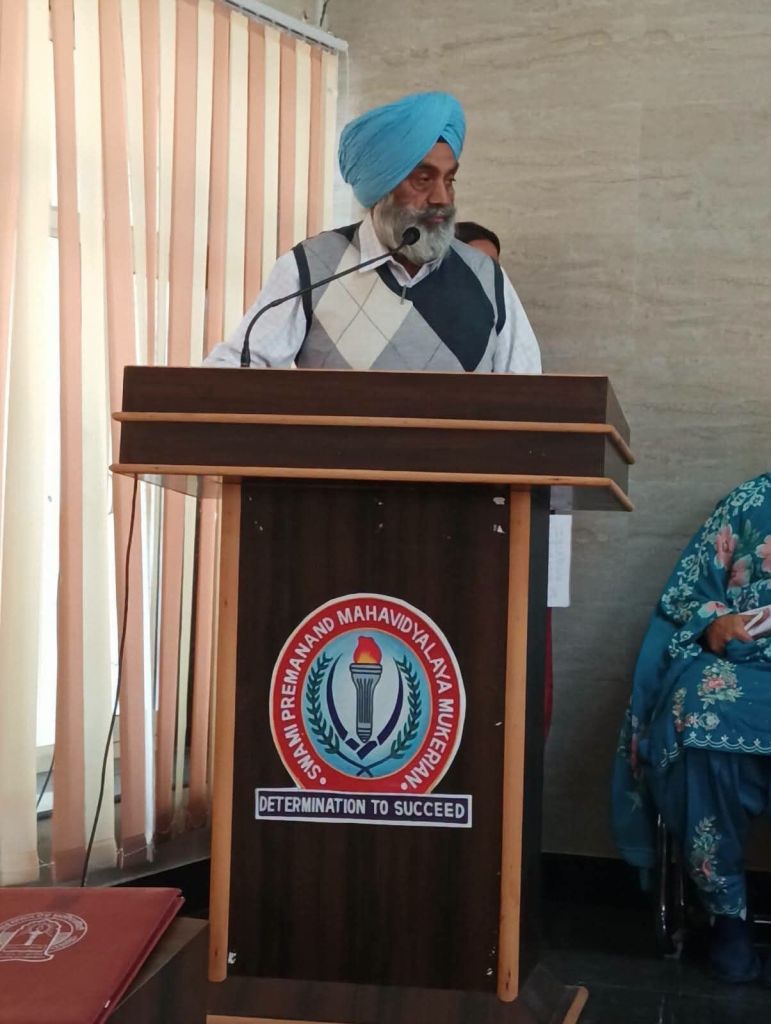
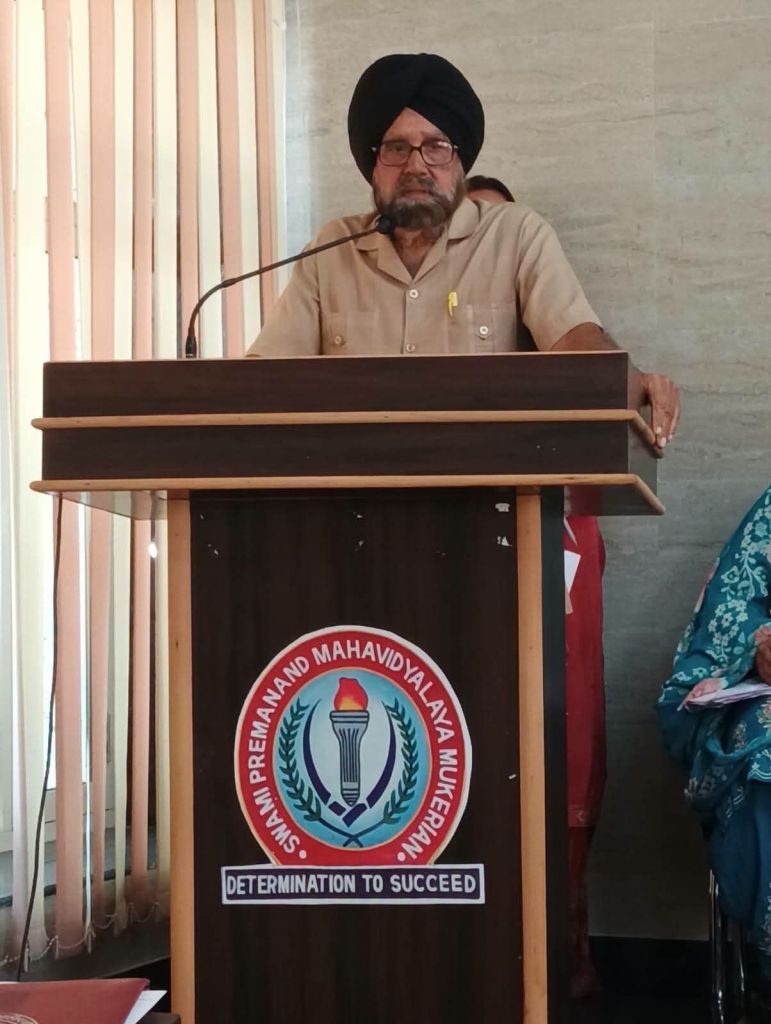
The session was presided over by Prof. Jagdish Singh, Director, Naad Pargaas, Sri Amritsar. In his presidential address, he emphasised the need to explore the deeper dimensions of Guru Ravidas Ji’s Bani from diverse perspectives, free from the limitations of colonial discourse. He observed that the Bani of Guru Ravidas Ji could not be adequately analysed solely through Western critical methodologies. He stressed the need to develop a new theoretical vocabulary rooted in Indian socio-cultural realities to gain a deeper understanding of Guru Sahib’s philosophy.
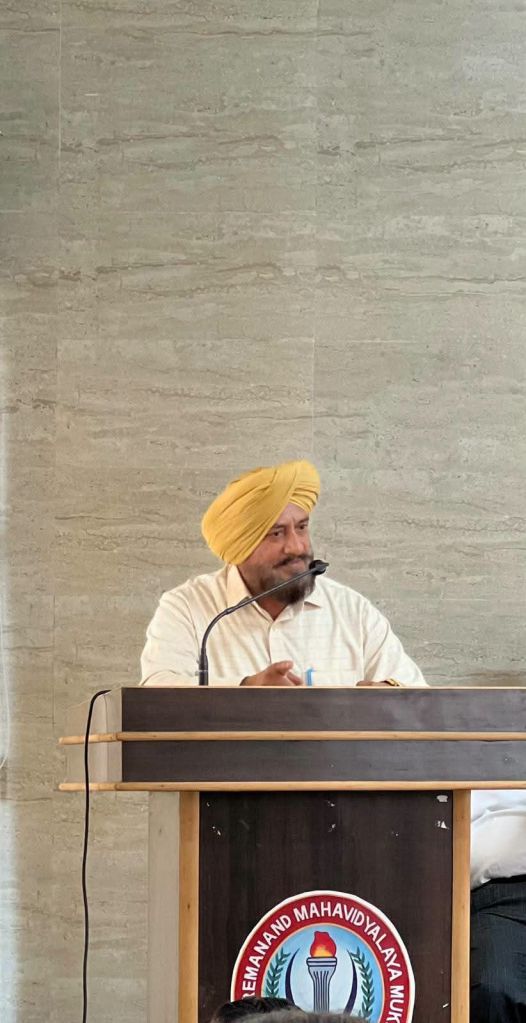
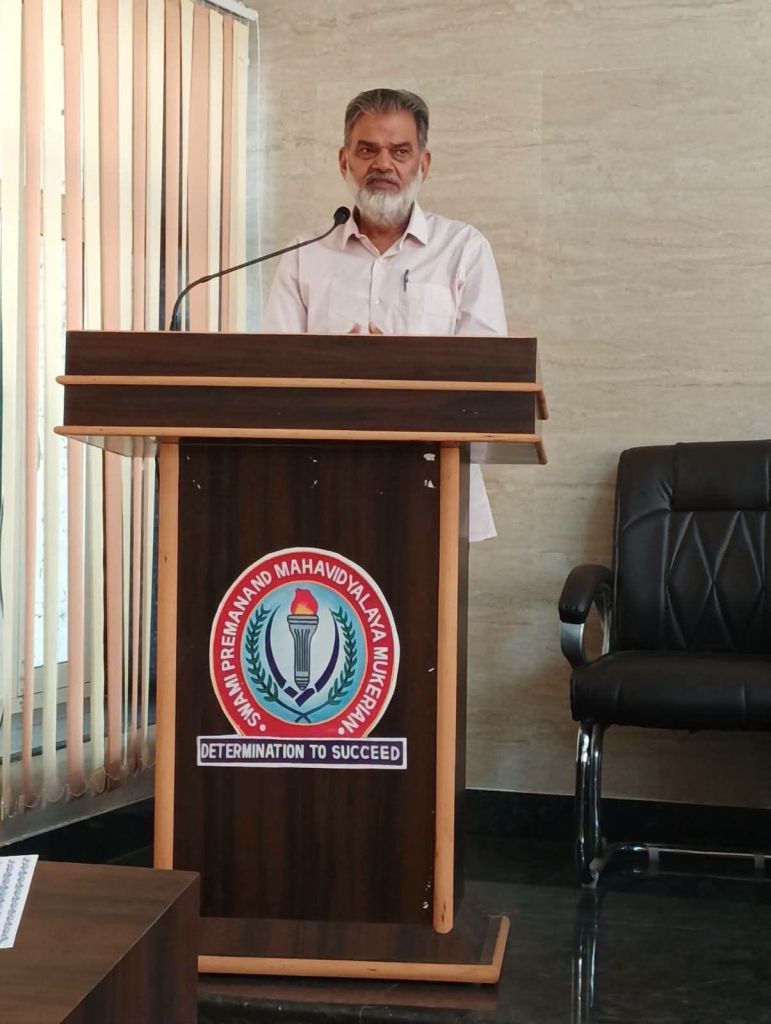
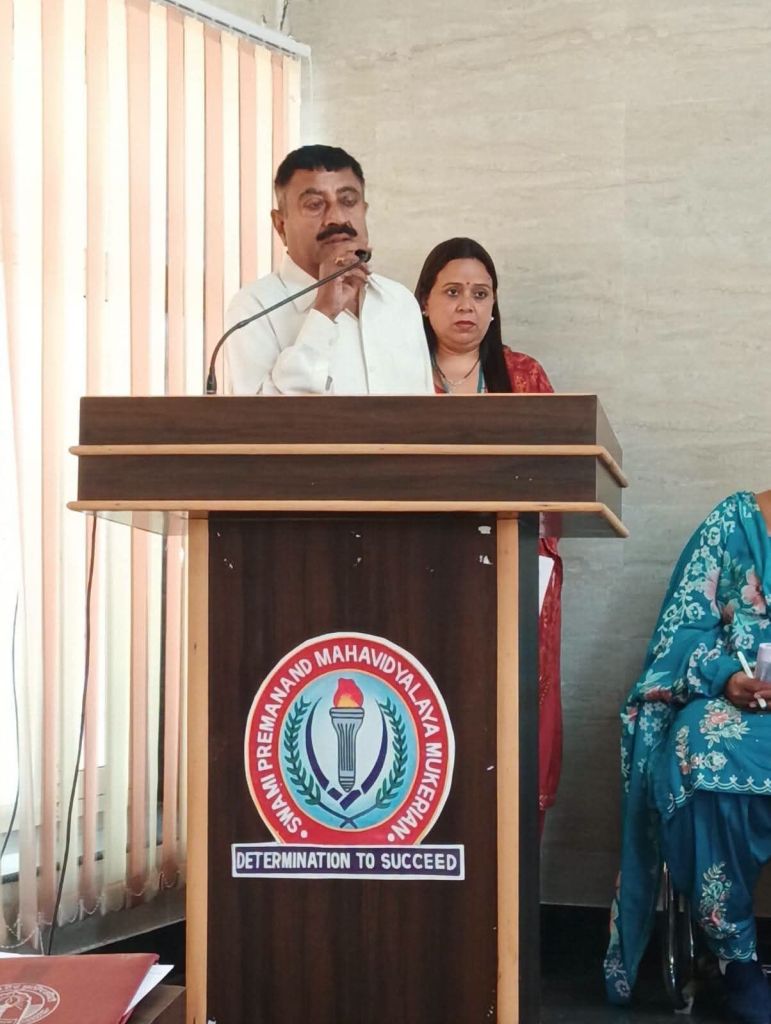
At the conclusion of the session, Dr. Sarabjot Singh, President of the Punjabi Sahit Sabha (Regd.), Mukerian, delivered the vote of thanks. He expressed his gratitude to the Chief Guests, research scholars, academicians and all the literature enthusiasts for their valuable presence and participation. He particularly appreciated the support and cooperation extended by Principal Dr. Sameer Sharma, the SPN College Managing Committee and all the collaborators in making this literary initiative a success.
Second Day of Kandi-Beas Literary Festival Marked by Literary Discussions, Book Releases and a Grand Poets’ Meet
Sahitya Akademi Award-winning poet Darshan Buttar and Dhahan Prize-winning novelist Balbir Parwana grace the occasion
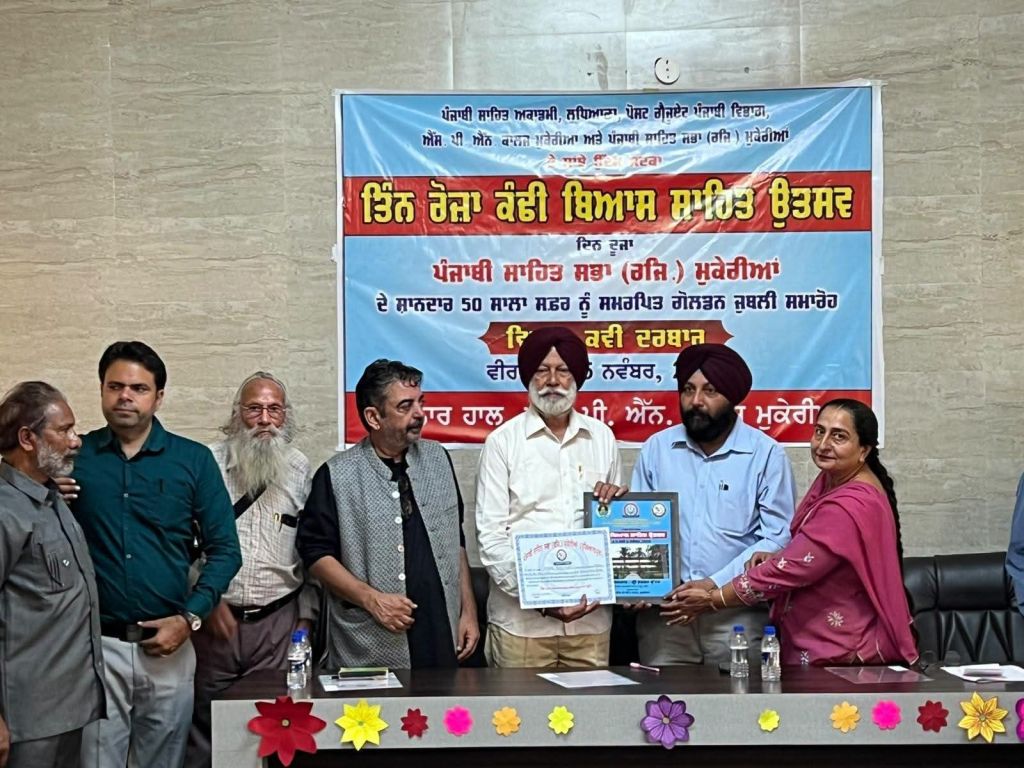
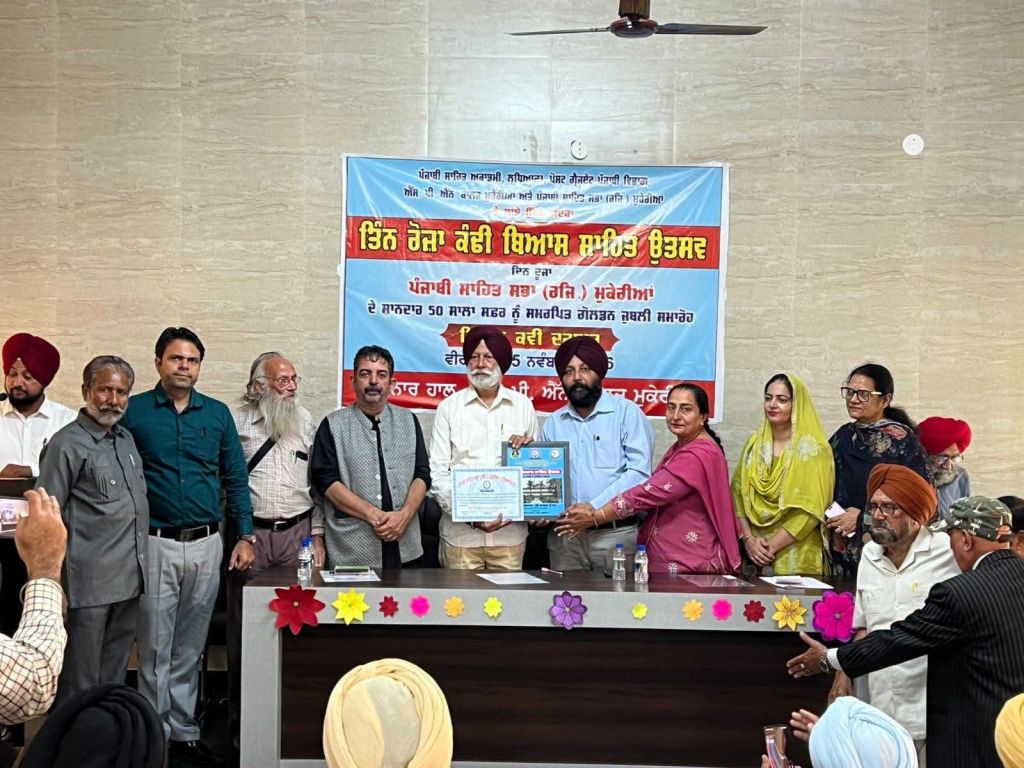
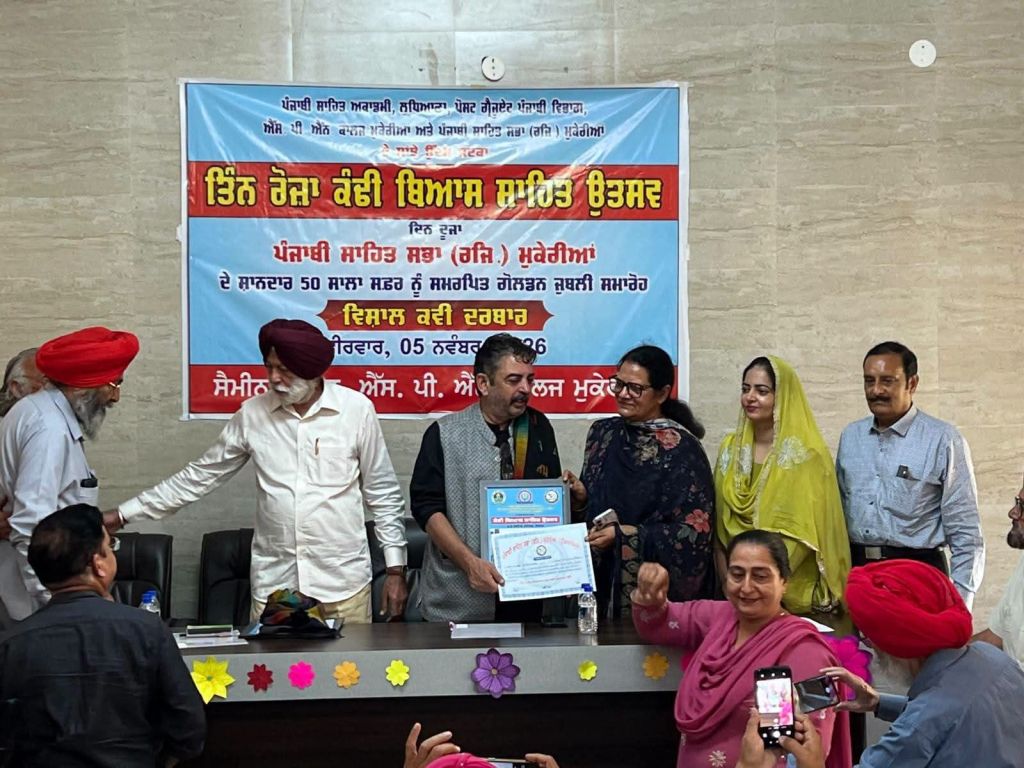
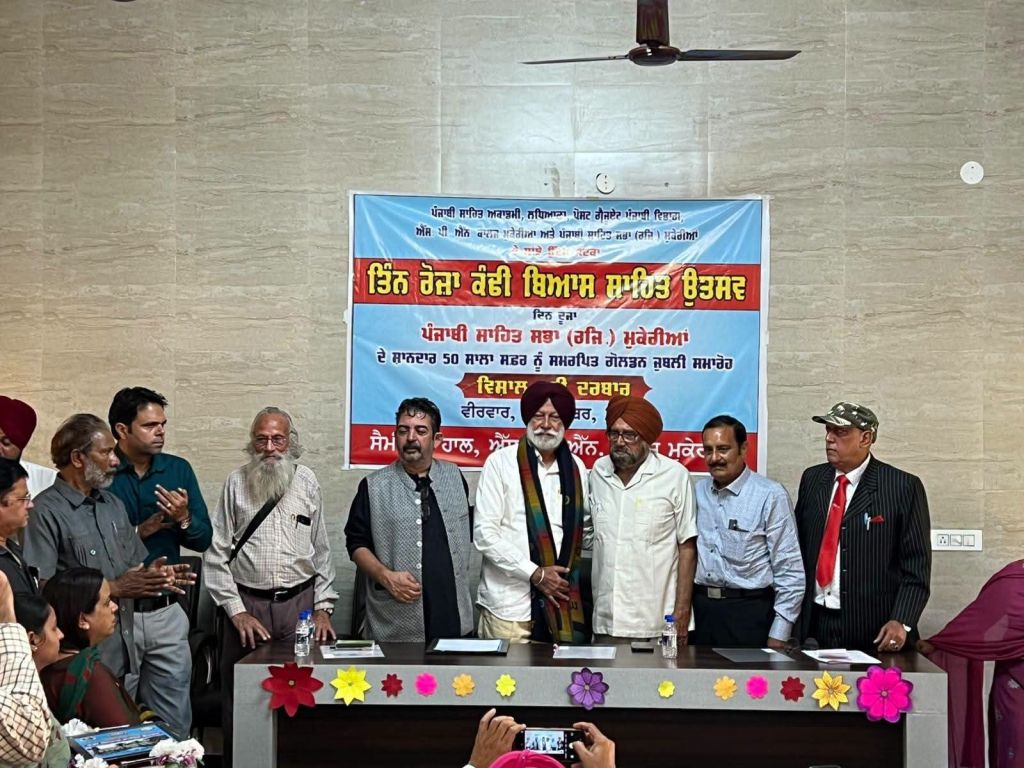
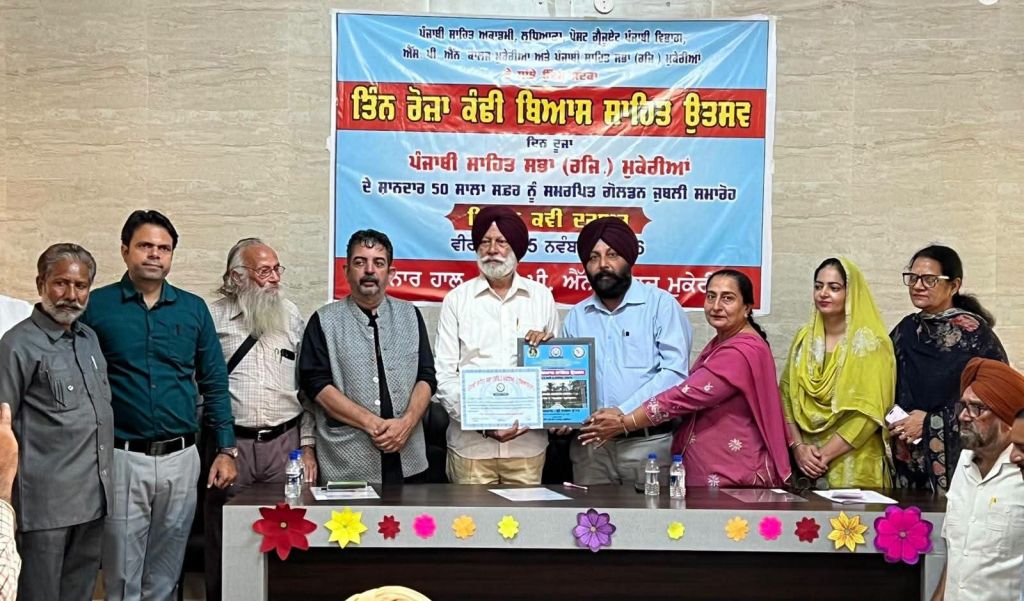
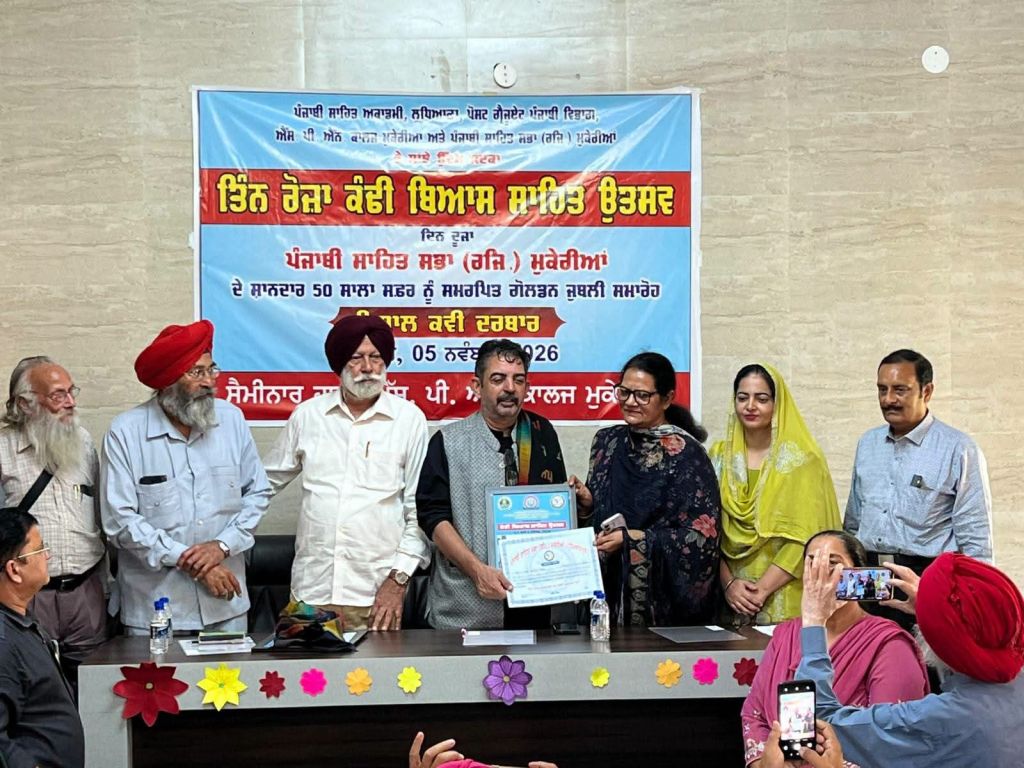
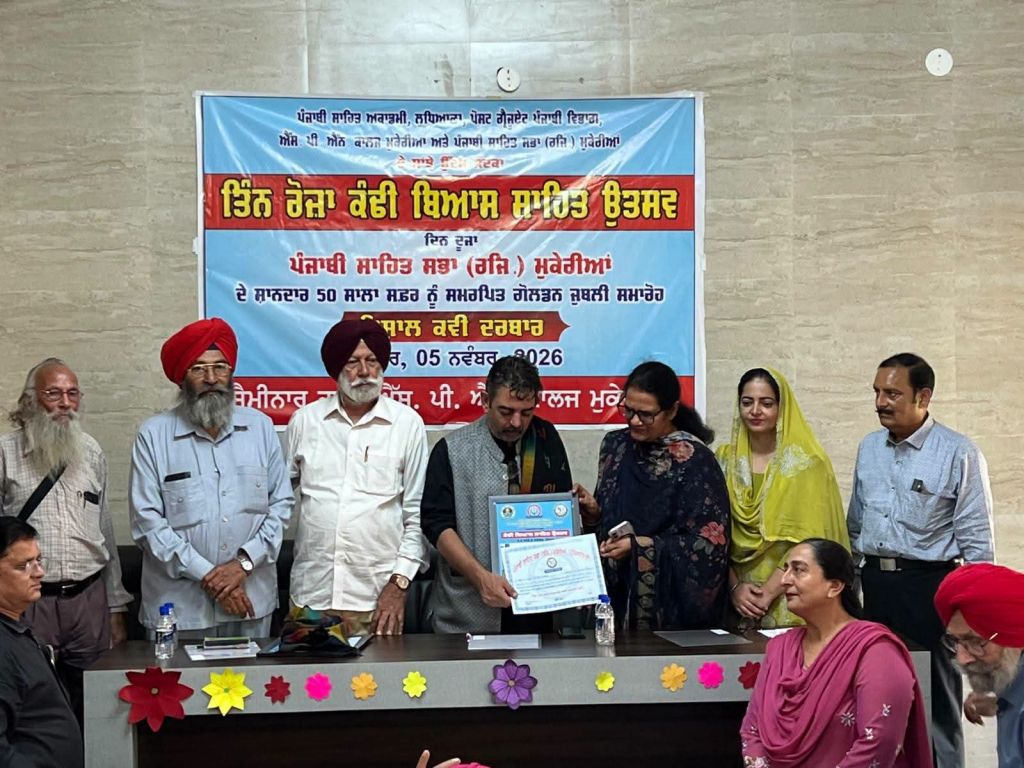
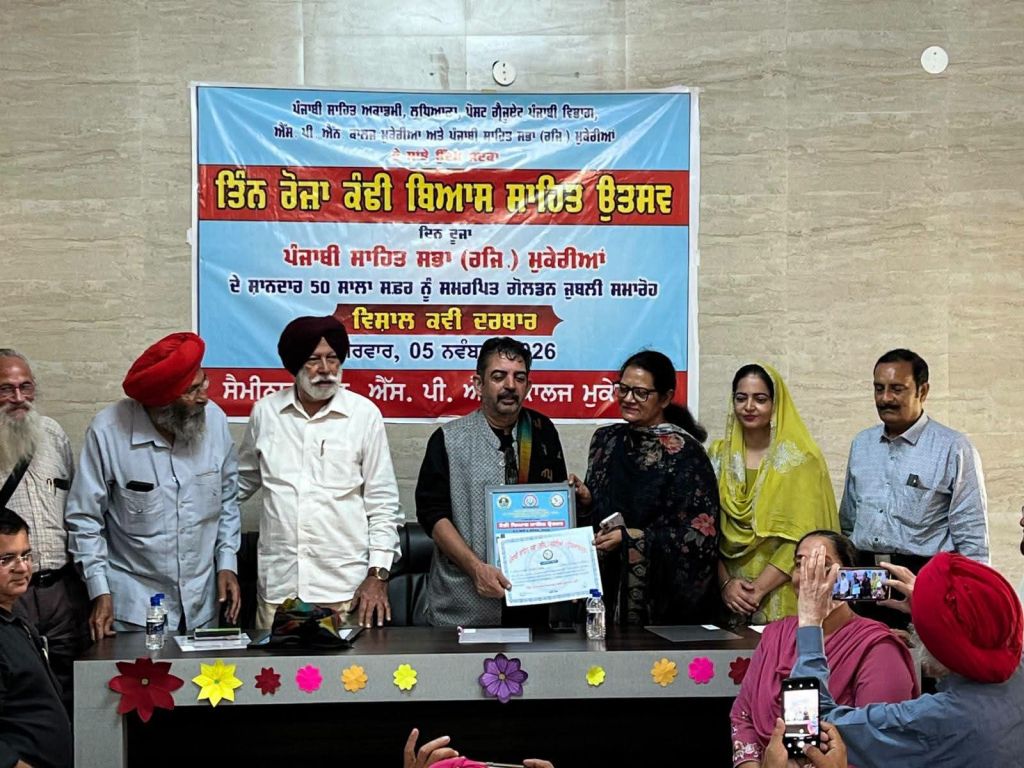
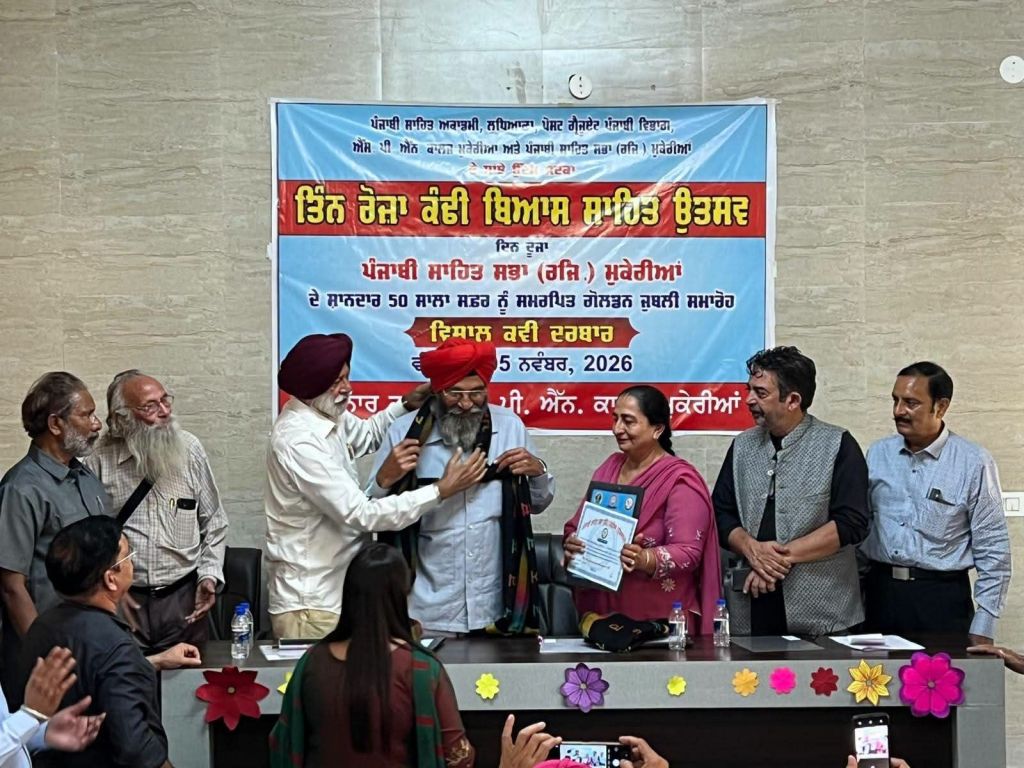
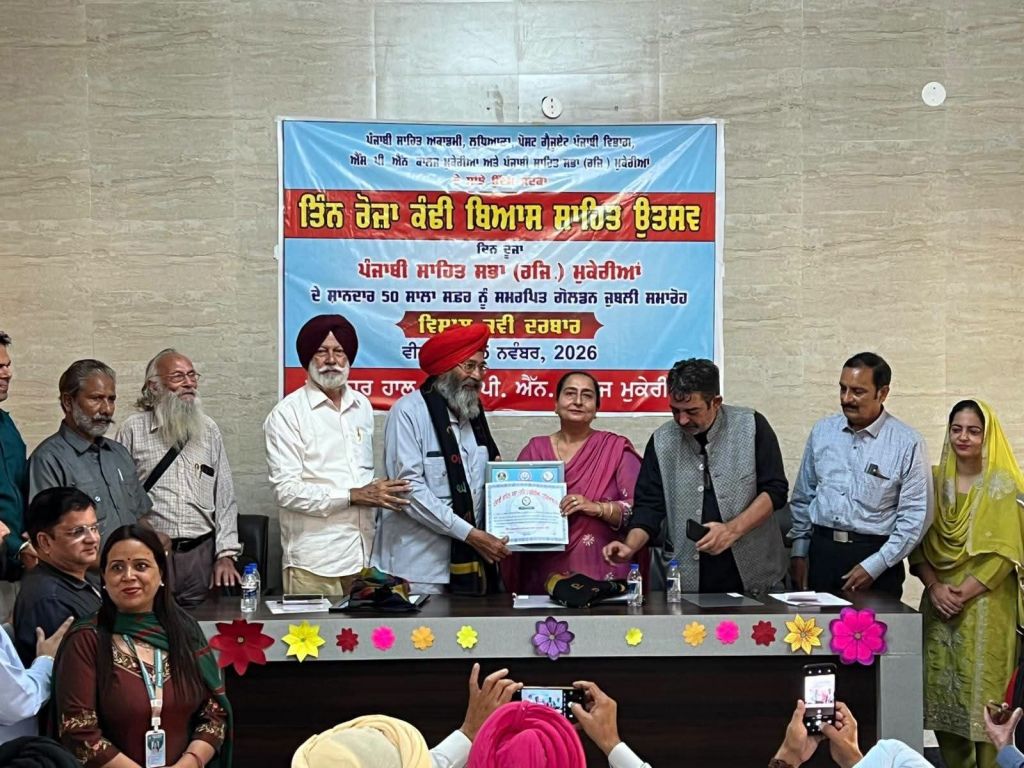
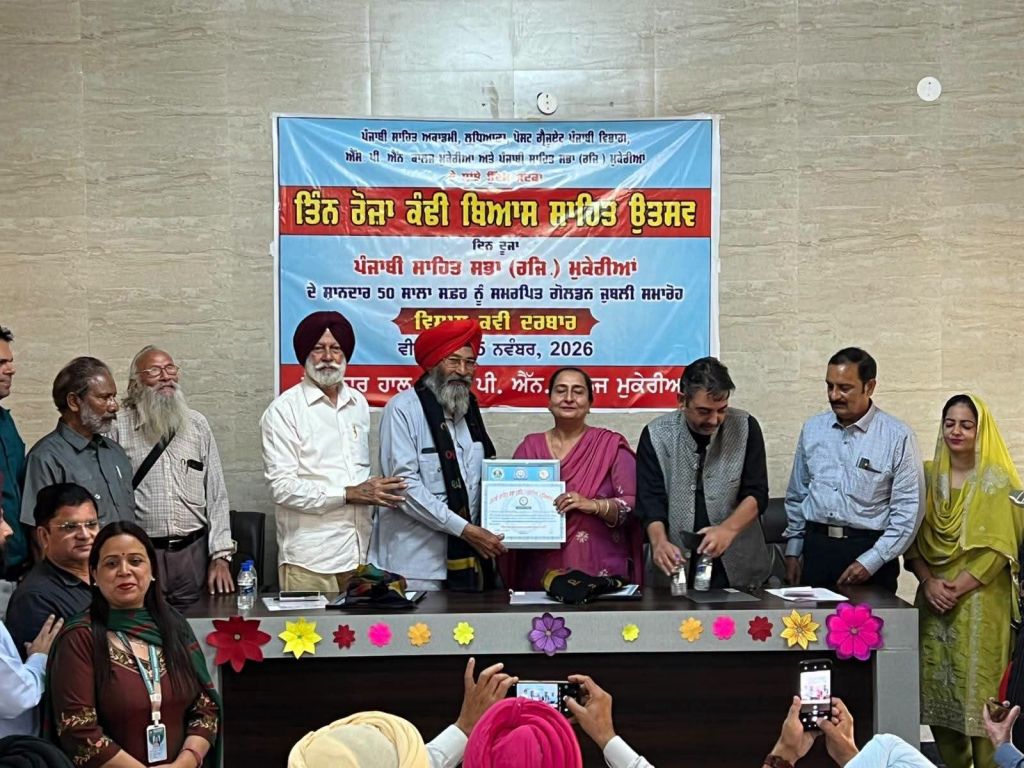
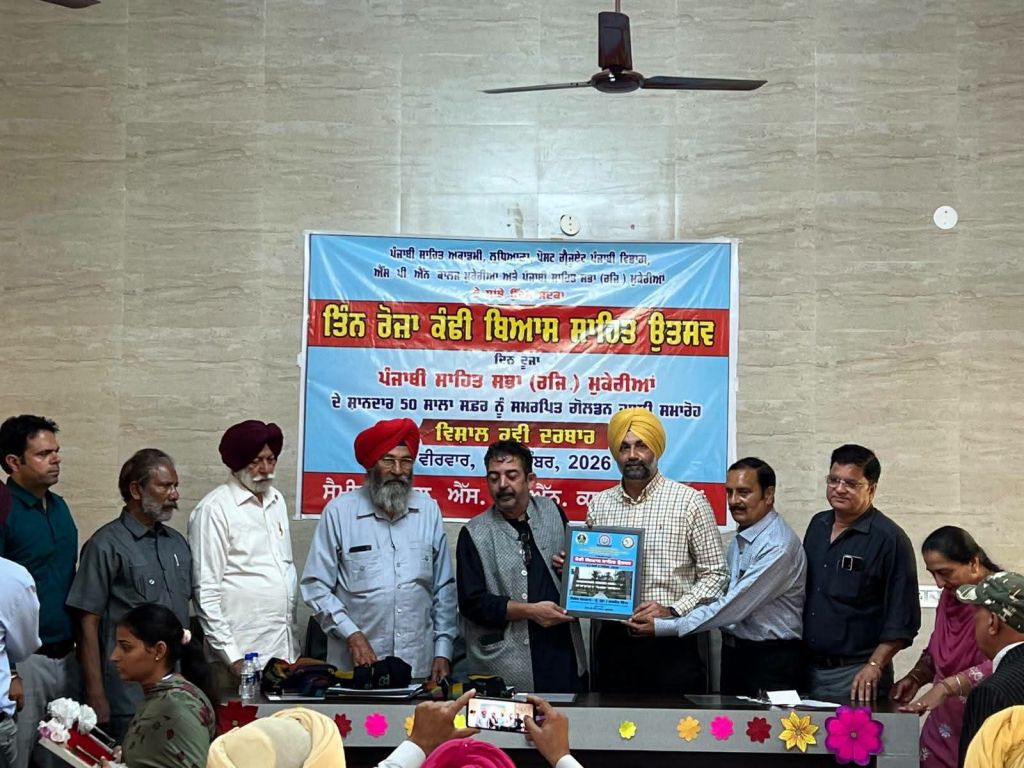
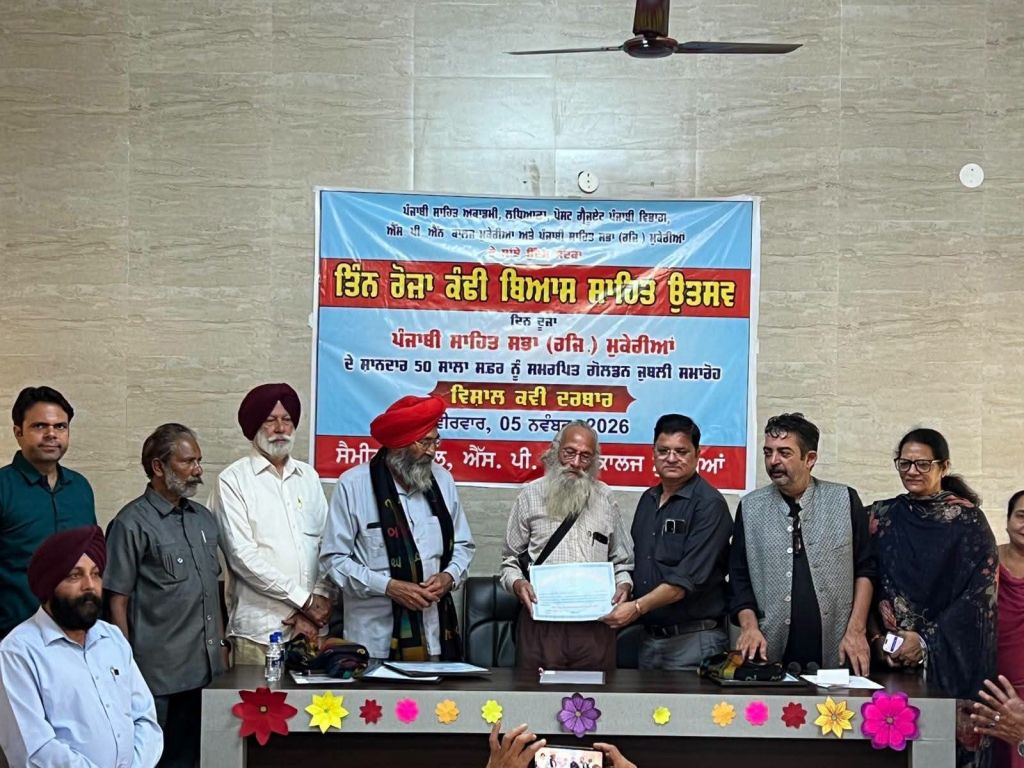
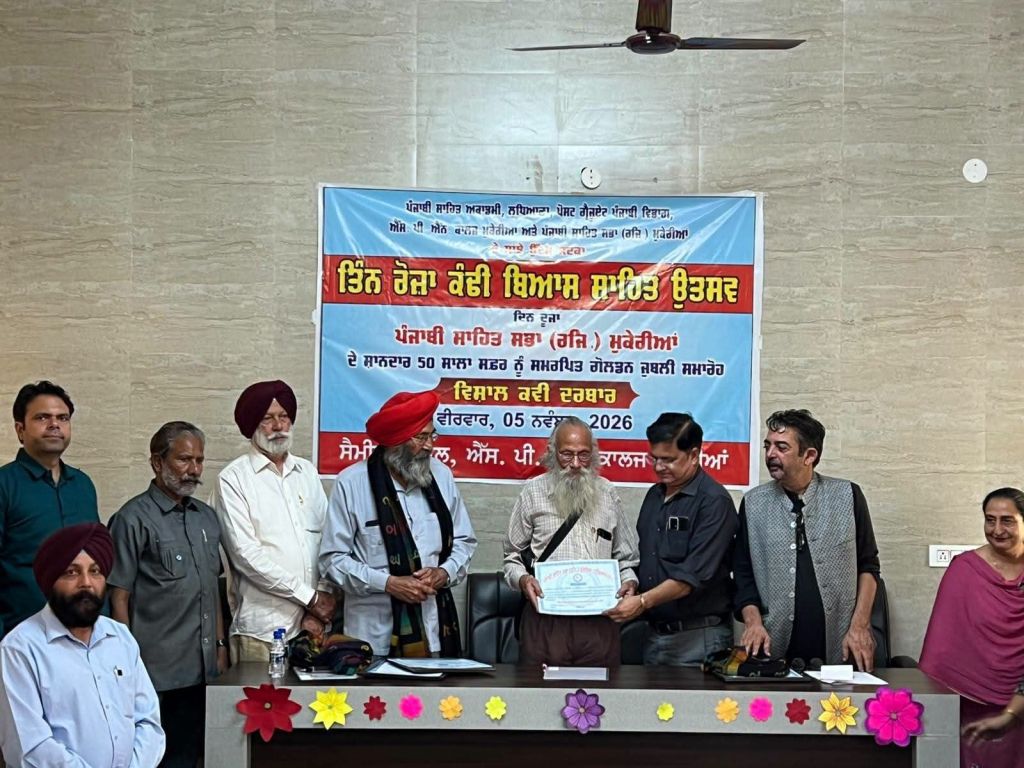
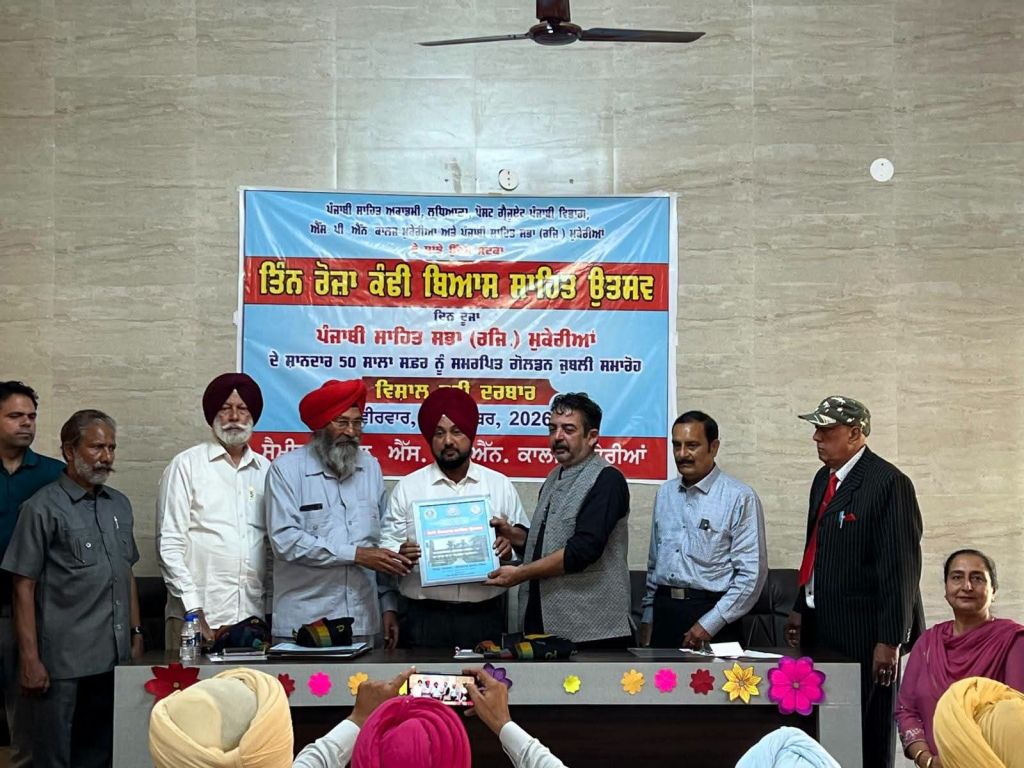
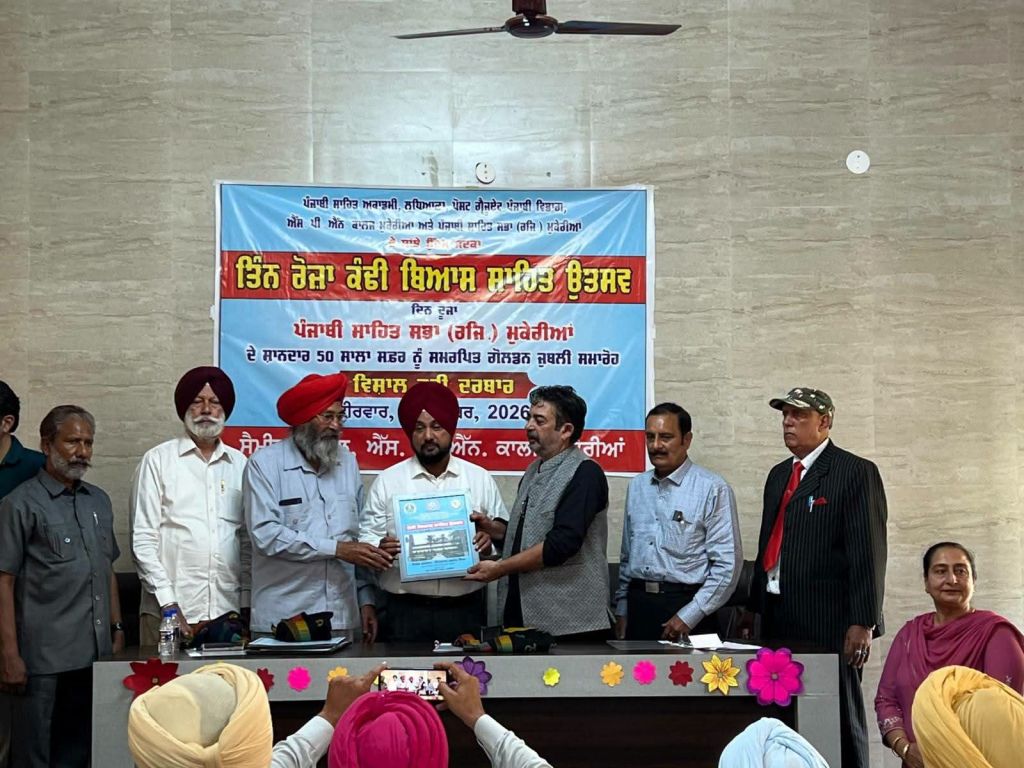
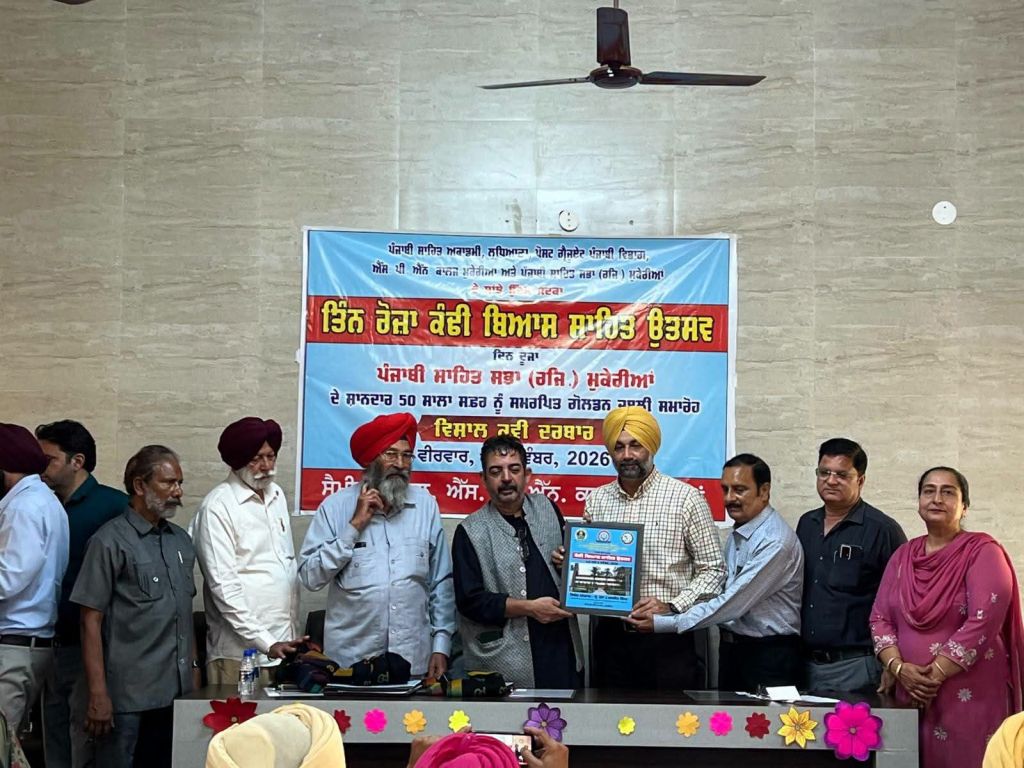
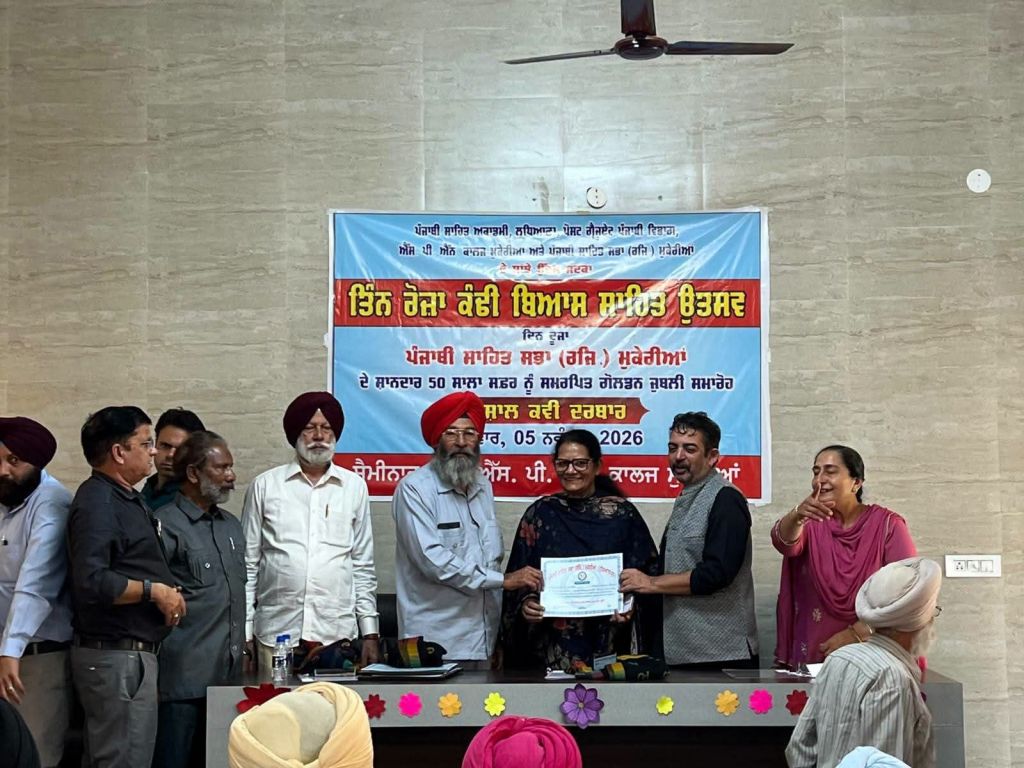
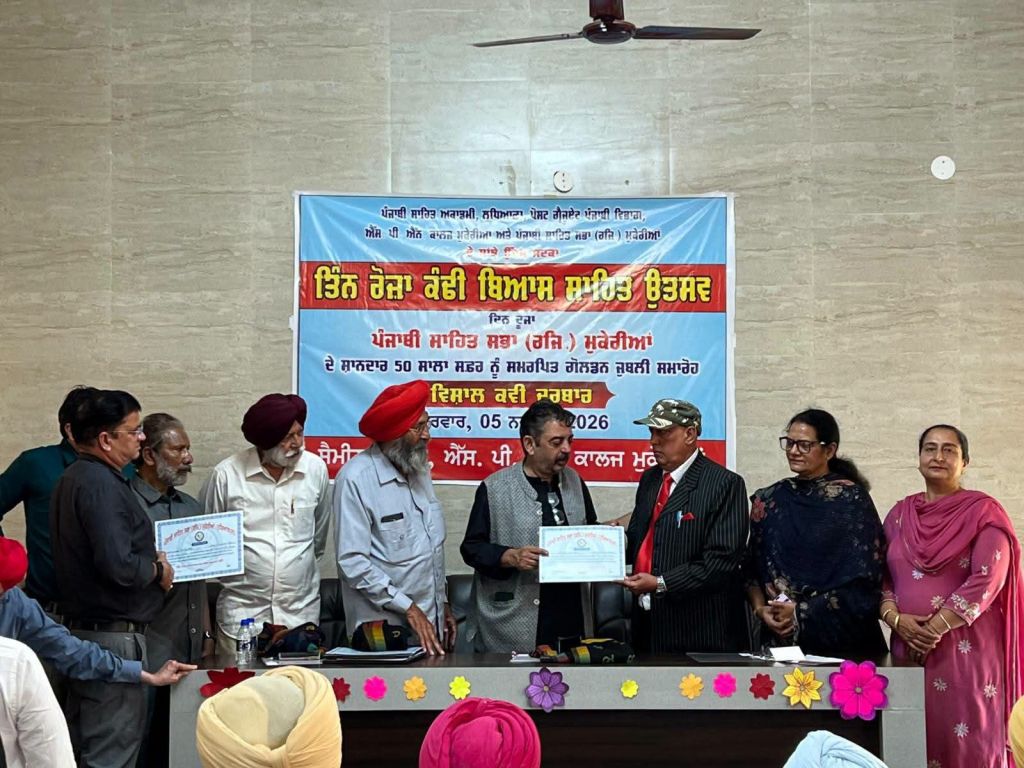
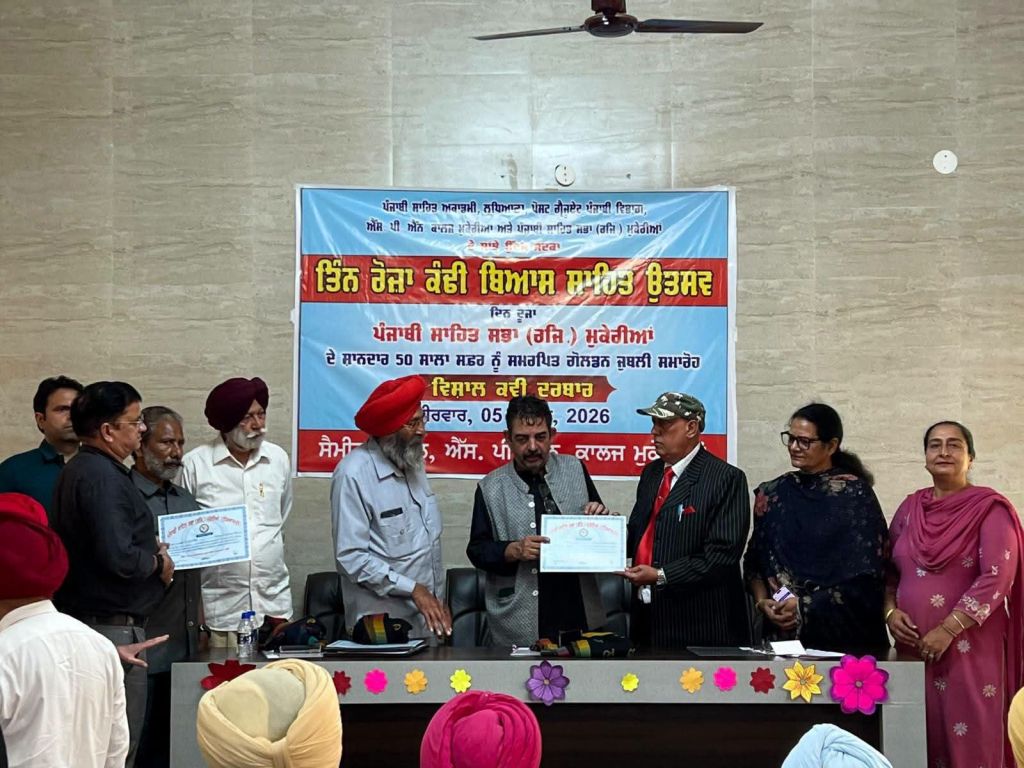
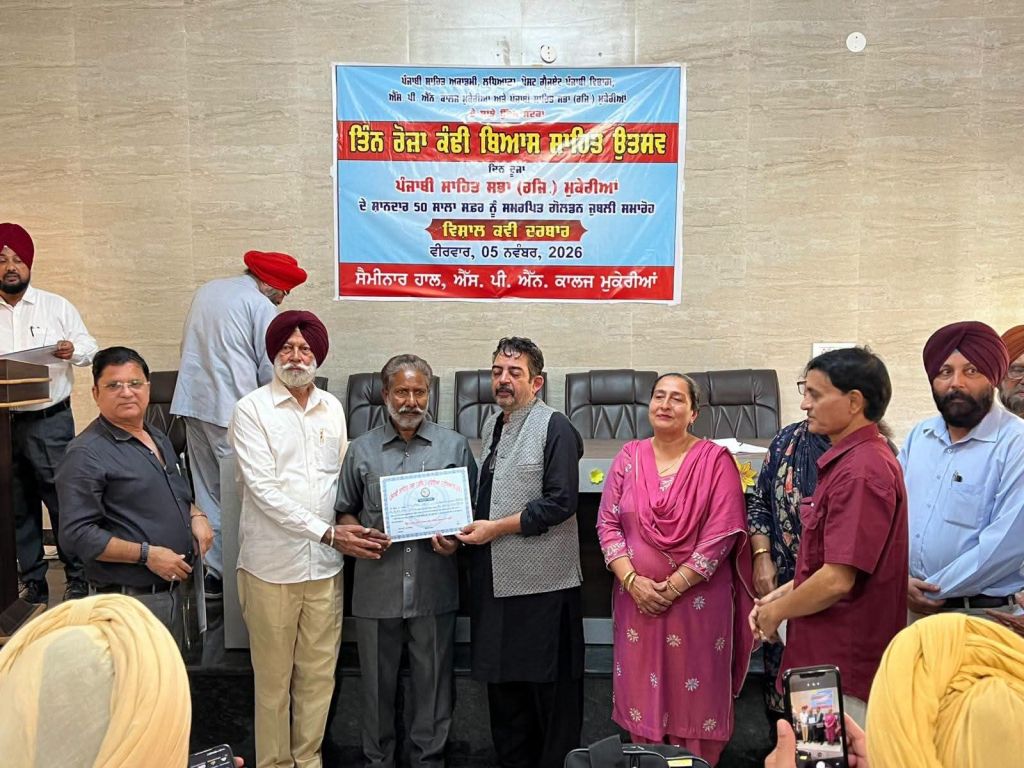
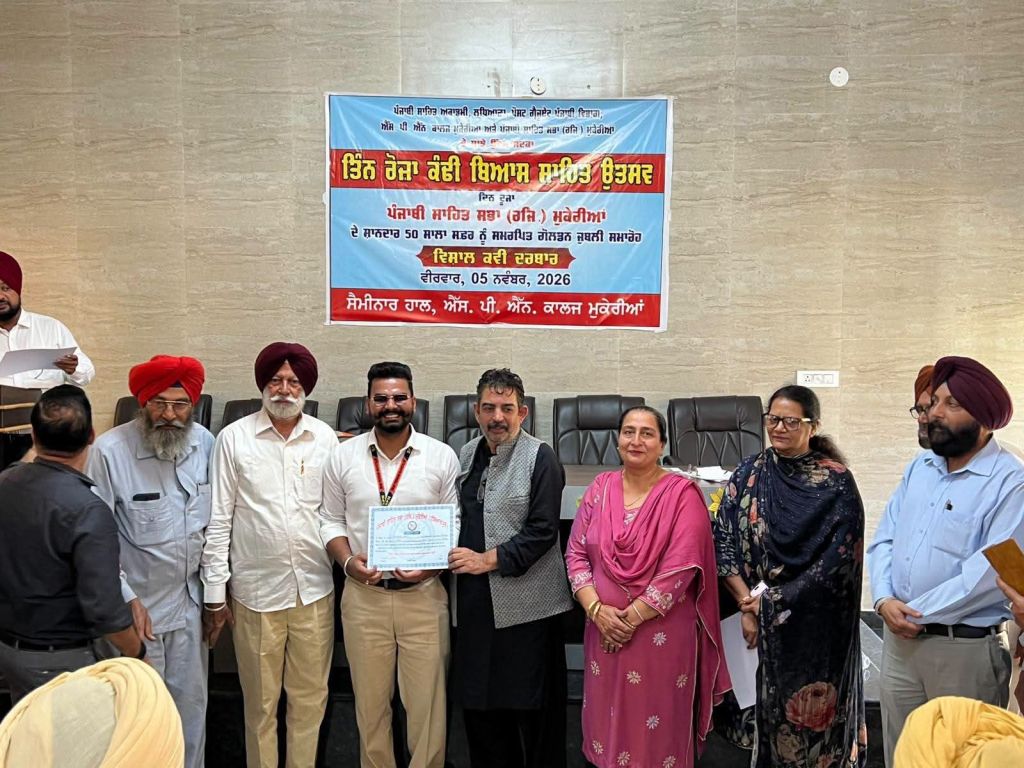
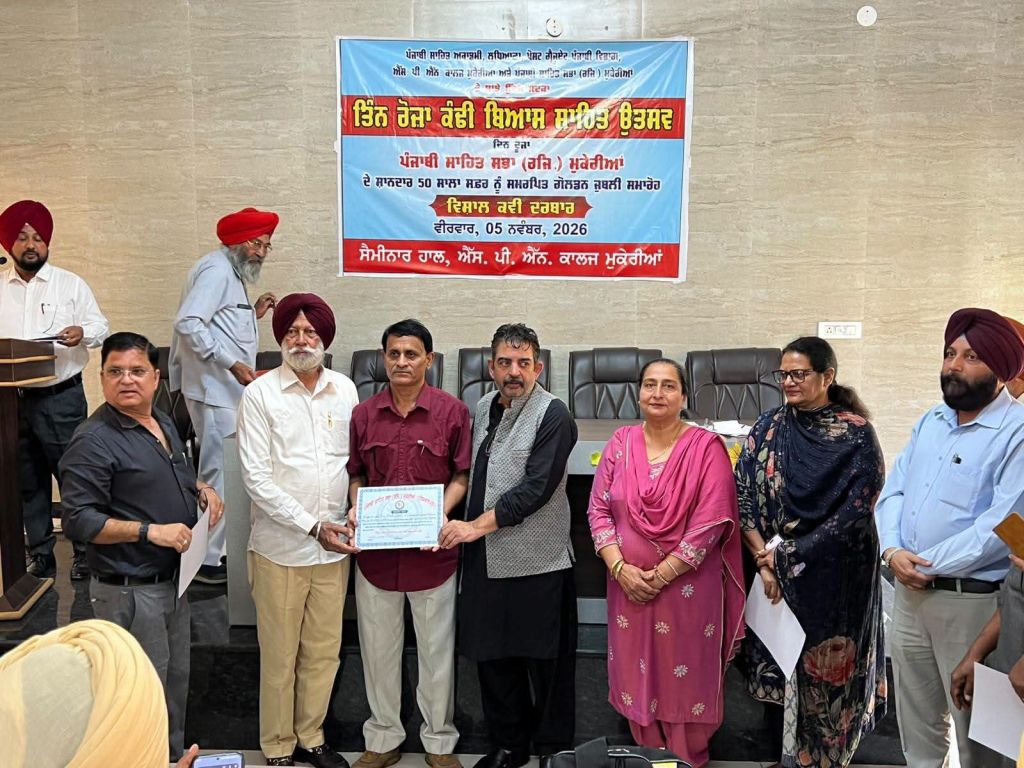
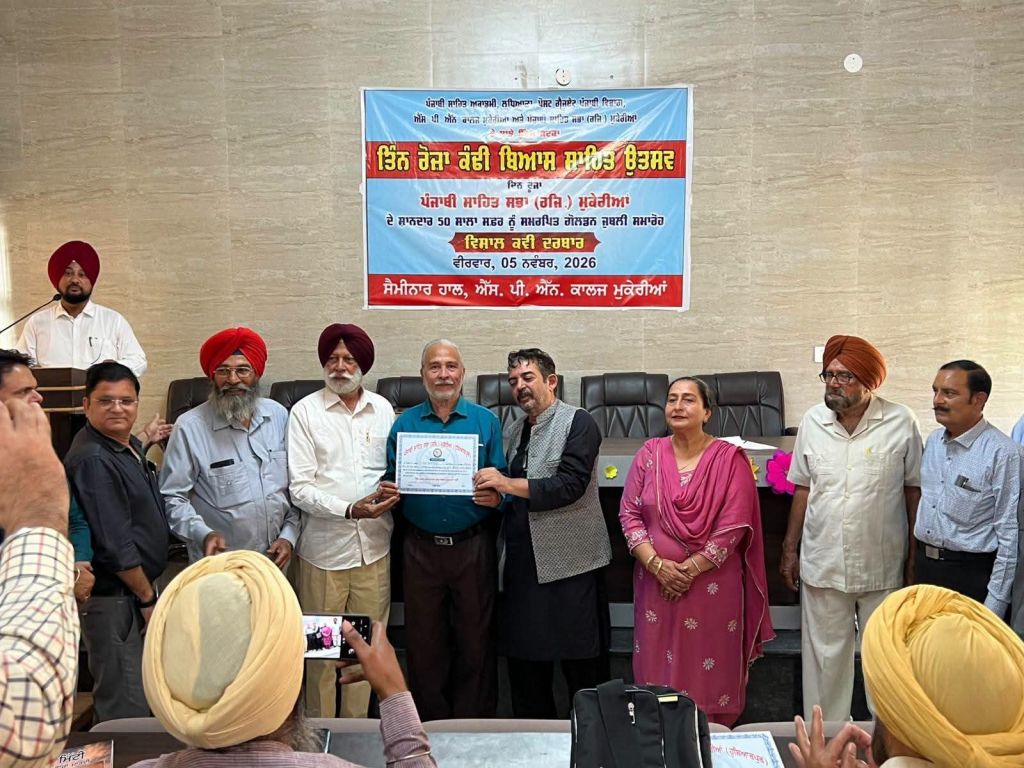
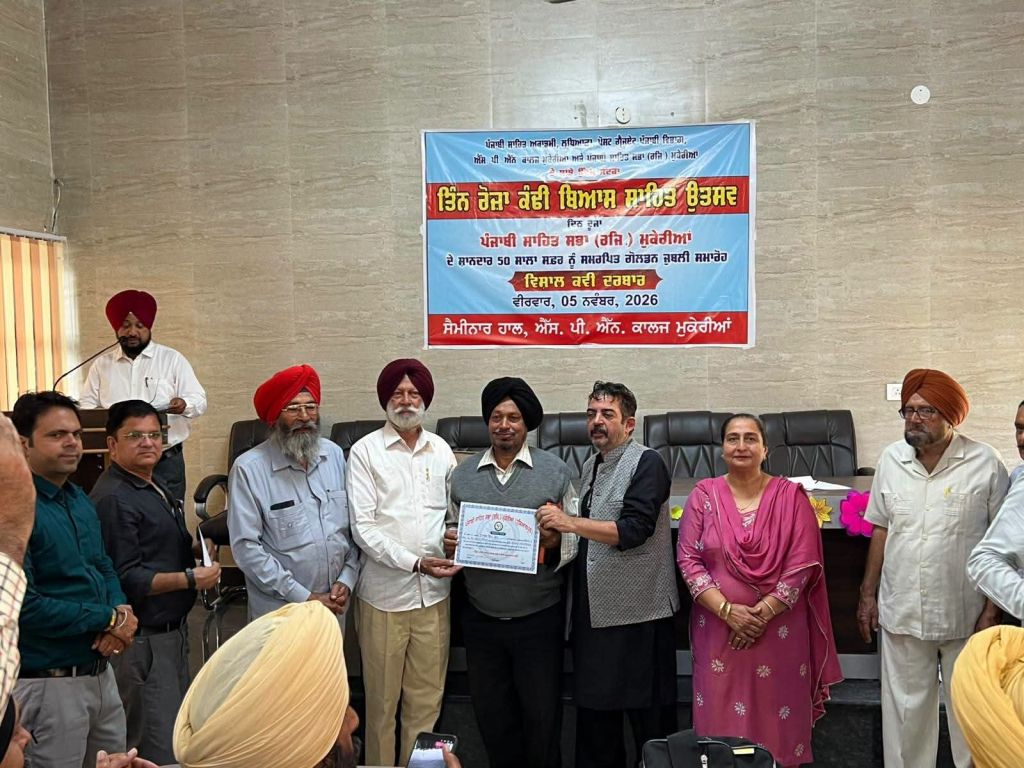
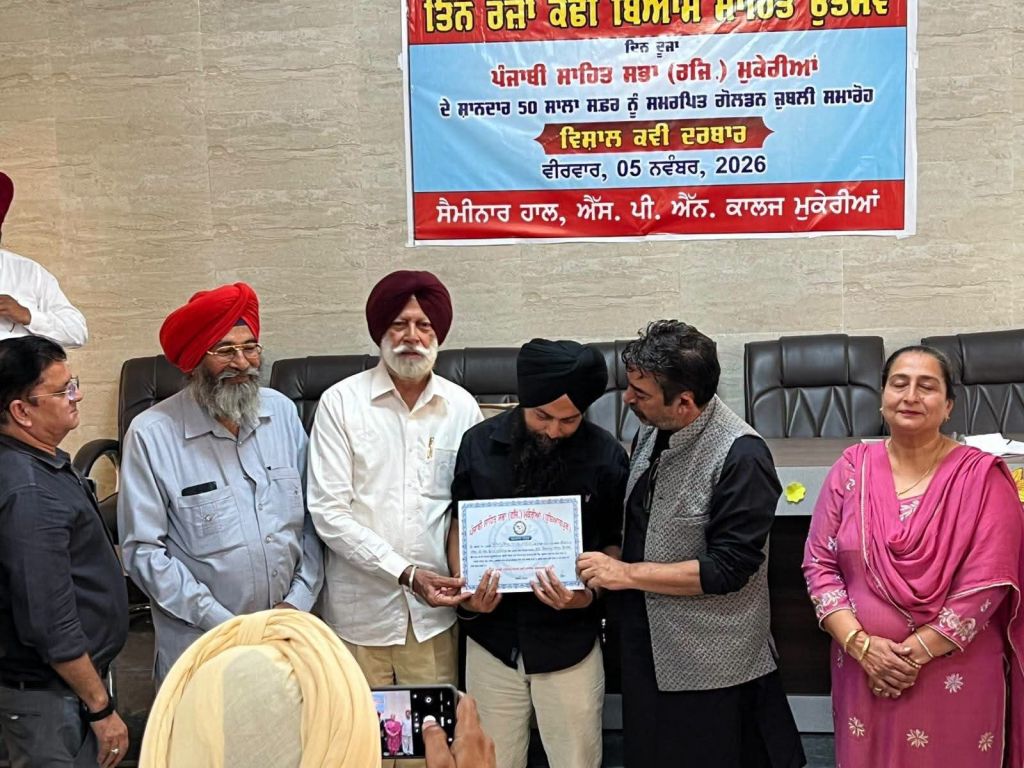
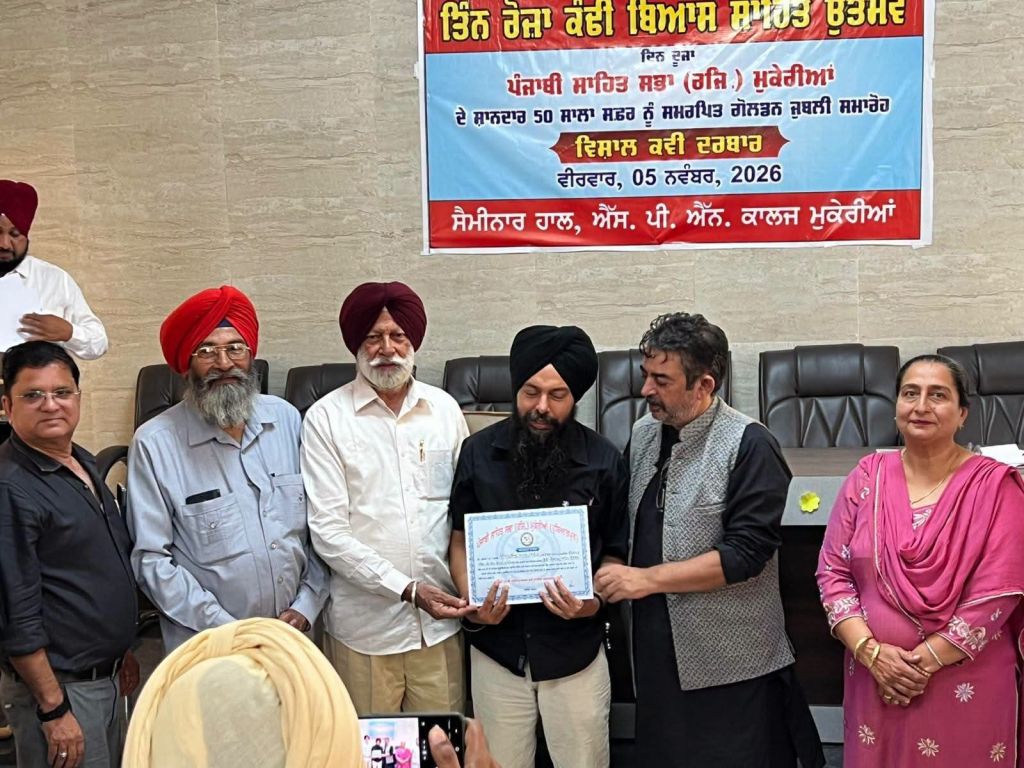
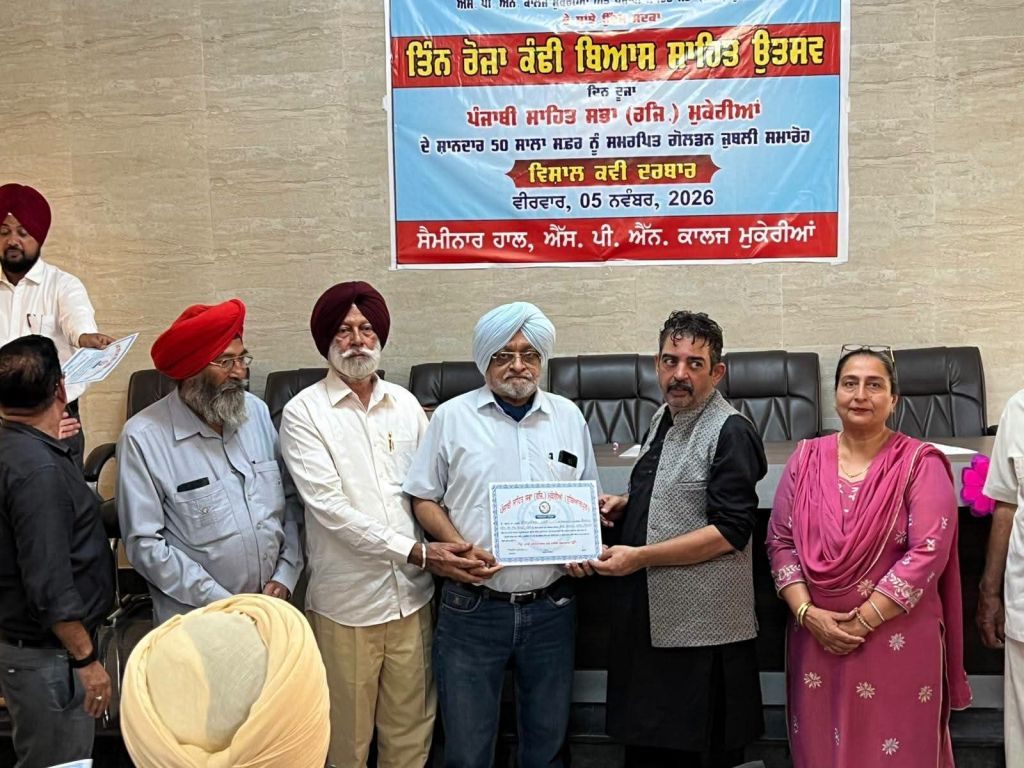
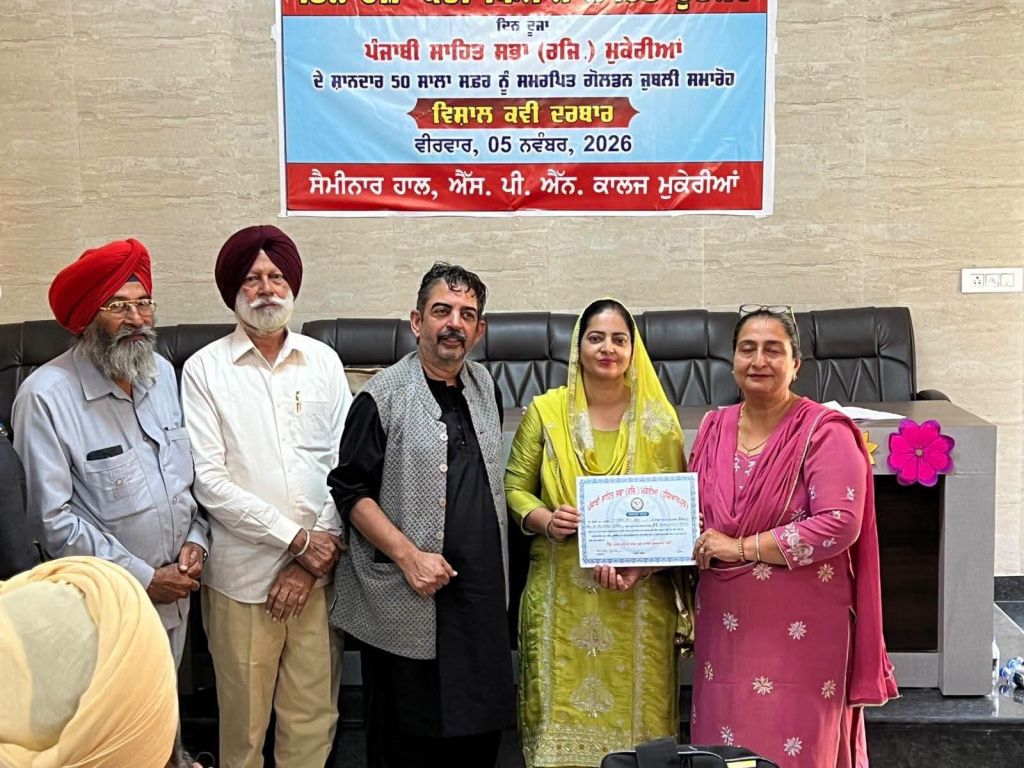
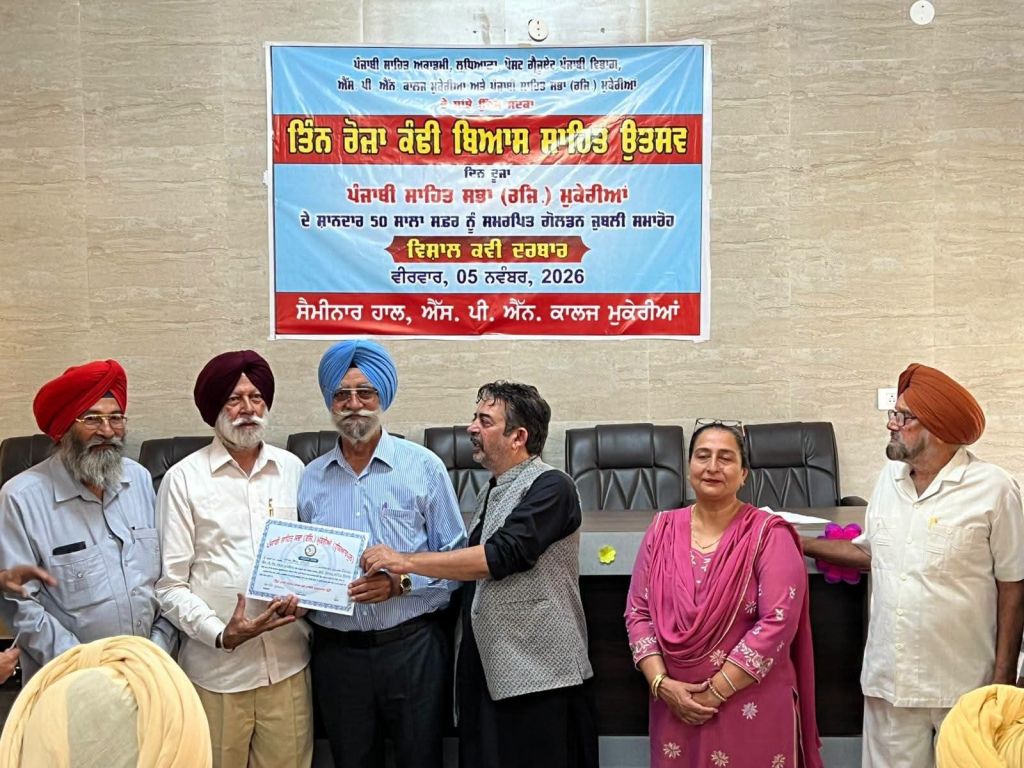
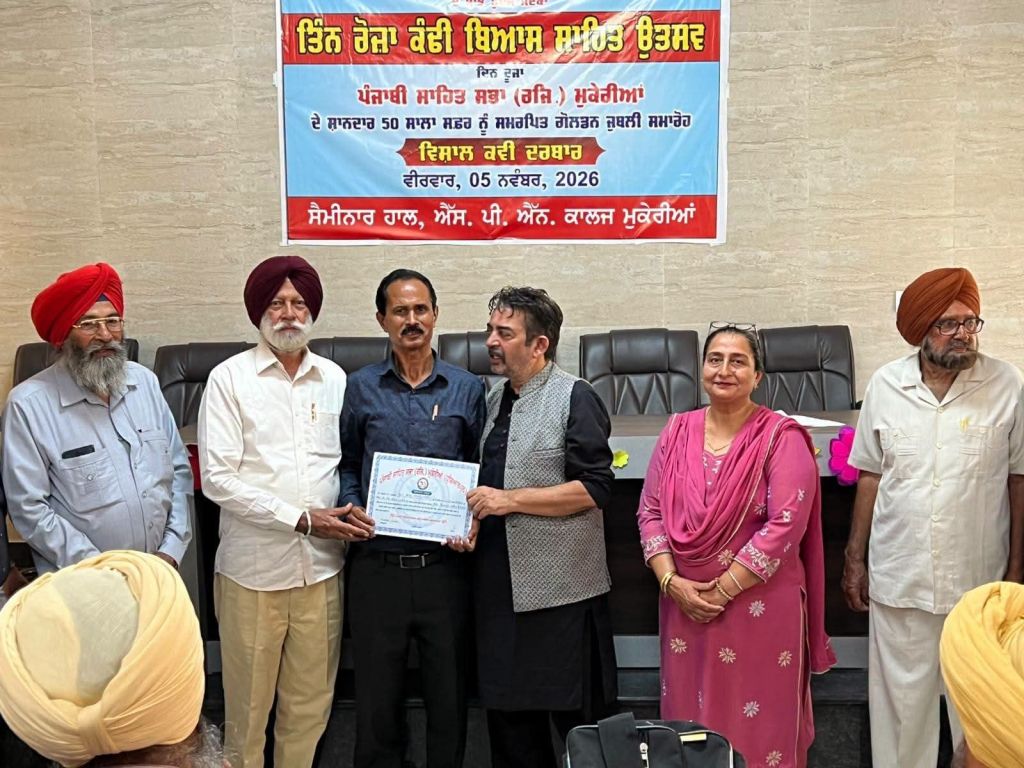
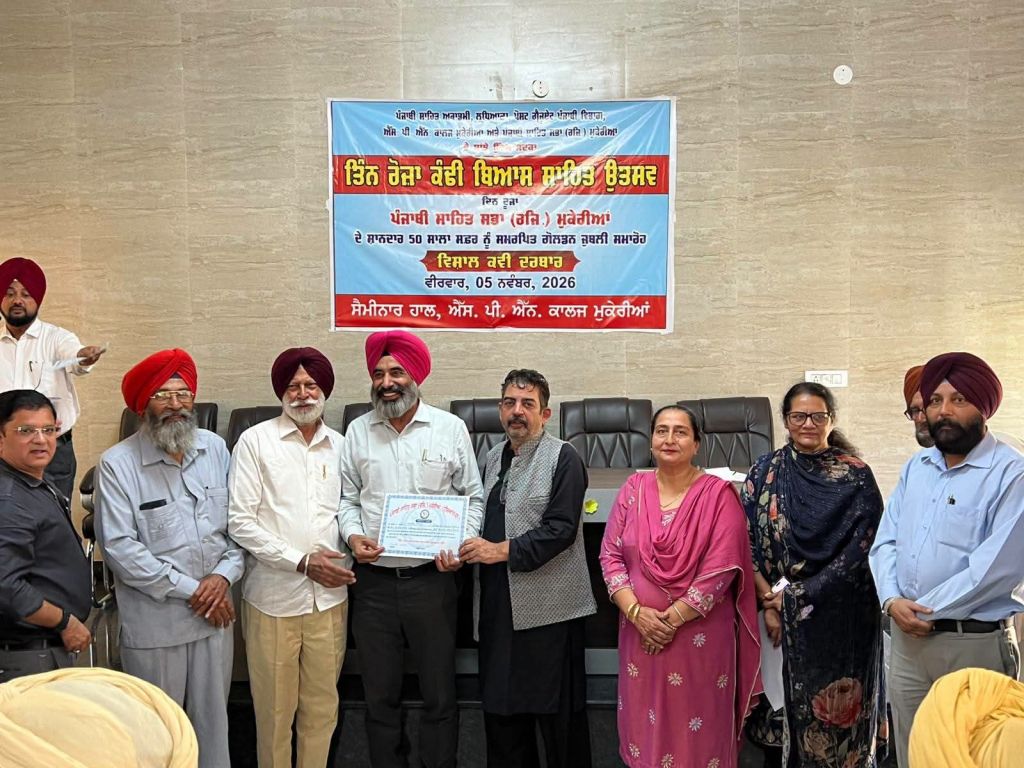
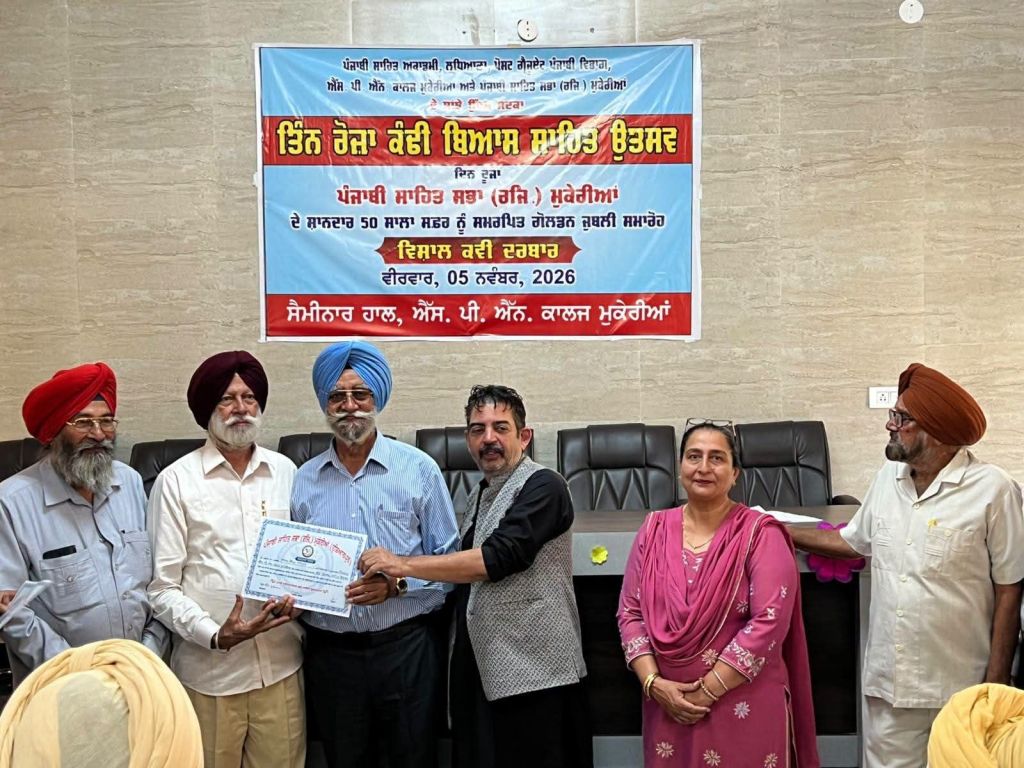
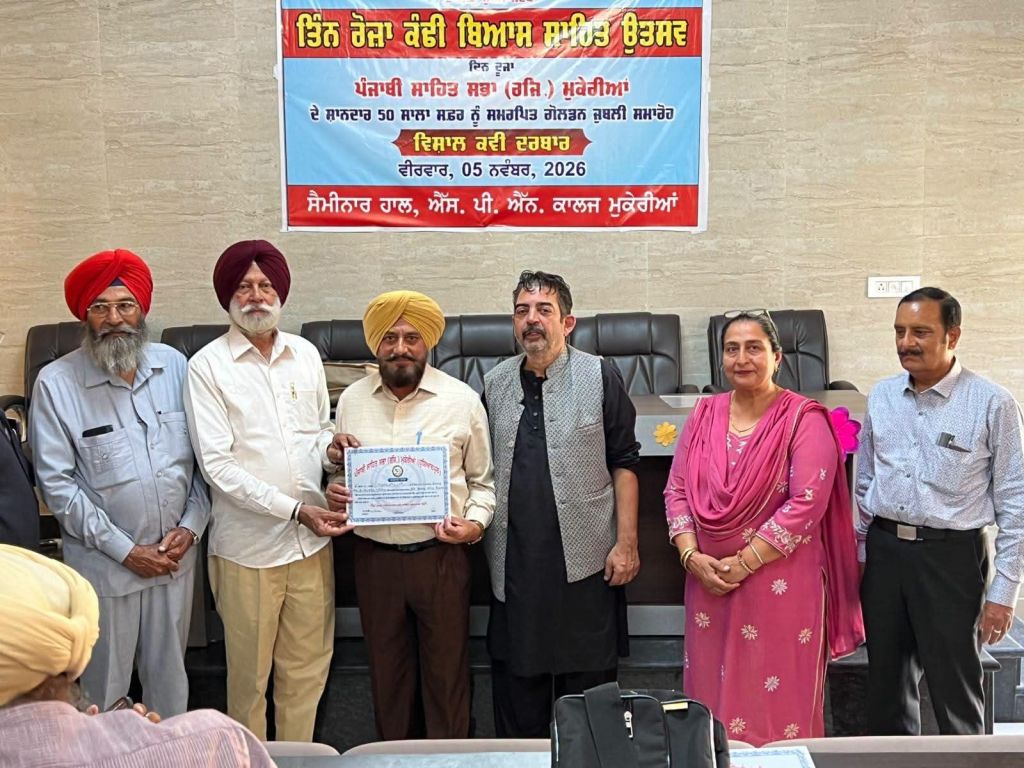
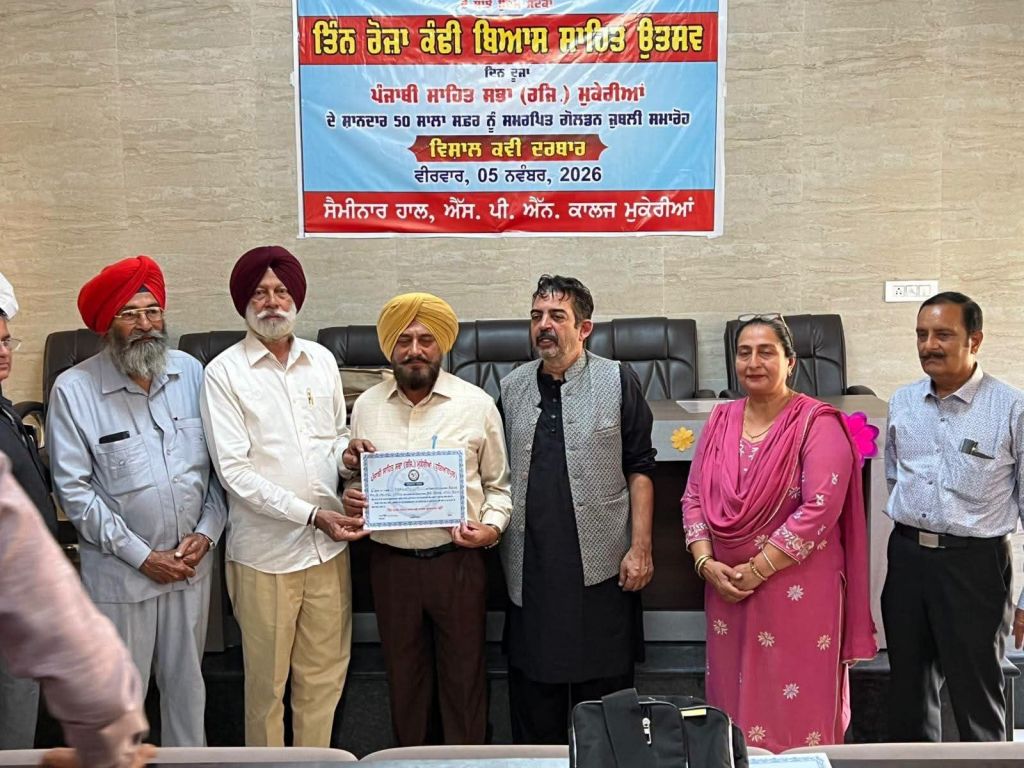
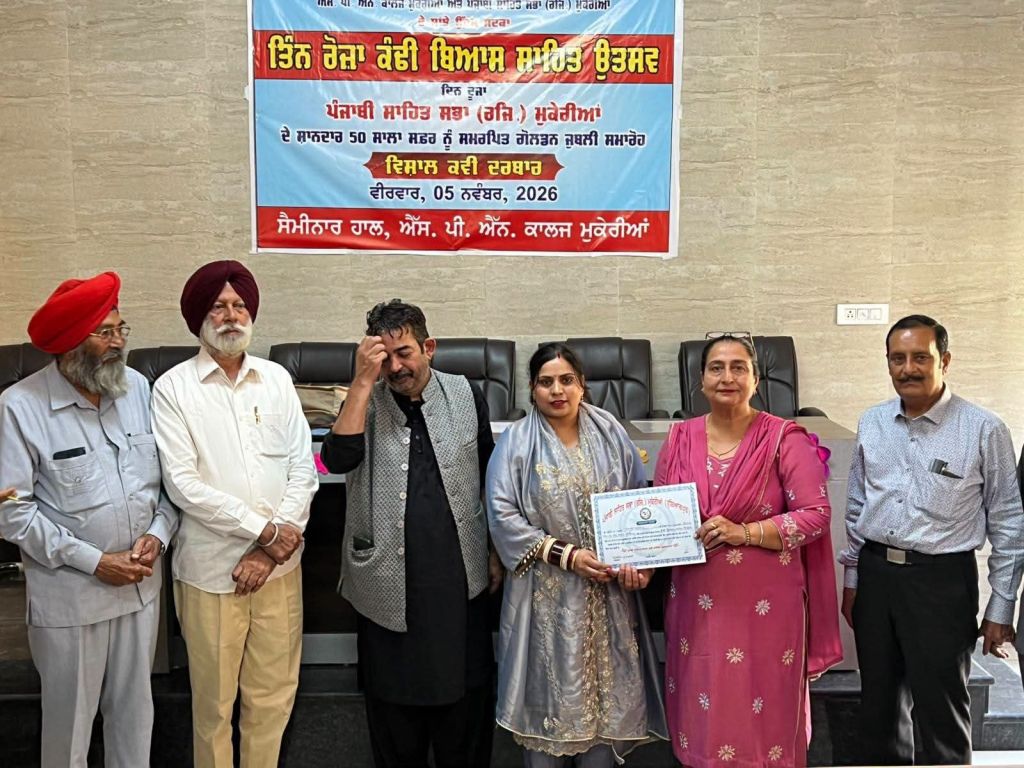
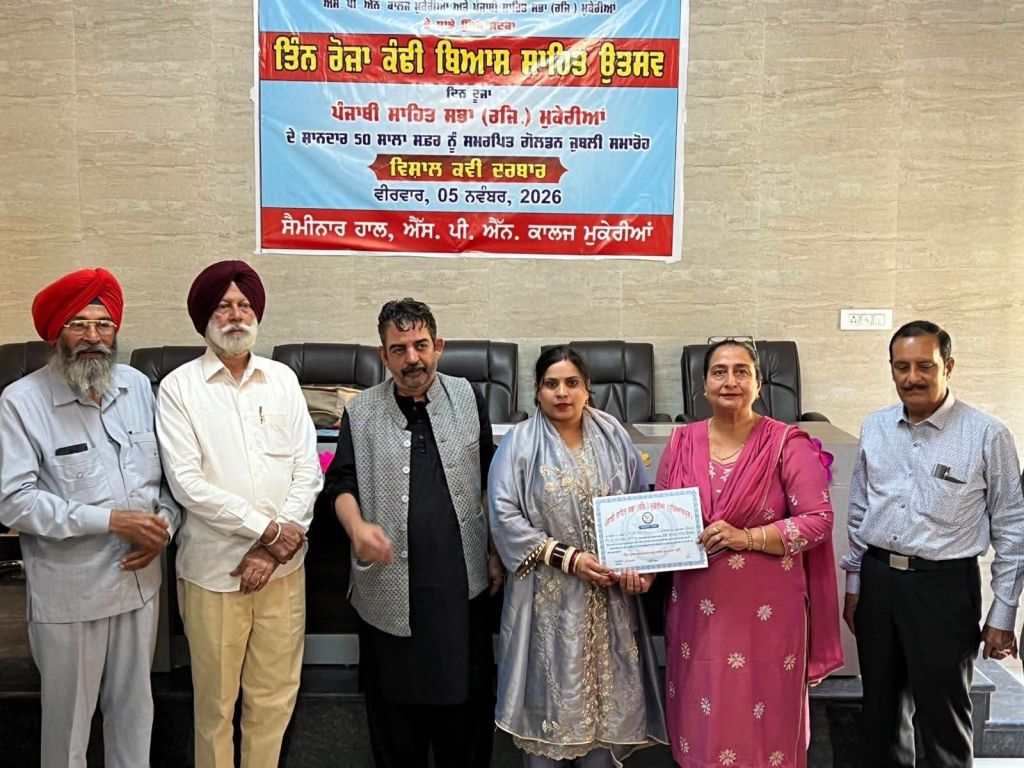
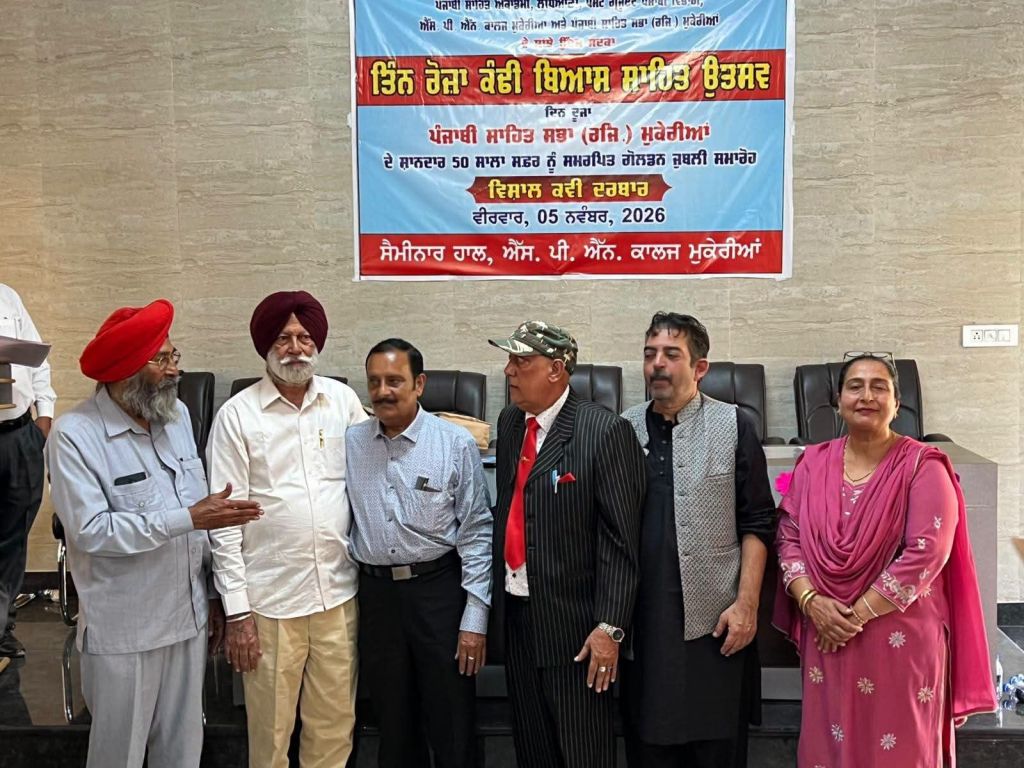
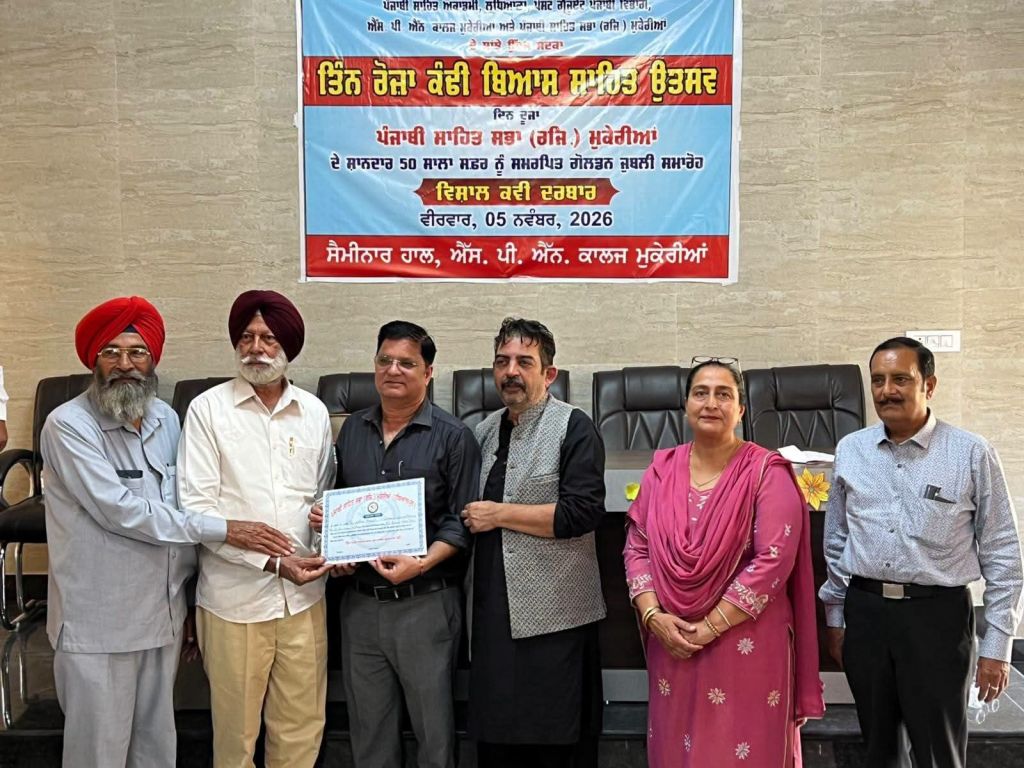
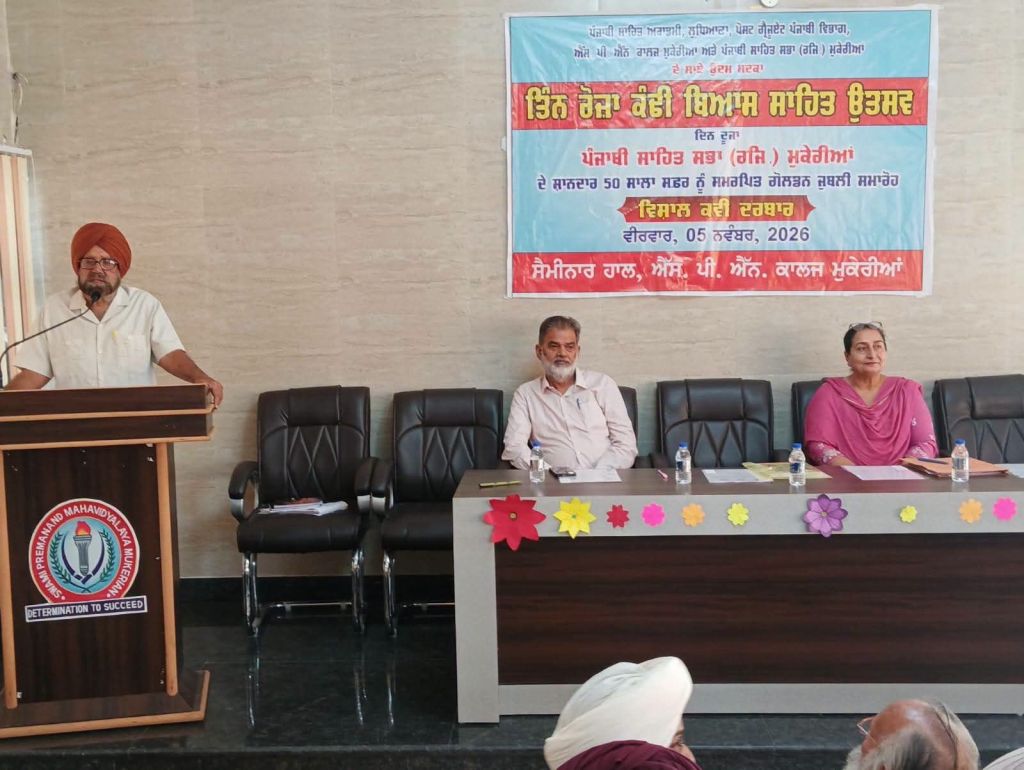
The second day of the three-day Kandi-Beas Literary Festival, being organised jointly by the Postgraduate Department of Punjabi, SPN College, Mukerian, and Punjabi Sahit Sabha (Regd.), Mukerian, with the support of the Punjabi Sahit Academy, was marked by engaging literary discussions, a book release ceremony and a grand poets’ meet. The day was dedicated to celebrating the fifty-year literary journey of Punjabi Sahit Sabha, Mukerian, and exploring the literary potential of the Kandi region.
The programme commenced with a welcome address by Dr. Kiranjit Kaur, Head, Post Graduate Department of Punjabi, S.P.N. College. Welcoming the eminent writers, scholars and poets, she highlighted the significance and literary objectives of the festival.
On this occasion, Dr. Satbir Singh, Professor, Department of Engineering and Technology, Guru Nanak Dev University Regional Campus, Gurdaspur, and Editor of the Sabha, shared detailed insights into the fifty-year history of Punjabi Sahit Sabha. He highlighted the organisation’s five decades of literary activities, its contribution to the promotion and propagation of the Punjabi language and literature, and its rich literary legacy.
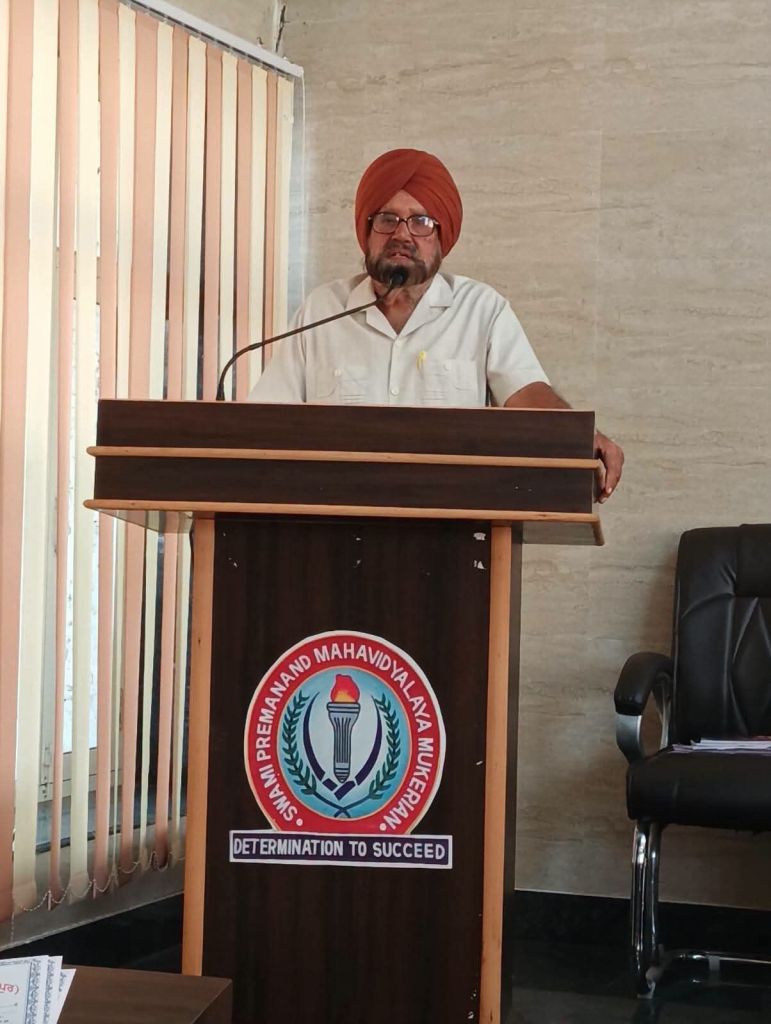
Sharing his views on the vision and relevance of the Kandi-Beas Literary Festival, Prof. Balbir Mukerian, Patron of the Sabha, emphasised that such literary festivals could play a significant role in bringing the literary, cultural and intellectual potential of the Kandi region to the forefront and giving it wider recognition.
First Session: An Insightful Discussion on the Creative Process of Novel Writing
The first session featured renowned novelist Balbir Parwana as the Chief Guest. He shared his experiences and detailed insights into the creative process behind his award-winning novel “Raulaan Vele”. He discussed the novel’s background, character development, portrayal of social realities and the sensitivity and creative vision of a writer that contribute to the birth of a literary work. The session proved highly insightful and enriching for understanding the art of novel writing and the intricacies of the creative process.
On this occasion, three books authored by Dr. Janak Raj Bhatia, a member of Punjabi Sahit Sabha, Mukerian, were also released. The book release ceremony added another significant creative dimension to the literary festival.
Second Session: Grand Poets’ Meet Enthrals the Audience
The second session featured a grand poets’ meet dedicated to the 50th anniversary of Punjabi Sahit Sabha, Mukerian. Renowned poet and Sahitya Akademi Award recipient Darshan Buttar graced the occasion as the Chief Guest, while Sushil Dusanjh, Editor of the literary magazine “Hun”, attended as the Special Guest. The presidium comprised eminent ghazal writers Makhan Kohar and Pammi Diwedi Tanda.
Poets from various cities, including Kalanaur, Gurdaspur, Batala, Hoshiarpur, Pathankot and Jalandhar, participated in the event and presented diverse shades of Punjabi poetic expression through their poems, ghazals and songs. Their compositions beautifully reflected social concerns, human emotions and different dimensions of life, captivating the audience with their literary depth and artistic expression.
Among the poets who enriched the occasion with their compositions were ghazal writers Baljit Saini, Teerath Chand Saroya and Vinod Vasal; lyricist Rana Ropari; Raghbir Terkiana; Seetal Singh Ghunopuri; Surinder Batala; Prof. Lakhwinder Singh; Ram Rattan; Mandeep Kaur Preet; Harshwinder Talwara; Diksha Mahajan and several other literary figures.
The entire poets’ meet was conducted in an impressive and well-organised manner by Jaswant Khanpuri, General Secretary of Punjabi Sahit Sabha, Mukerian.
At the conclusion of the programme, Dr. Sarabjot Singh, President of Punjabi Sahit Sabha, Mukerian, expressed his gratitude to all the distinguished guests, writers, poets, faculty members of the Department of Punjabi, and the audience for their valuable presence and participation. He specially acknowledged the support and cooperation extended by the Management Committee of SPN College and Principal Dr. Sameer Sharma, in making the event a success.
Organised with the objective of promoting literary awareness, meaningful dialogue and creative activities in the Kandi region, the second day of the Kandi-Beas Literary Festival proved to be an outstanding success in terms of literary engagement and participation. The festival not only celebrated the glorious fifty-year journey of Punjabi Sahit Sabha, Mukerian, but also emerged as a meaningful initiative towards strengthening the identity of the Kandi region on the literary map of Punjab.
The Third Day of the Kandi-Beas Literary Festival Witnesses an In-Depth Exploration of the Historical, Social and Cultural Dimensions of the Novel
Two novels discussed in collaboration with the Punjabi Sahit Akademi, Ludhiana; the tragedy of Partition and the lived realities of the Kandi region receive literary expression
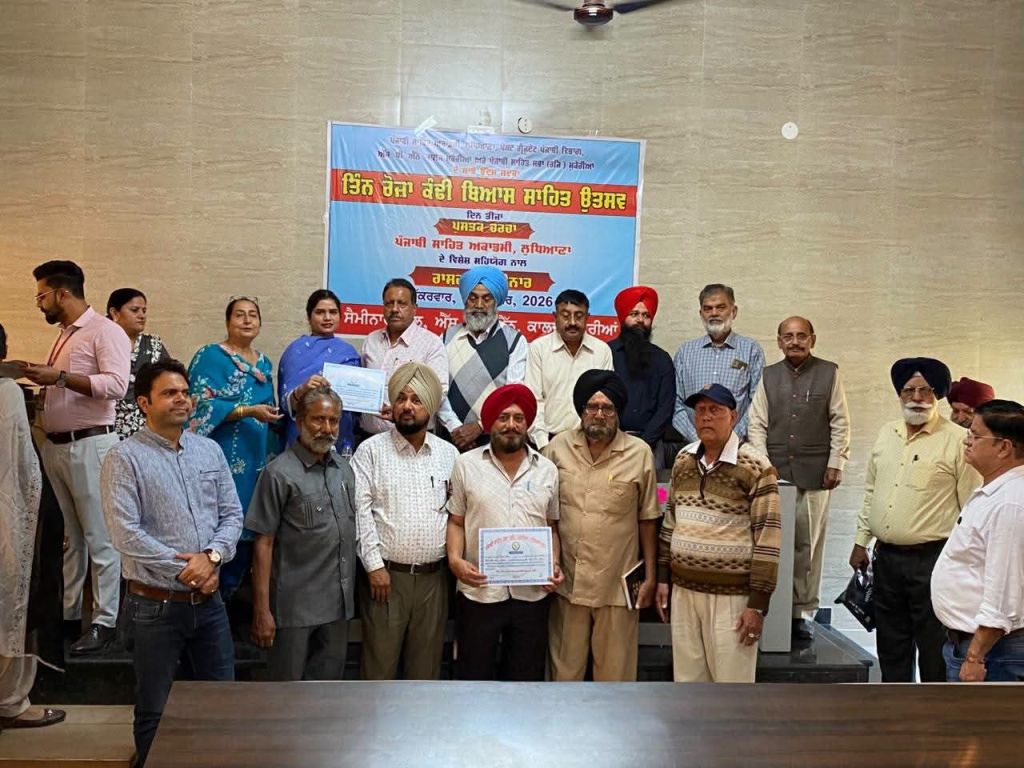
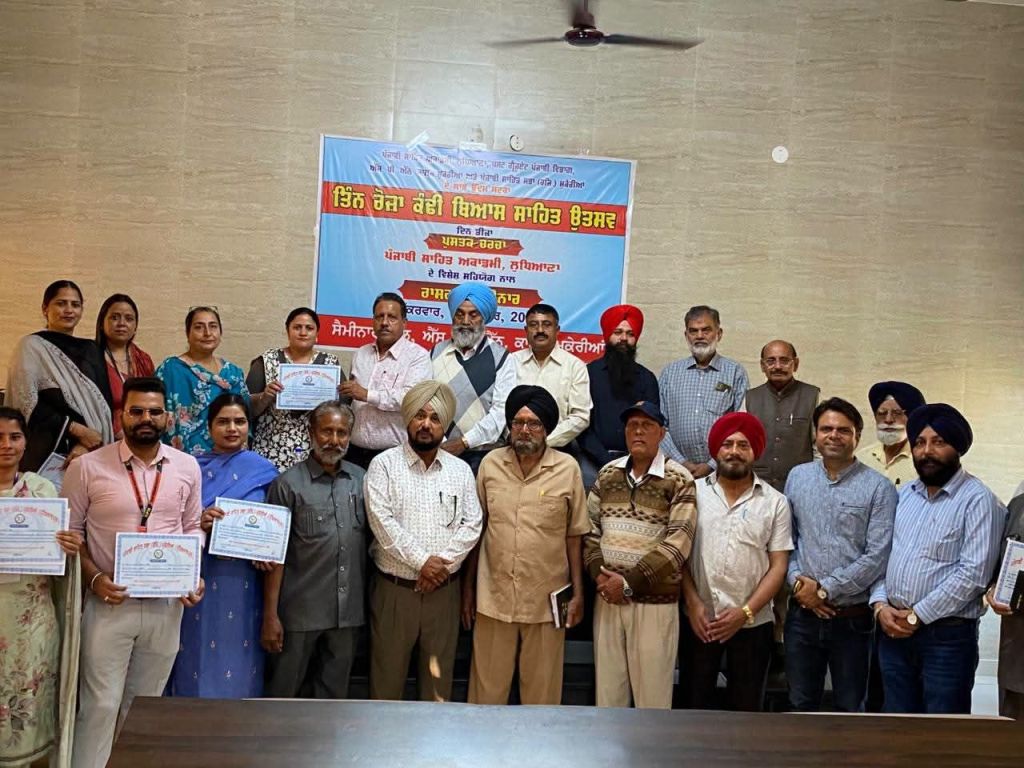
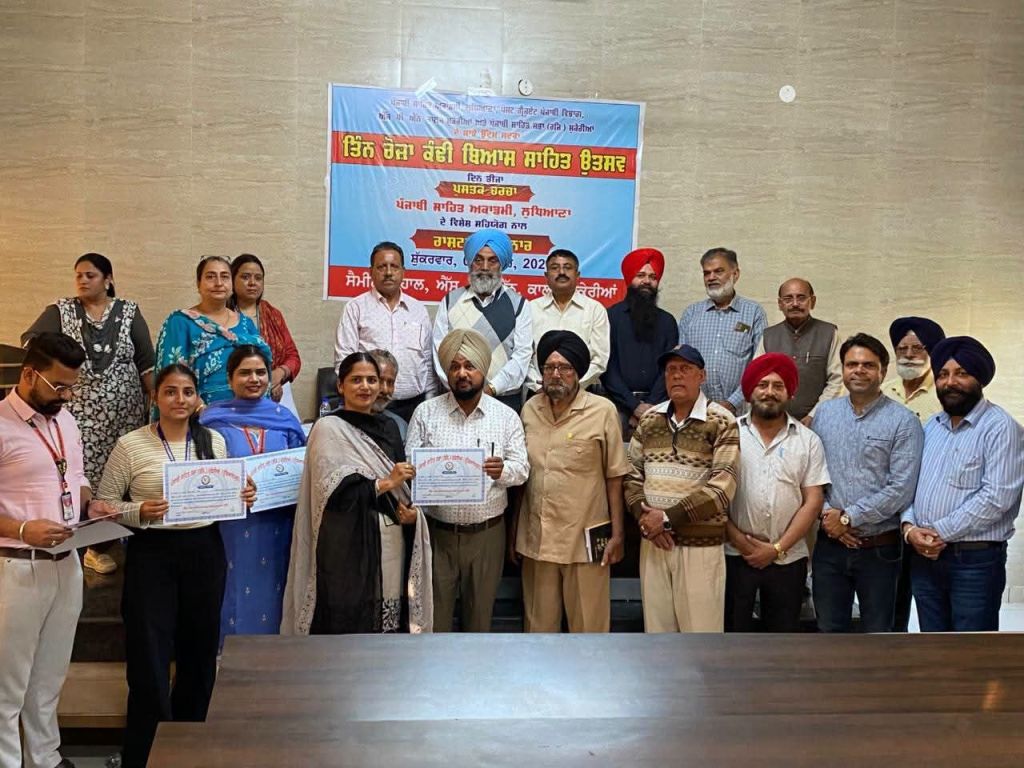
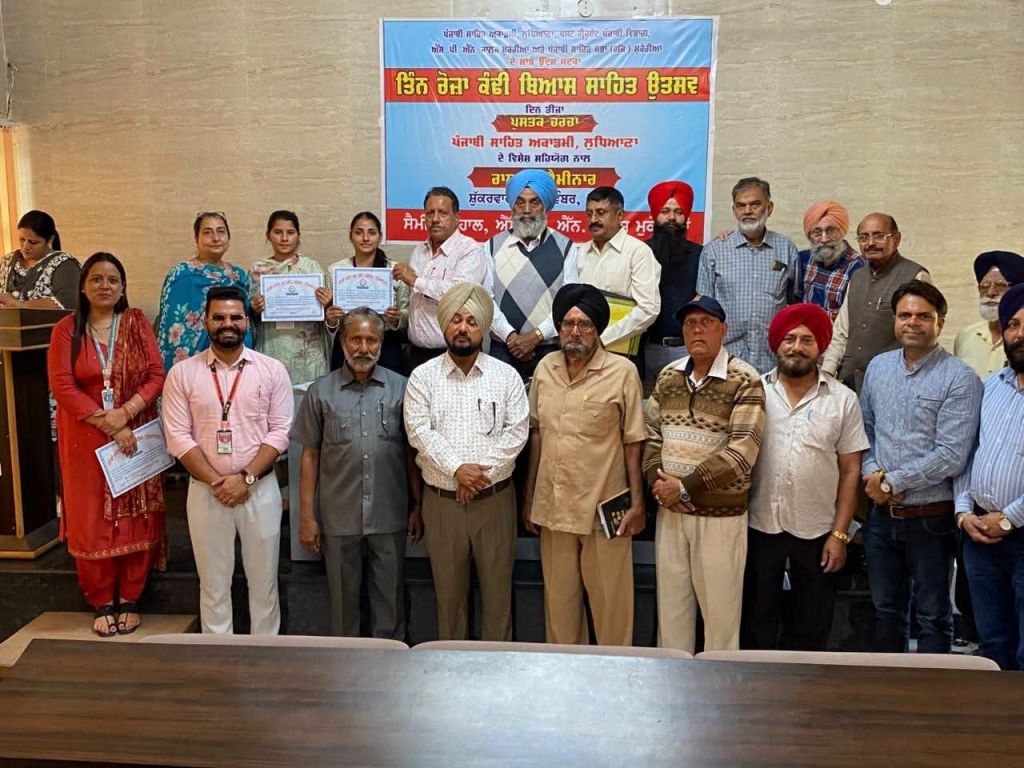
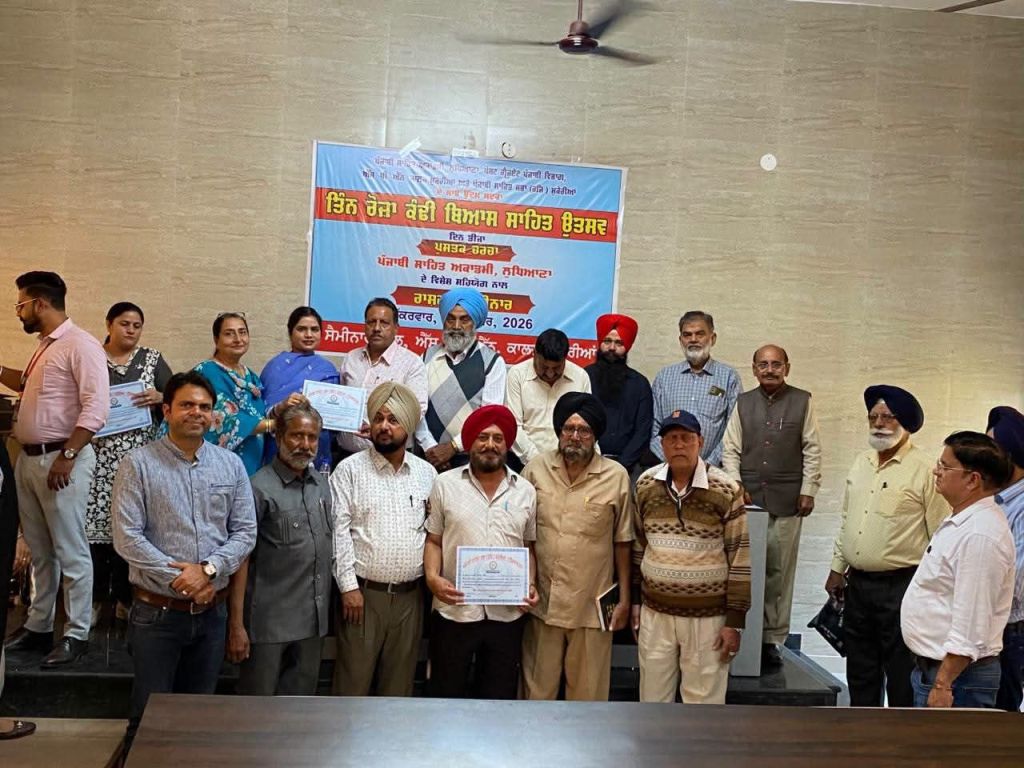
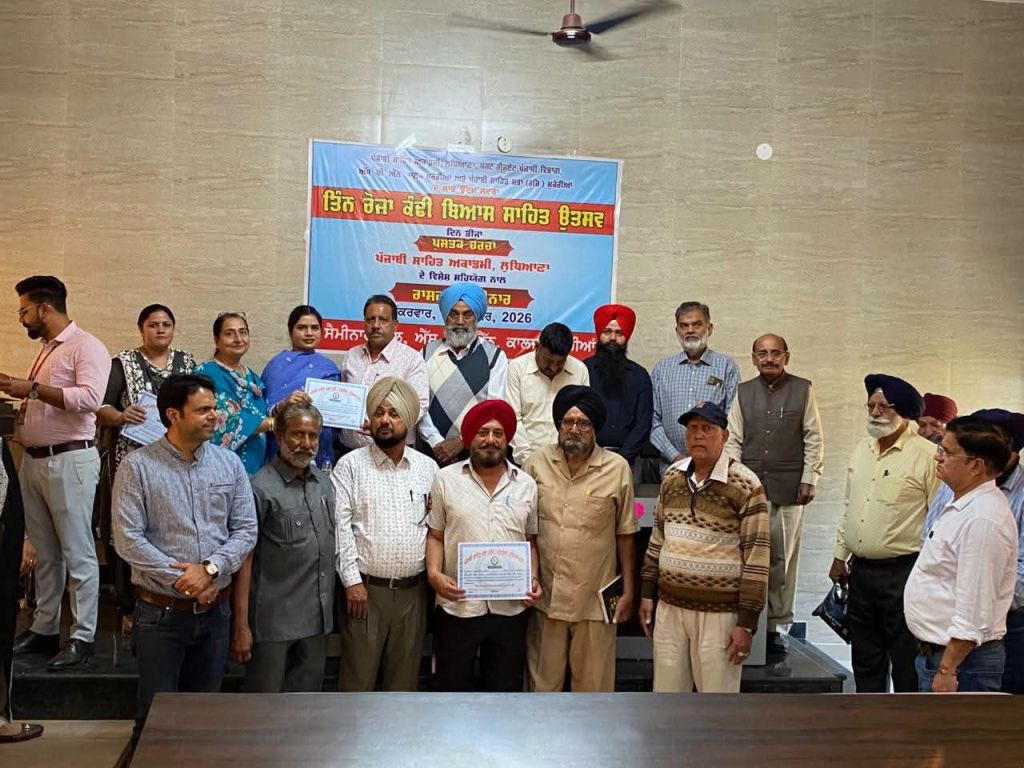
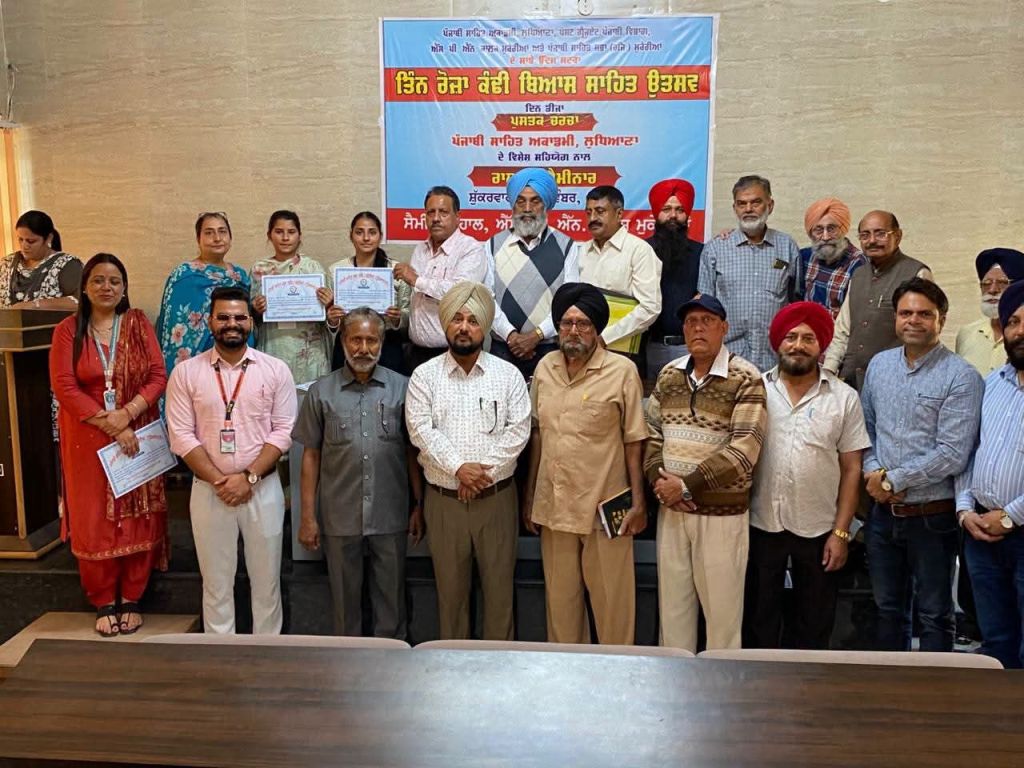
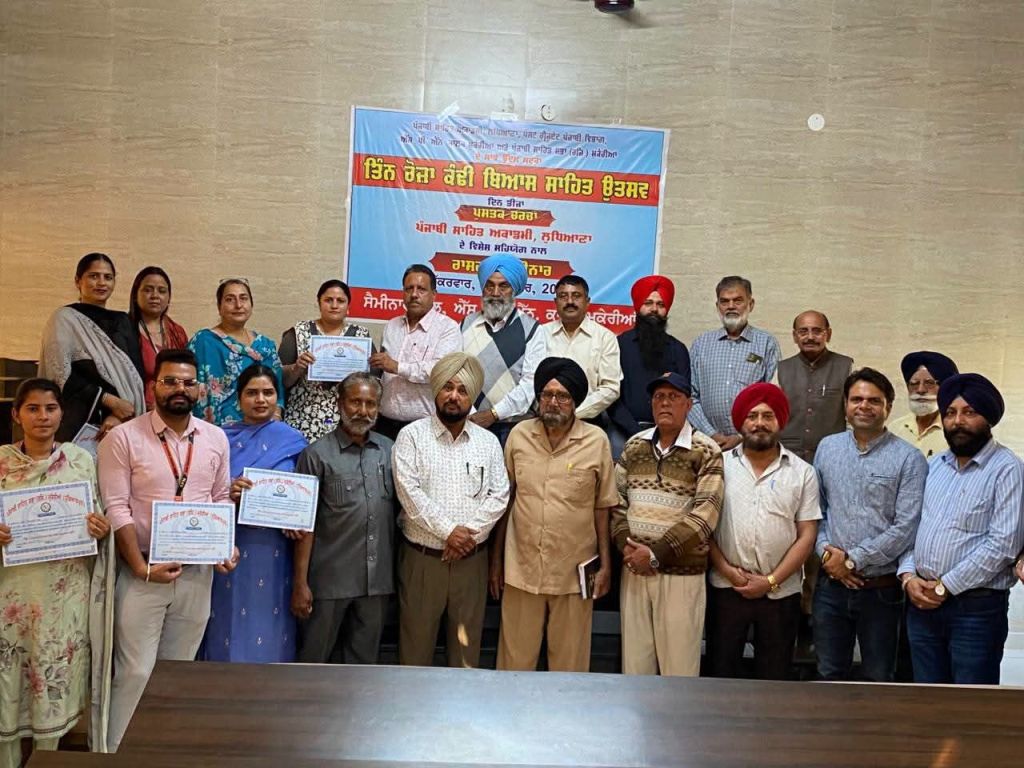
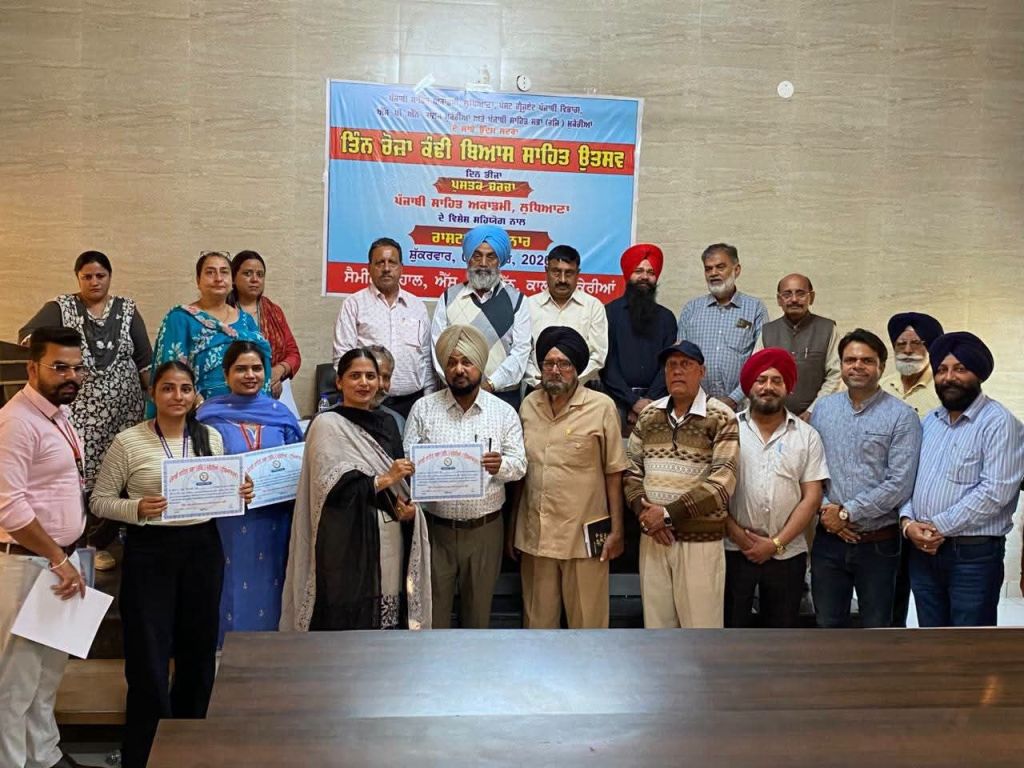
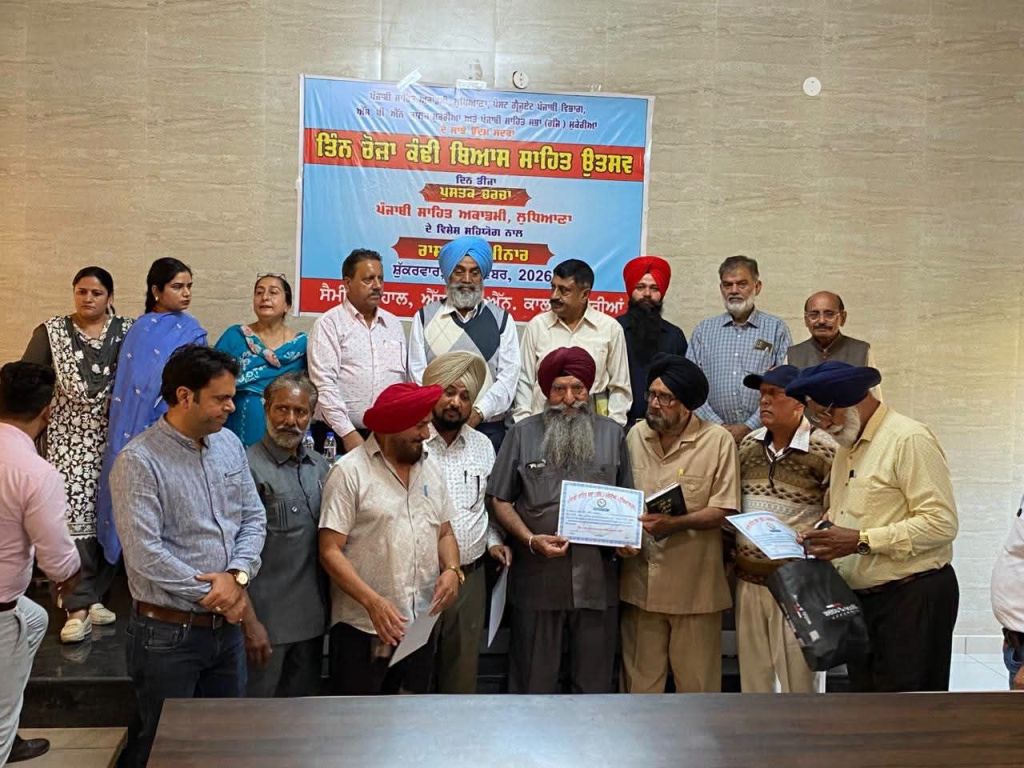
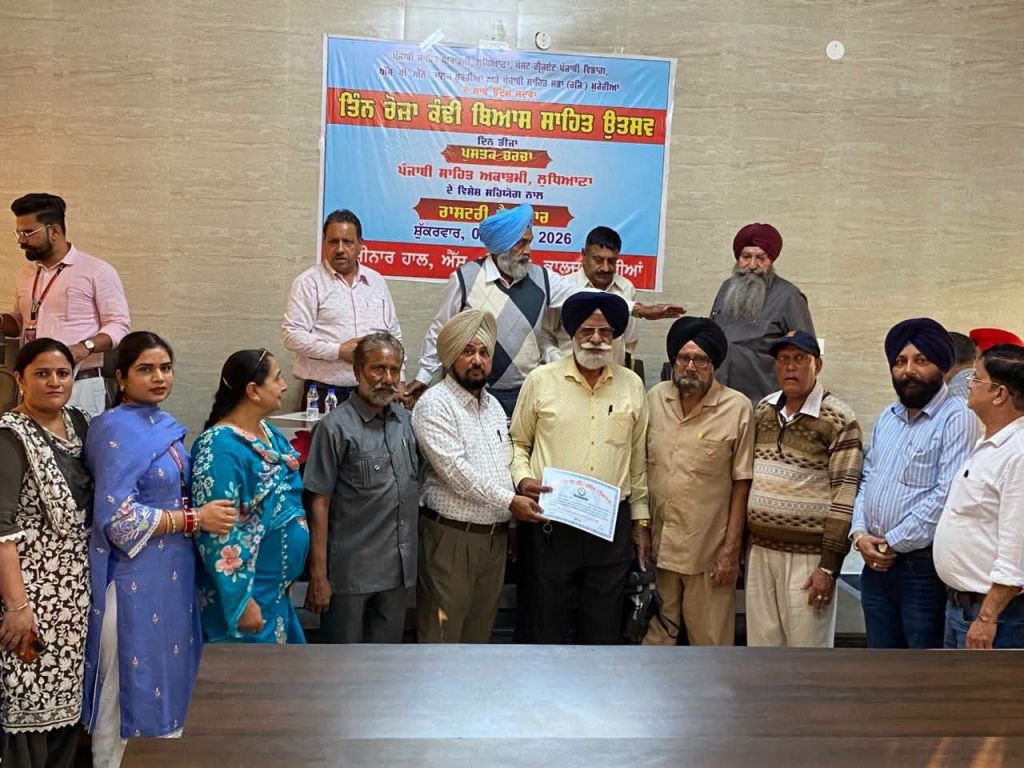
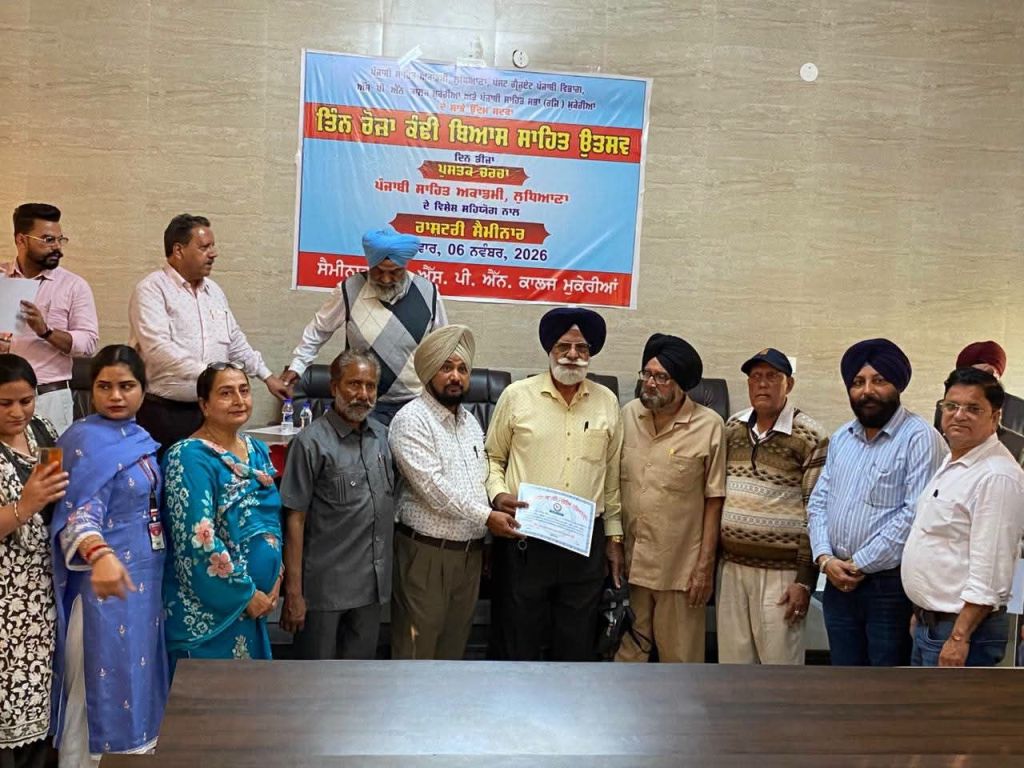
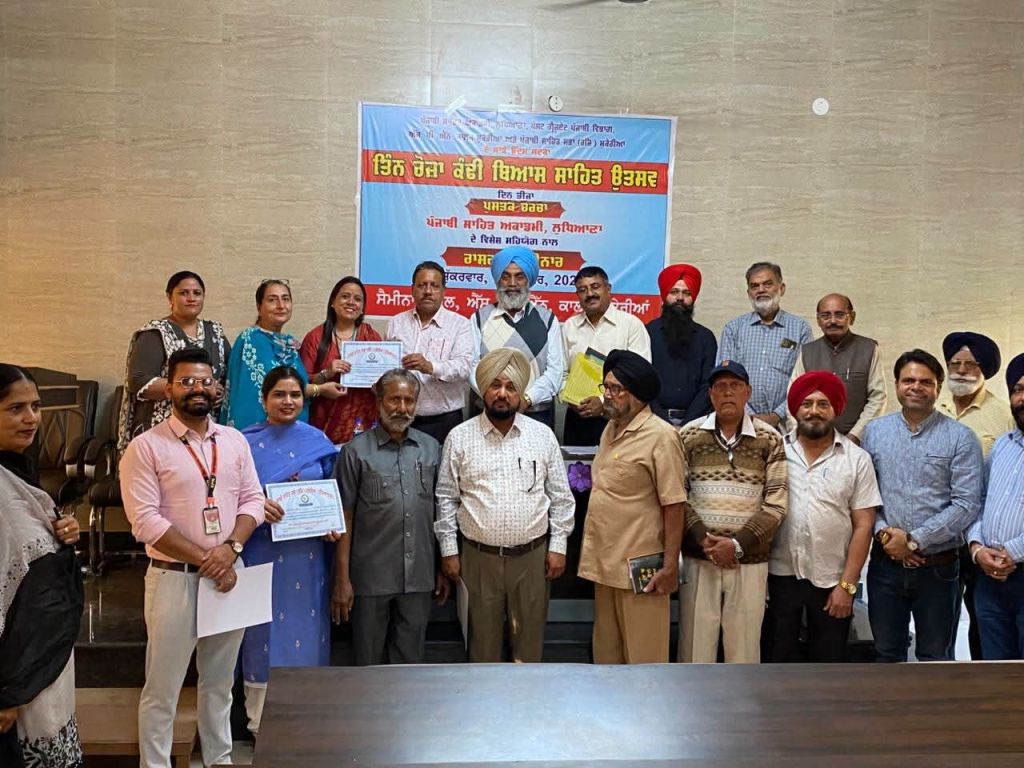
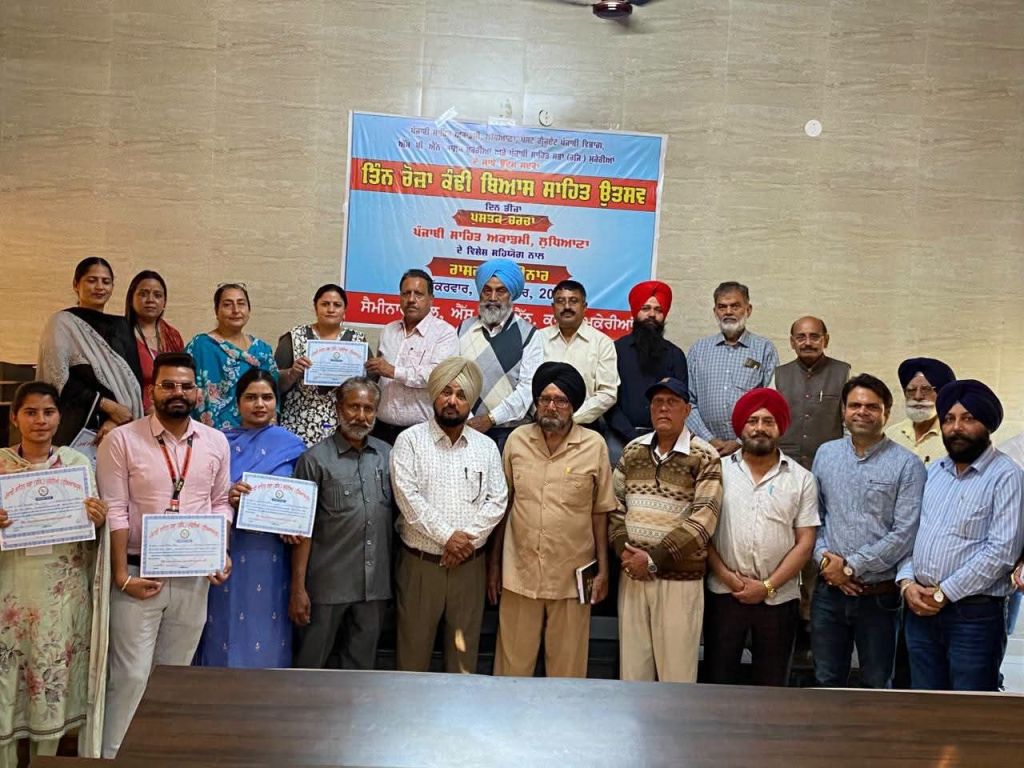
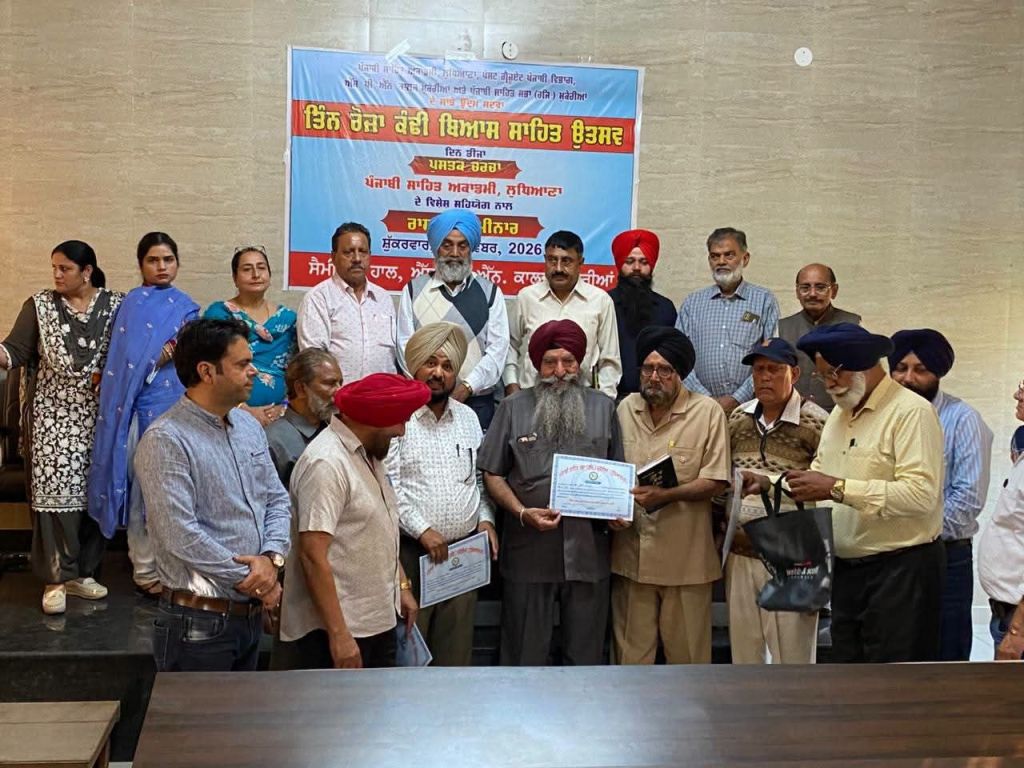
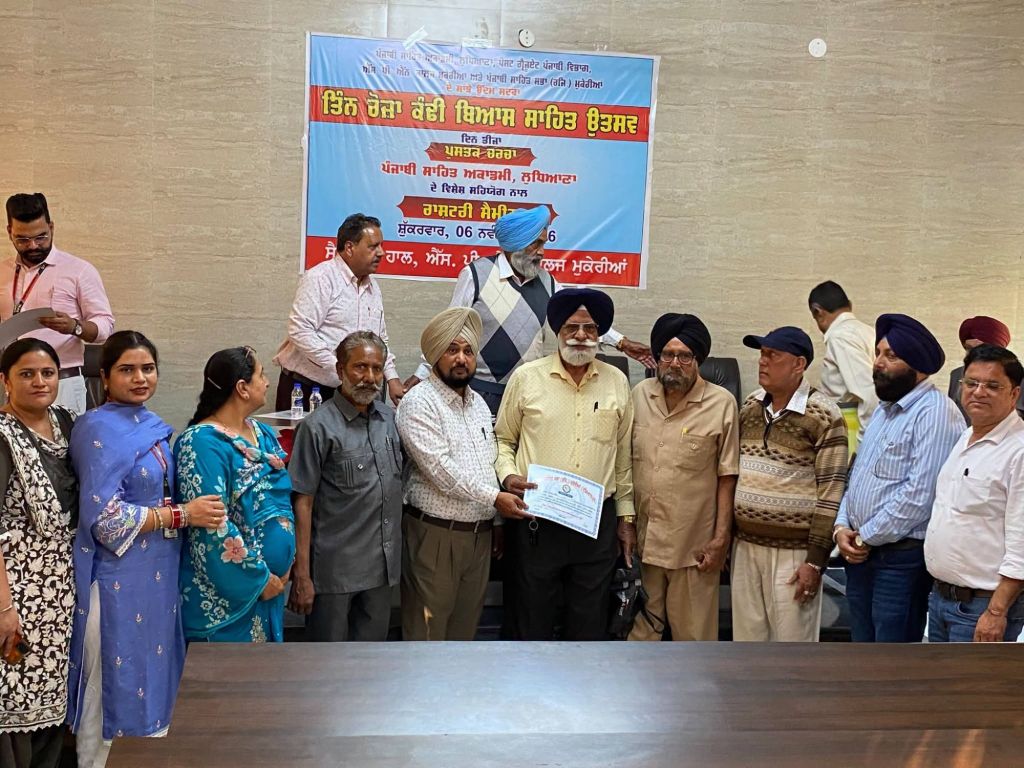
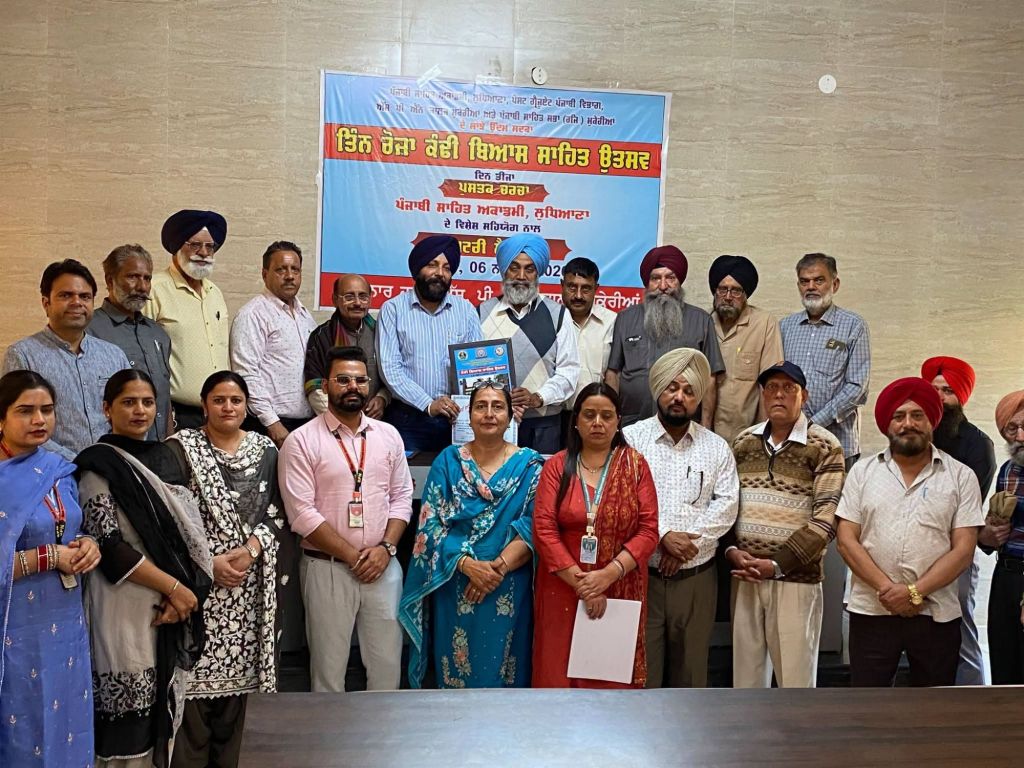
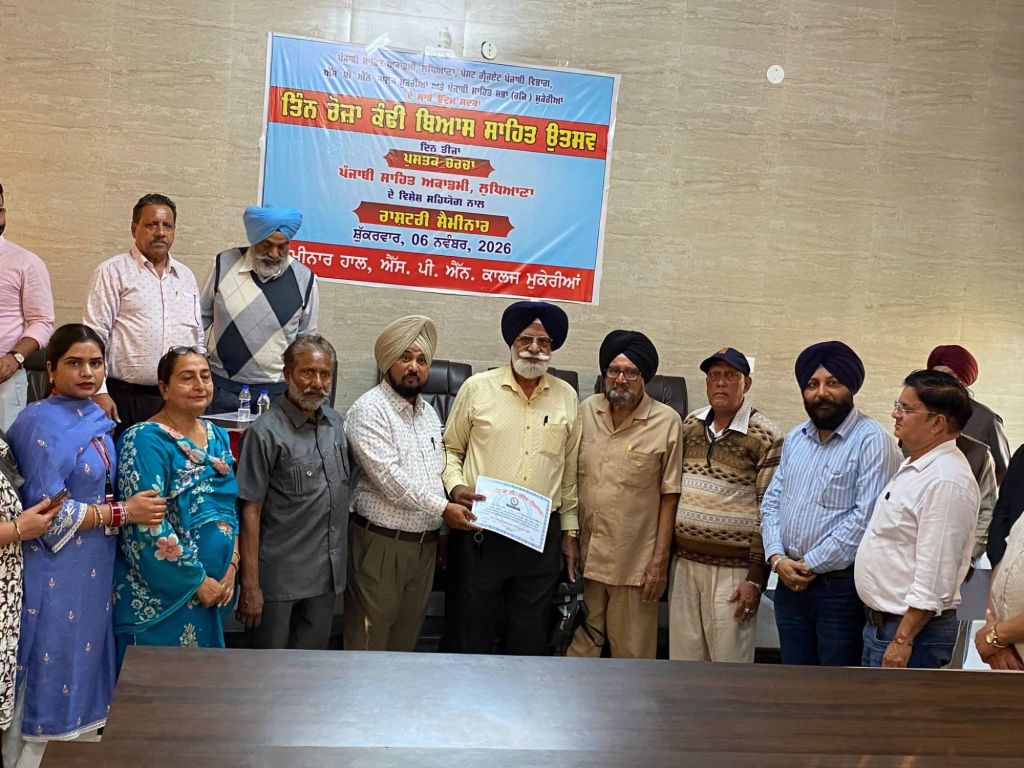
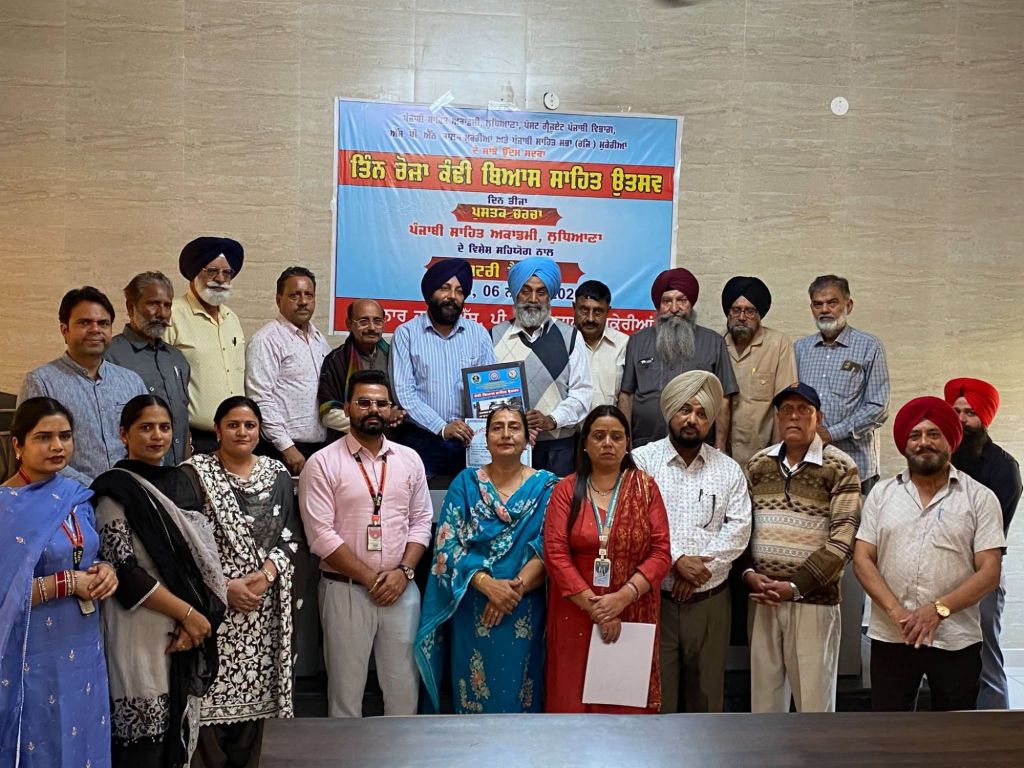
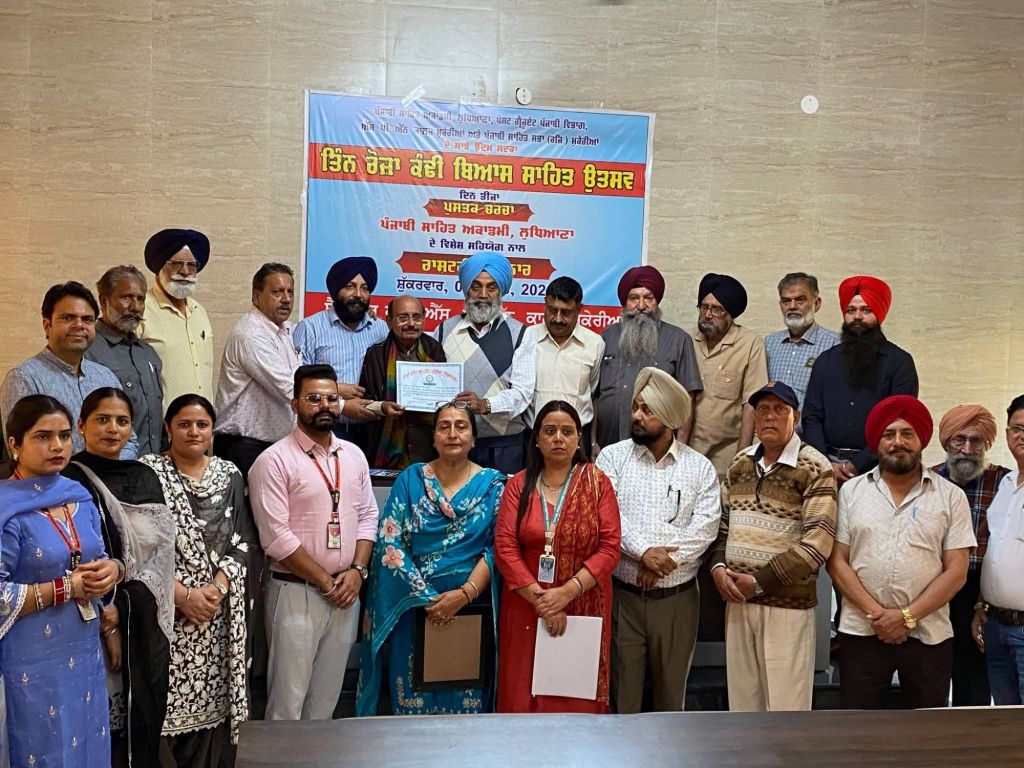
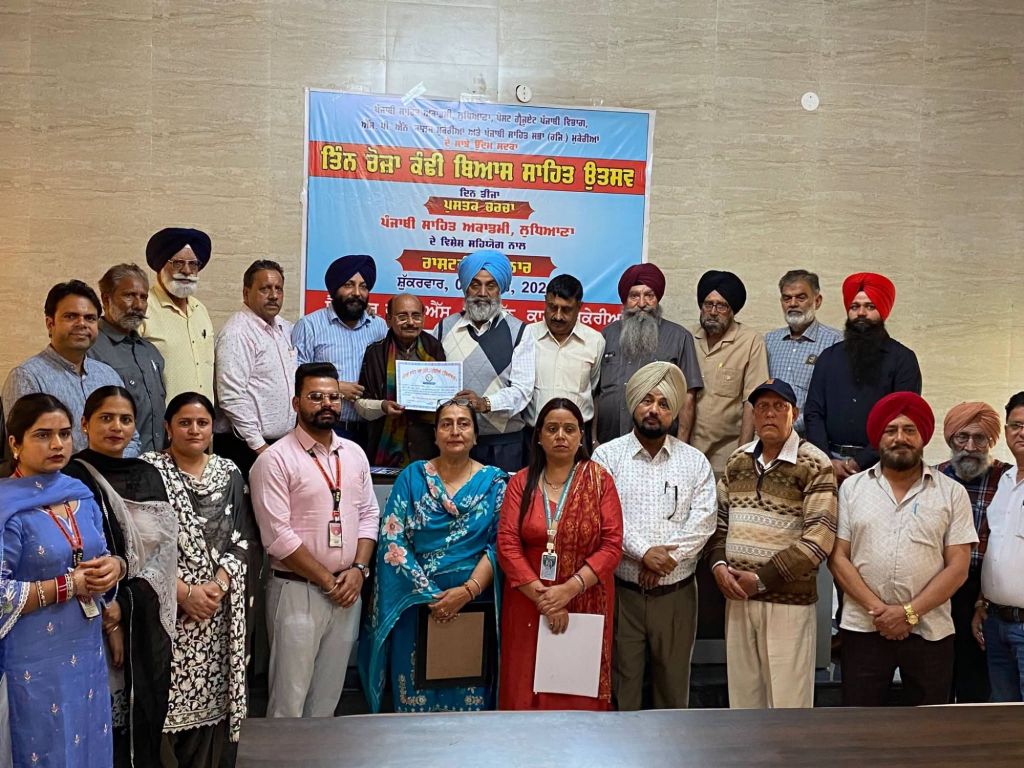
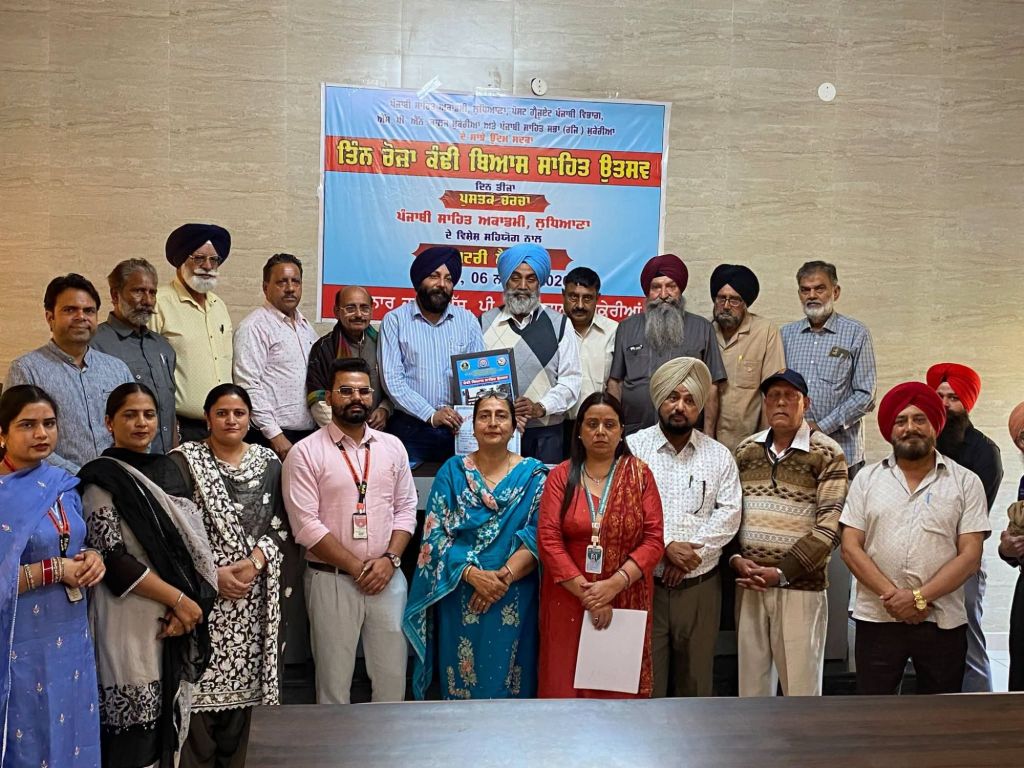
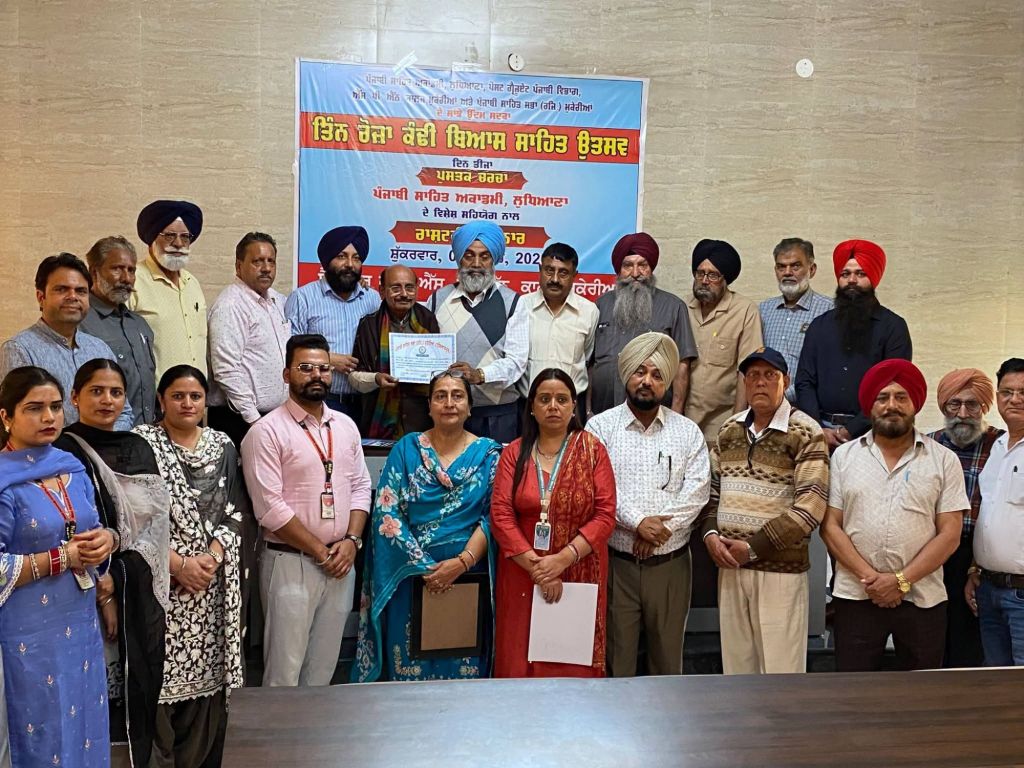
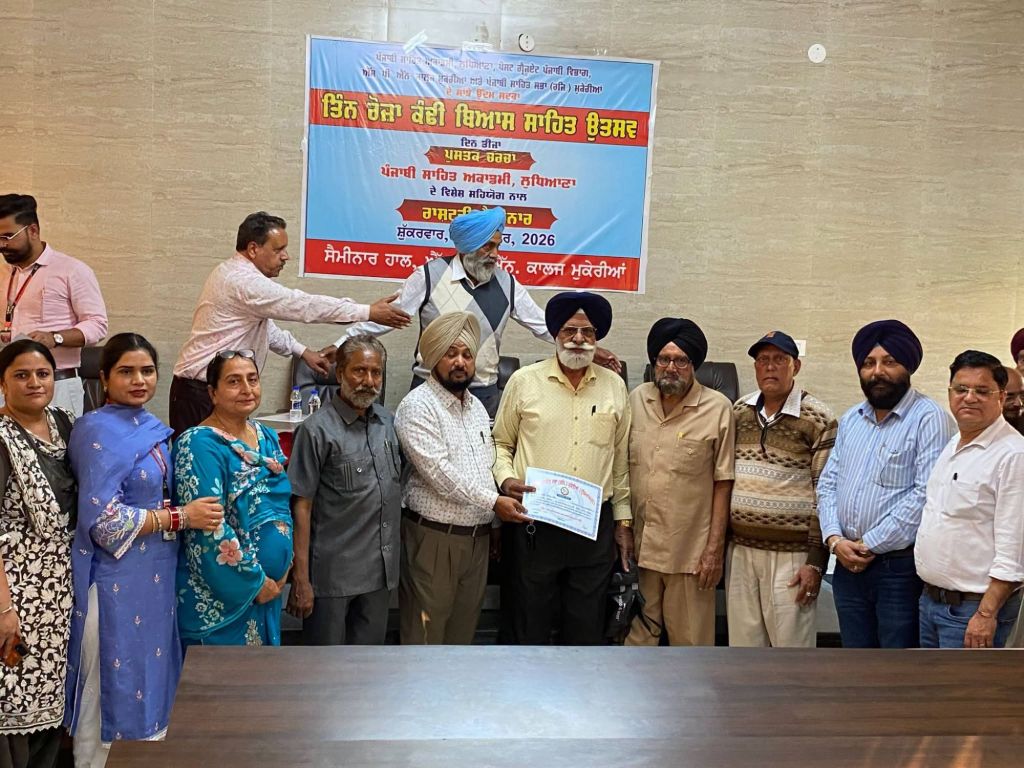
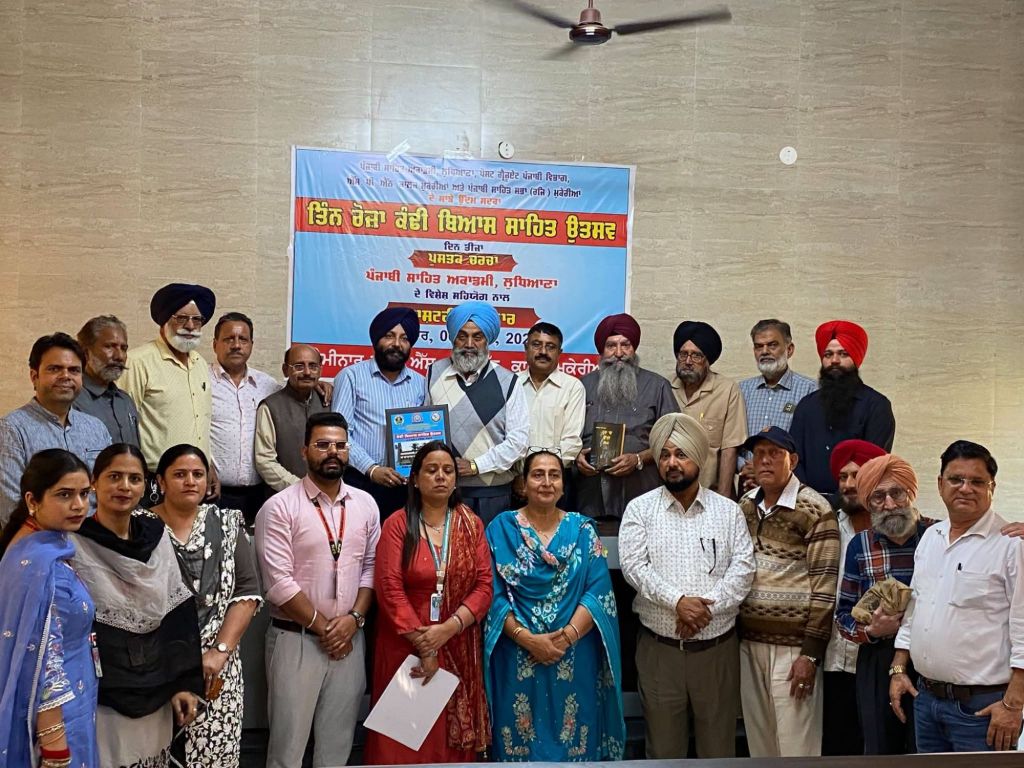
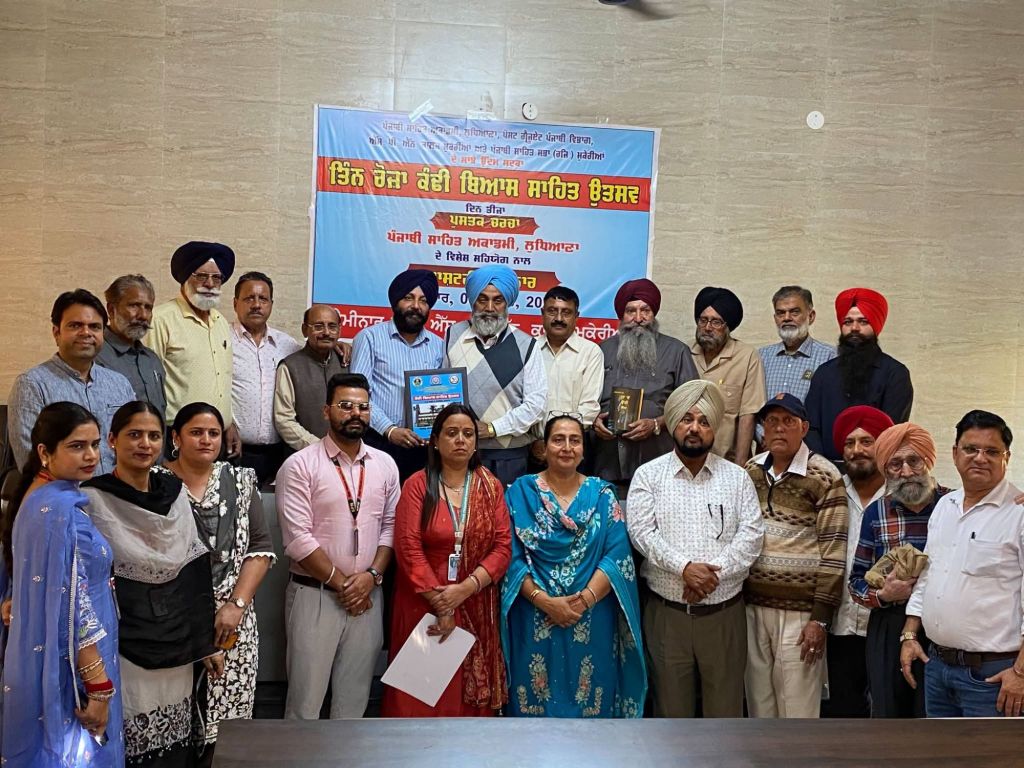
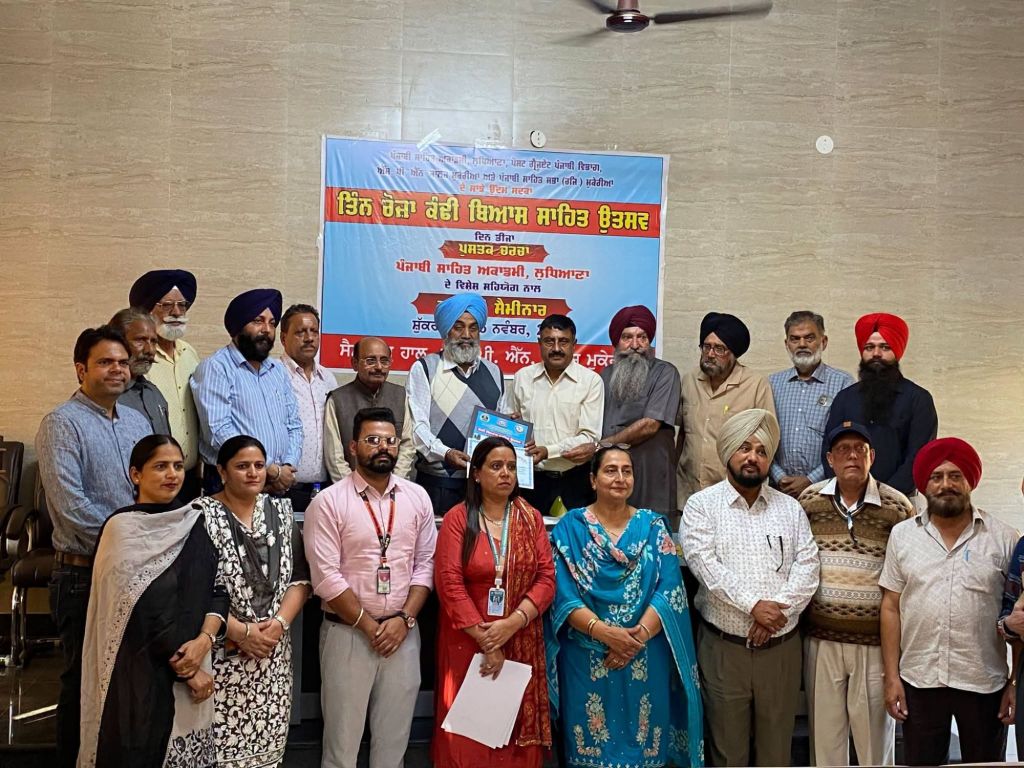
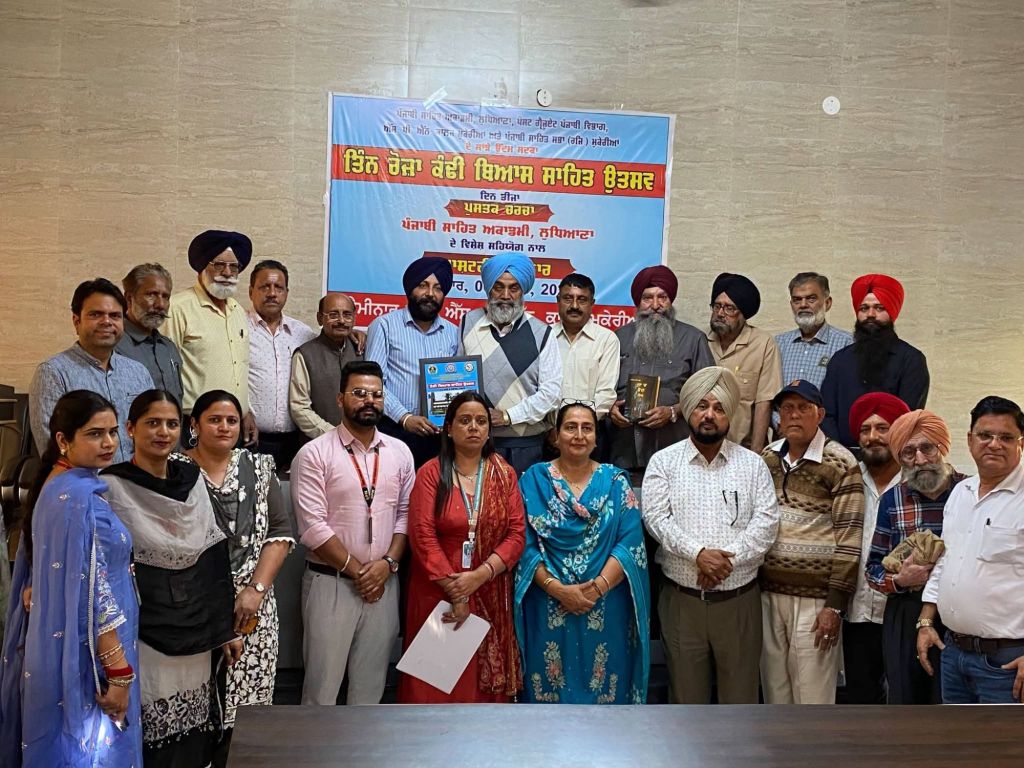
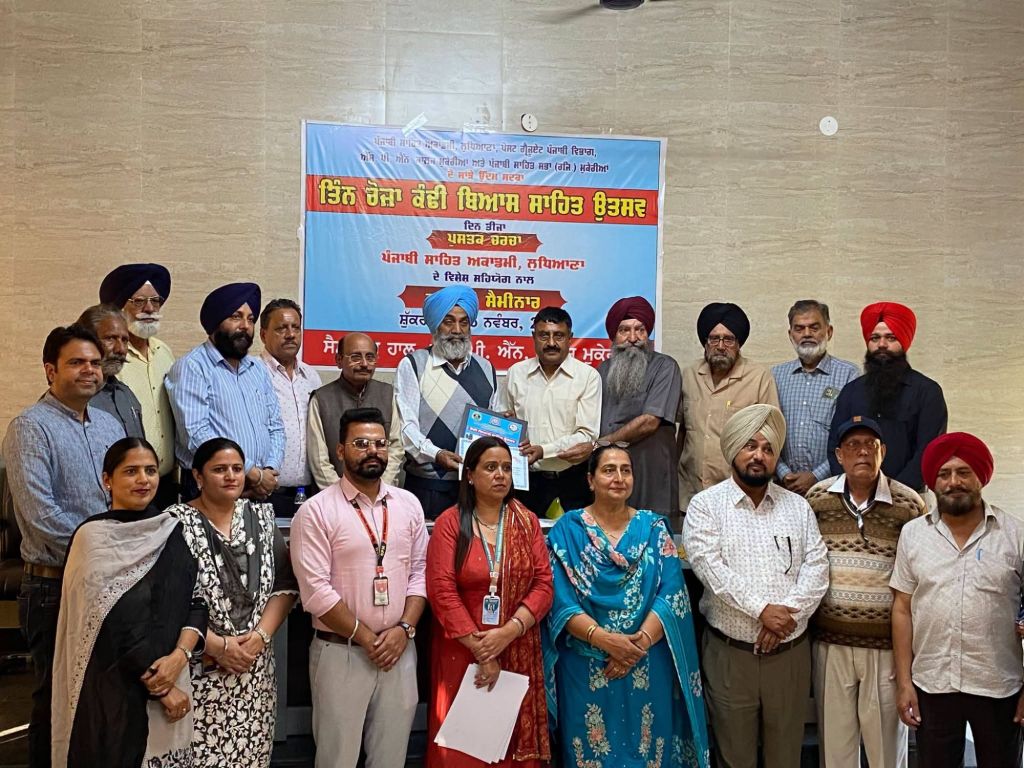
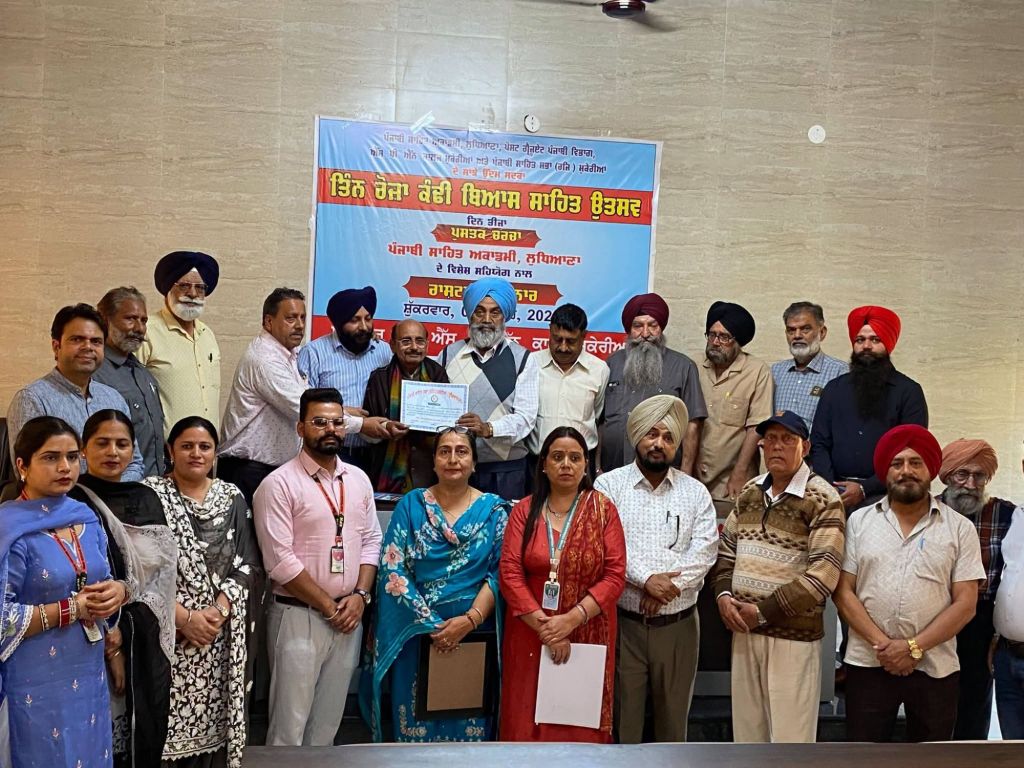
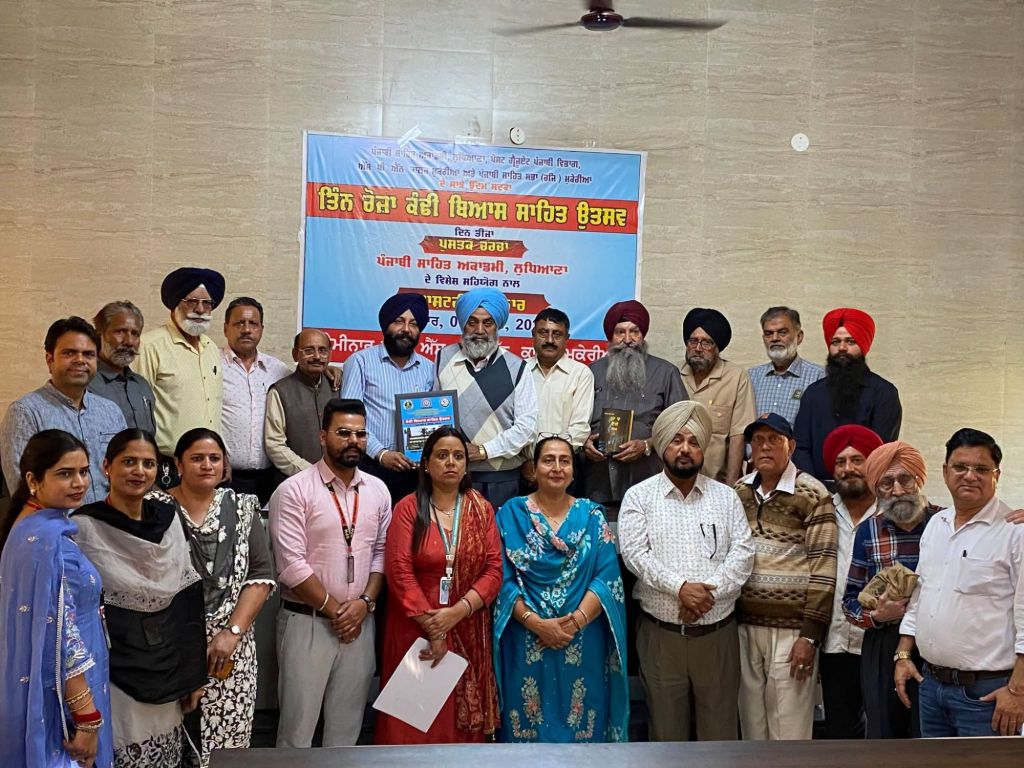
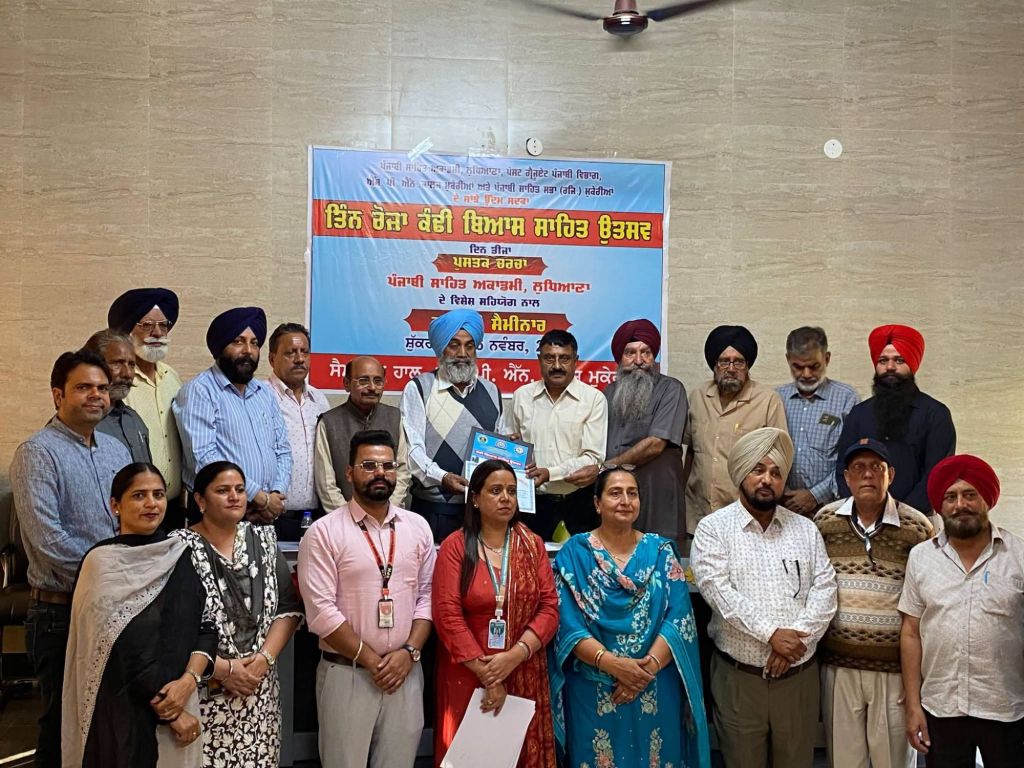
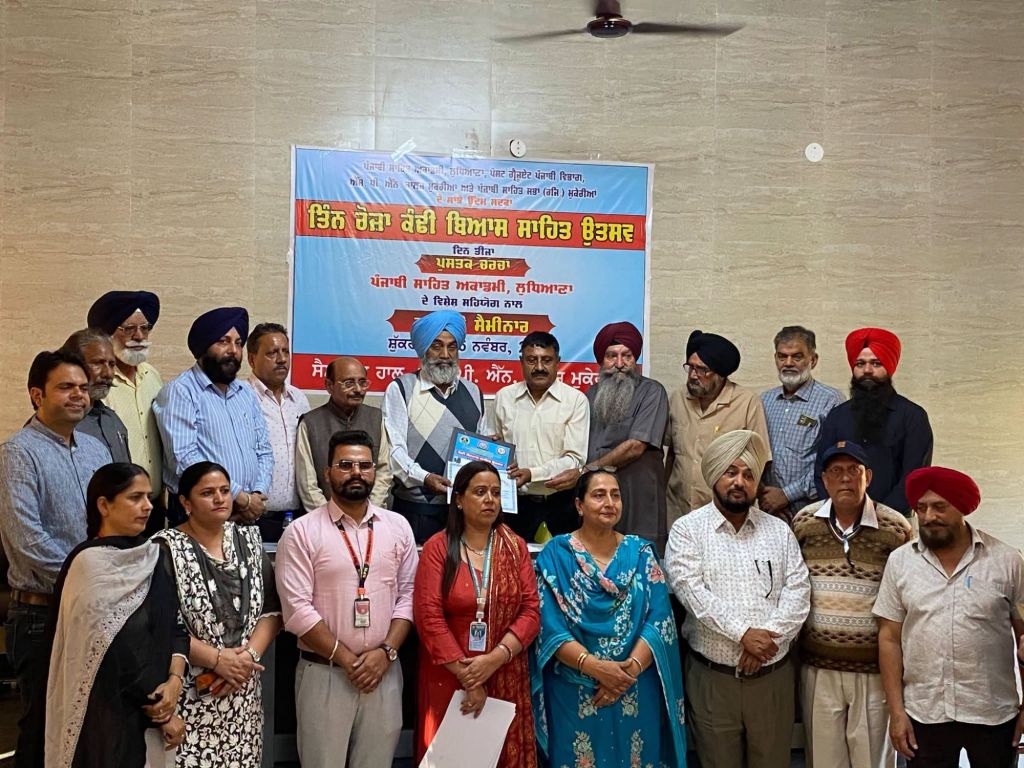
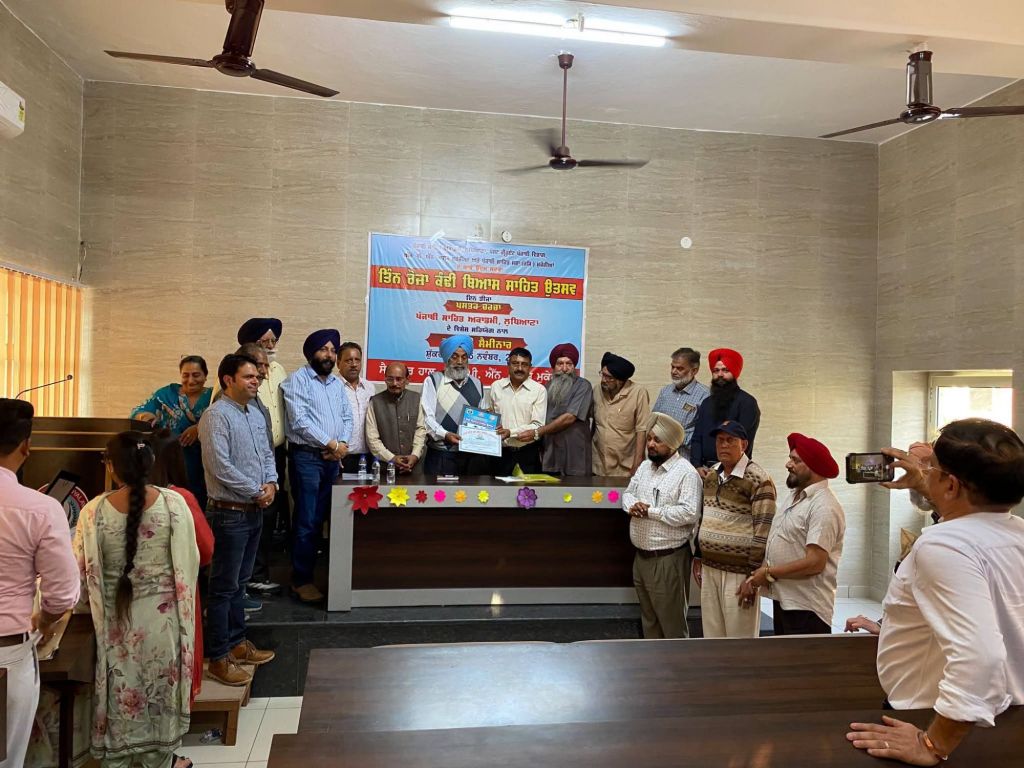
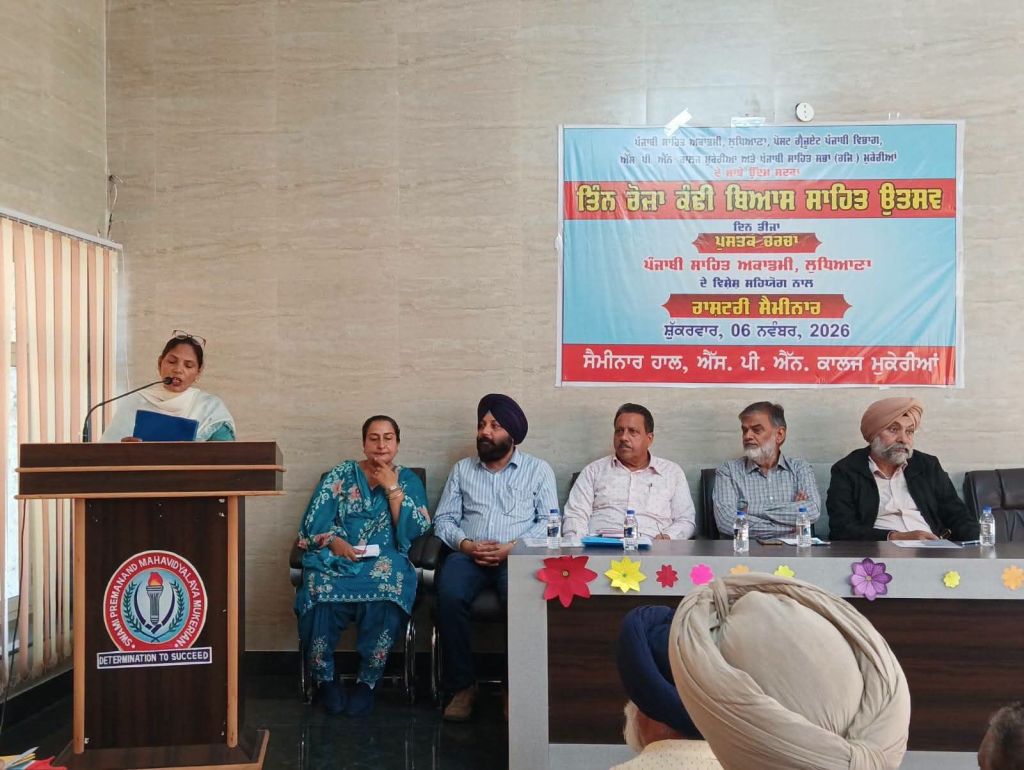
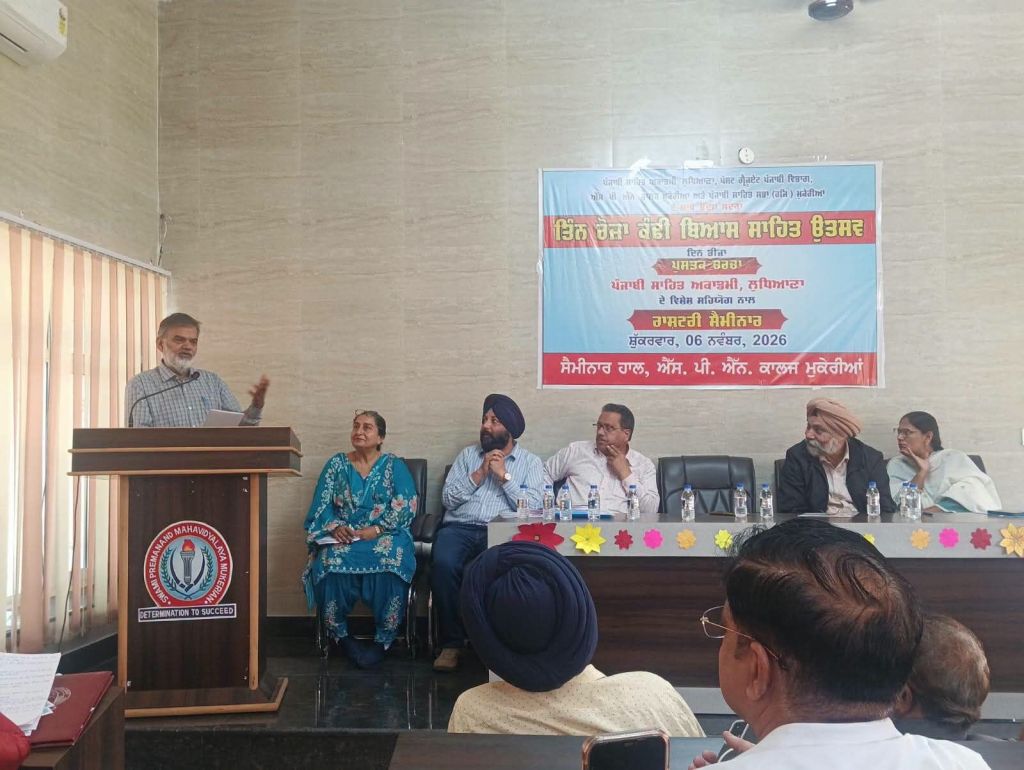
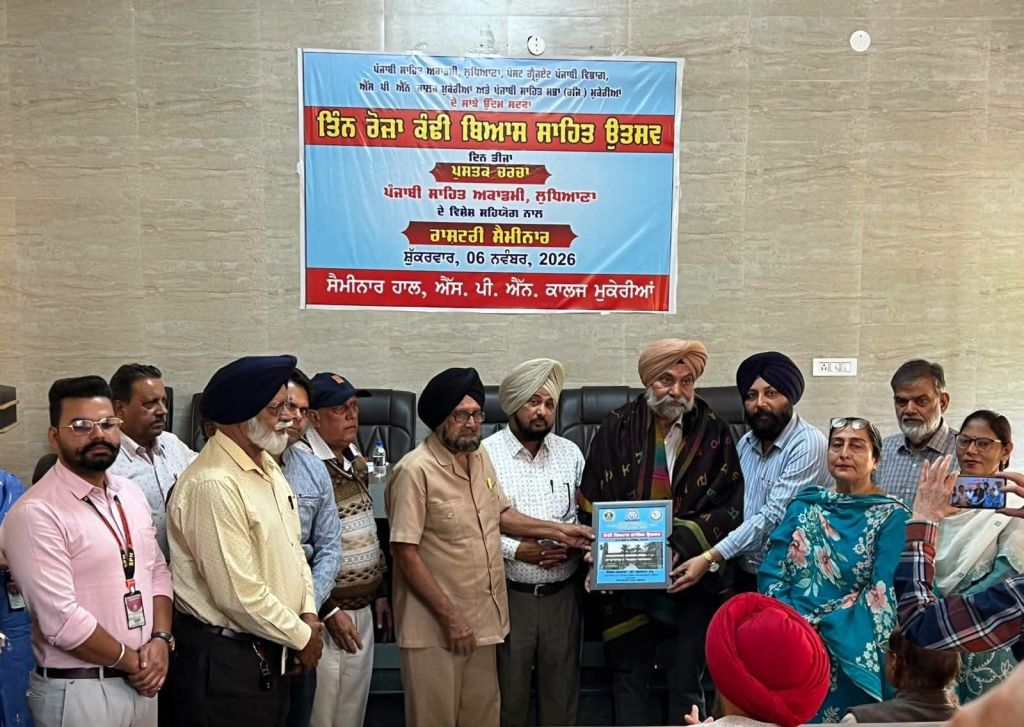
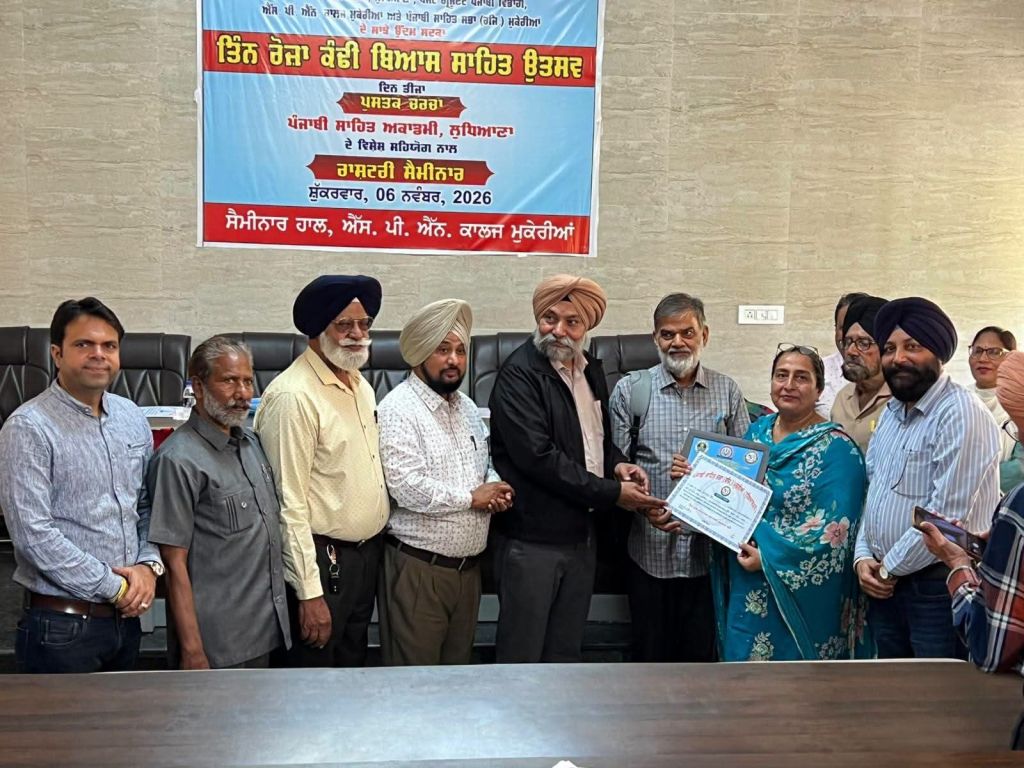
On the third and concluding day of the Kandi-Beas Literary Festival, a special book discussion was organised at SPN College, Mukerian, in collaboration with the Punjabi Sahit Academy, Ludhiana. On this occasion, Sh. Sanjeev Anand ji, Secretary, SPN College Management Committee, attended as the Chief Guest, while Principal Navtej Garhdiwala, Executive Member of the Punjabi Sahit Academy, Ludhiana, graced the occasion as the Special Guest.
Addressing the gathering, Chief Guest Sh. Sanjeev Anand ji congratulated the Department of Punjabi and the Punjabi Sahit Sabha, Mukerian, on the successful organisation of the three-day literary festival. He extended special gratitude to the Punjabi Sahit Akademi, Ludhiana, and warmly welcomed novelists Balbir Parwana and Dharampal Sahil. He stated that the college would continue to organise such literary and research-oriented programmes in the future and make dedicated efforts to strengthen research activities, thereby encouraging students to engage more deeply with research in Punjabi language and literature.
The presence of Special Guest Principal Navtej Garhdiwala further enhanced the significance of the literary gathering. His participation reflected the spirit of literary collaboration and academic association between the Punjabi Sahit Akademi and the college.
On this day, two separate sessions were devoted to in-depth and critical discussions on the novel “Raulian Vele” by renowned novelist Balbir Parwana and “Jaldoot” by Dharampal Sahil, which portrays the life and realities of the Kandi region.
First Session: Exploring the Tragedy of Partition through “Raulian Vele”
The first session focused on the novel “Raulian Vele” by Dhahan Prize-winning novelist Balbir Parwana. The session was chaired by Dr. Gurdial Singh Sandhu from the Department of Guru Nanak Sikh Studies, Panjab University, Chandigarh. Dr. Kiranjit Kaur, Head, Post Graduate Department of Punjabi, SPN College, Mukerian, and Dr. Sonia Devi, Head, Department of Punjabi, Dashmesh Girls College, presented their research papers on the novel.
The research papers and ensuing discussion explored the novel’s poignant portrayal of the tragedy of the Partition of Punjab, displacement, human suffering and its social and cultural consequences. An important question that emerged during the deliberations was the need for novels to examine not only the social and cultural repercussions of Partition but also the underlying political factors that led to this historical catastrophe.
In his presidential address, Dr. Gurdial Singh Sandhu observed that the expansive canvas of the novel enables writers to explore the multiple dimensions of historical events. He emphasised the need to understand more deeply the political causes and historical background of a major tragedy such as the Partition. Appreciating Balbir Parwana’s sensitive portrayal of human suffering, he described the novel as a significant literary contribution.
Second Session: Understanding the Life and Philosophy of the Kandi Region through “Jaldoot”
The second session was devoted to a discussion of Dharampal Sahil’s novel “Jaldoot” and was chaired by Prof. Baldev Singh Balli. Dr. Sarabjot Singh, President of the Punjabi Sahit Sabha, Mukerian, presented his research paper, while the second paper was presented by Dr. Anurag Sharma, former Head of the Department at DAV College, Jalandhar.
In his research paper, Dr. Sarabjot Singh focused on the distinction between an ordinary and an extraordinary human being, with particular reference to the character of Kishan in the novel. He observed that social behaviour often leads people to mistake cleverness, calculations and worldly manoeuvring for wisdom. However, an individual who appears ordinary may, at times, possess greater humanity, simplicity and sensitivity. According to him, the novel raises a fundamental question about social attitudes: does true wisdom lie in cleverness or in humanity?
Dr. Anurag Sharma, in his research paper, interpreted the relationship between the characters Kishan and Radha in the light of the Shiva-Shakti concept in Indian philosophical tradition. While analysing the dimensions of feminine power, spirituality and the deeper layers of human relationships depicted in the novel, he attempted to understand the narrative within the broader philosophical framework of Indian traditions.
Delivering the presidential address, Prof. Baldev Singh Balli remarked that Dharampal Sahil had carved out a distinctive literary identity for the Kandi region in Punjabi fiction by authentically portraying its lived realities. He observed that bringing the geographical landscape, folk life, culture and human struggles of the Kandi region into the mainstream of Punjabi literature was a significant achievement of the novelist.
The intellectual deliberations during the literary gathering highlighted that literary festivals are not merely limited to book releases or the felicitation of writers. Rather, they serve as important platforms for meaningful dialogue and critical engagement with society, history, culture and human existence.
At the conclusion of the programme, Principal Dr. Sameer Sharma expressed gratitude to all the guests, scholars, writers, researchers and collaborators for their valuable presence and contribution.
Thus, the first three-day Kandi-Beas Literary Festival concluded on a high note, successfully achieving its objectives of promoting literary discourse, research-oriented dialogue and highlighting the cultural identity of the Kandi region. The festival left behind not only cherished memories but also opened up new possibilities for the literary study, research and documentation of the Kandi region.
Categories: Uncategorized


